
how to advertise small business: practical strategies
Learn how to advertise small business with proven strategies to reach your audience, choose channels, and create ads that convert.
Veo3 AI · 23 min read · Dec 2, 2025
Before you even think about creating an ad, let’s talk strategy. So many small business owners jump straight to spending money, but effective advertising starts with a solid plan, not just a budget. You need to get three things right from the very beginning: defining your target audience, setting clear, measurable goals, and figuring out what your competitors are up to.
Quick Answer: To advertise small business effectively, focus on a consistent content strategy, compelling visual hooks in the first 3 seconds, and data-driven optimization. AI video tools like Google Veo 3 and Runway can help you produce high-quality content at scale while analytics platforms guide your decisions.
Nail these, and you'll stop wasting money on ads that just don't work.
Build Your Advertising Foundation First
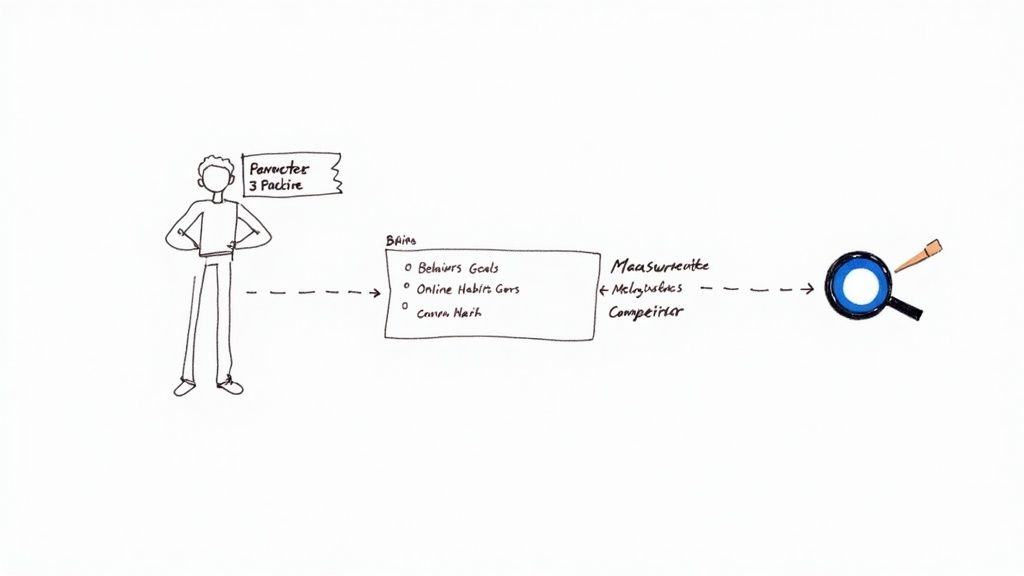
It’s tempting to dive right into ad creation, but that's a classic mistake. You need a blueprint first. This foundational work is what separates a successful campaign from a costly failure, because it ensures every decision you make is intentional. To get started, it helps to use an ultimate digital marketing strategy template to map out your entire online presence.
Think of this prep work as turning an expense into a purposeful investment. Without a clear plan, you're just guessing who to talk to and what to say.
Define Your Ideal Customer
Let's be honest, vague descriptions like "women aged 25-40" don't cut it anymore. To write ads that actually connect with people, you need to build a detailed customer avatar. This means going way beyond basic demographics and getting into their psychographics—their real-world behaviors, what motivates them, and what keeps them up at night.
Start by asking yourself some pointed questions to bring this person to life:
- What podcasts do they listen to on their commute? This clues you into their interests and the influencers they already trust.
- Which social media platforms are they scrolling through before bed? This tells you exactly where your ads need to be.
- What’s their biggest daily frustration that your product or service solves? This is the key to writing ad copy that hits home.
- What kind of content do they share? If they love short-form video, for example, then building a solid video content marketing strategy is a no-brainer.
Let’s take a local coffee shop. Their ideal customer isn't just "anyone who likes coffee." It's "Brenda, a 32-year-old freelance graphic designer who works from home, cares about ethically sourced beans, and follows local food bloggers on Instagram for brunch ideas." See the difference? Now you know exactly who you're talking to and where to find her.
Key Takeaway: A detailed customer avatar is your most powerful targeting tool. When you know your customer's daily habits and motivations, choosing ad platforms and writing compelling copy becomes intuitive.
Set Clear and Measurable Goals
"I want more customers" isn't a goal. It's a wish. To run effective advertising, your goals need to be specific, measurable, achievable, relevant, and time-bound (SMART). If your objectives are fuzzy, you'll never know if your campaigns are actually working.
Instead, define concrete outcomes you can actually track.
Here are a few examples of what strong goals look like:
- Generate 25 qualified leads for our consulting service through LinkedIn Ads within the next 30 days.
- Increase online sales for our new product line by 15% in the next quarter using targeted Facebook video ads.
- Achieve 50 new appointment bookings from local residents via Google Search ads this month.
Goals like these give you clear benchmarks for success. You’ll know precisely what you’re aiming for and can measure your return on investment down to the dollar. Anything else is just spending money and hoping for the best.
Choose the Right Advertising Channels
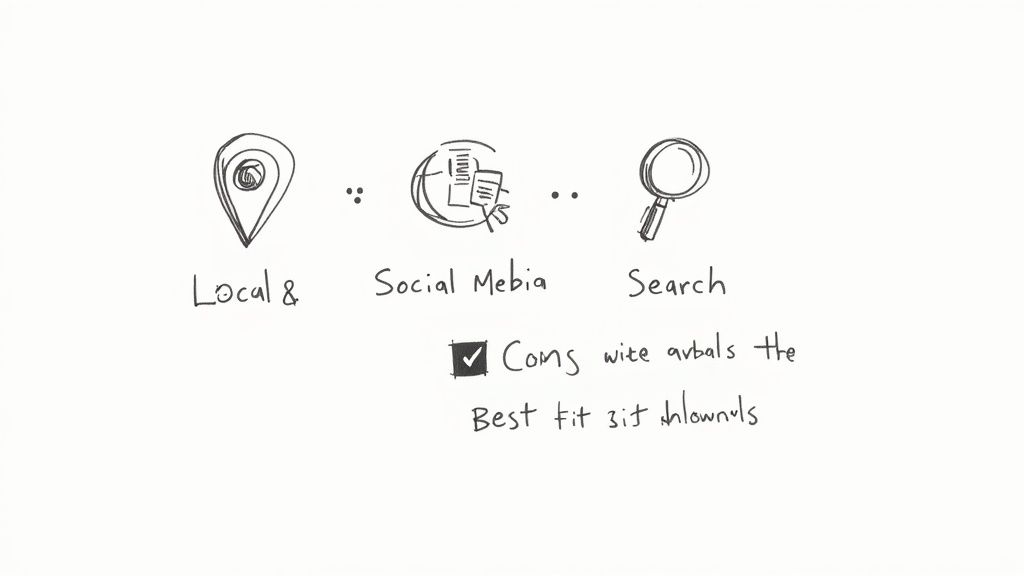
Now that you know who you’re talking to and what you want them to do, it's time to figure out where that conversation should happen. It's easy to get overwhelmed by the sheer number of advertising platforms out there, but the secret isn't being everywhere. It's about showing up where your ideal customers already are.
Spreading your budget too thin across a dozen different channels is one of the fastest ways to see zero results. Instead, get strategic. Focus your time, energy, and money on a handful of platforms that actually make sense for your audience and your business model.
If you're feeling a bit lost, you're not alone. A staggering 73% of small businesses globally aren't confident their marketing strategy is working. That doubt often comes from a mismatch between their message and the channels they're using. Let's fix that.
Master Your Local Presence
For any business with a physical storefront—a coffee shop, a boutique, a local accounting firm—your first priority should be dominating your immediate area. Before pouring money into complex digital campaigns, you have to nail the fundamentals right in your own backyard.
This all starts with your Google Business Profile. It’s a free and incredibly powerful tool that helps you appear in Google Maps and local search results. Getting this right is non-negotiable. Fill it out completely, add great photos, keep your hours updated, and actively encourage customer reviews.
Don't forget about tried-and-true local tactics that still work wonders:
- Community Sponsorships: Sponsoring a local Little League team or a neighborhood festival gets your brand in front of local families in a really positive way.
- Local Partnerships: Find a non-competing business that serves the same type of customer. A local gym, for instance, could team up with a nearby health food store for a cross-promotion.
- Flyers and Posters: Placed on community boards in libraries, cafes, and other high-traffic spots, these can still be surprisingly effective for promoting a special offer or event.
Dominate with Social Media Ads
If your customers are online, they’re almost certainly on social media. The trick is figuring out which platform they prefer. A B2B consultant will likely find qualified leads on LinkedIn, while a business selling handcrafted jewelry is going to shine on highly visual platforms like Instagram and Pinterest.
The real magic of social media ads lies in their targeting capabilities. You can get hyper-specific, reaching people based on their interests, online behaviors, demographics, and even major life events.
Let's say you own a specialty dog bakery. Using Facebook Ads, you could create a campaign targeting users who follow popular pet influencers, have shown an interest in specific dog breeds, and live within a 10-mile radius of your shop. That's a level of precision you just can't get with a billboard.
Pro Tip: Don't just run ads—build a community. Use your social media channels to show behind-the-scenes content, answer questions, and actually talk to your followers. This organic engagement makes your paid ads feel much more authentic and trustworthy when they do appear.
Exploring different formats is also key; learning more about video marketing for small businesses can open up new ways to connect with your audience.
Capture Intent with Search Ads
While social media is fantastic for building awareness and reaching new people, search engine ads (like Google Ads) are all about capturing intent. When someone types "emergency plumber near me" or "best vegan restaurant in Brooklyn" into Google, they aren't just browsing—they have an immediate need and are ready to act.
This is precisely what makes search advertising so powerful for small businesses. You’re putting your solution right in front of someone the exact moment they're looking for it. It's a direct line to a highly motivated customer.
Here's a simple way to think about the difference:
- Social Media Ads: You're interrupting their scroll with something interesting (Discovery).
- Search Ads: You're providing the answer they just asked for (Intent).
Often, the most effective strategy is a combination of both. Use social media to introduce your brand to new people, and use search ads to be there when they're finally ready to make a purchase.
Choosing the right mix of channels can feel like a puzzle, but it gets easier when you break it down. The table below compares some of the most popular options to help you decide where to start.
Advertising Channel Comparison for Small Businesses
| Channel | Average Cost | Best For | Key Metric |
|---|---|---|---|
| Local SEO (Google) | Low (Free tools + time) | Brick-and-mortar, service-area businesses | Local search rankings, calls, direction requests |
| Social Media Ads | $-$$ | Building brand awareness, community, niche targeting | Engagement rate, reach, cost per lead |
| Search Ads (PPC) | $$-$$$ | Capturing high-intent customers with immediate needs | Click-through rate (CTR), conversion rate, cost per acquisition (CPA) |
| Email Marketing | $ | Nurturing existing leads and customer retention | Open rate, click-through rate, list growth |
| Content Marketing | $-$$ | Building authority, generating organic traffic, long-term growth | Organic traffic, time on page, inbound leads |
| Short-Form Video | $-$$ | Reaching younger demographics, showcasing personality | Views, watch time, shares |
Remember, this isn't about picking one and sticking with it forever. The best approach is to start with one or two channels that feel like a perfect fit, master them, and then thoughtfully expand as you grow. For a deeper look at using video effectively, our complete guide to video marketing for small business is a great next step.
Creating Ads That Actually Work (Without a Huge Budget)
Let’s be honest: most small businesses don’t have a Hollywood-sized budget for their ads. The good news? You don’t need one. Some of the most effective advertising I've ever seen wasn't about big spending; it was about smart, authentic creative that genuinely connected with people.
Forget the idea that you need a fancy agency or a professional film crew. Your biggest assets are your passion and your understanding of your customers. People are drawn to what’s real, and as a small business owner, you have authenticity in spades. Let's look at how to turn that into ads that grab attention and get results.
Your Smartphone is a Video Powerhouse
Video can feel intimidating, but it doesn't have to be. Your phone is more than capable of shooting incredible, professional-looking video if you just focus on two things: good lighting and clear sound.
Seriously, that's it. Before you even think about fancy gear, find a window. Natural light is your best friend and will instantly make your video look a hundred times better. For sound, a simple lavalier mic that clips to your shirt and plugs into your phone is a game-changer. It costs less than a nice dinner out and will eliminate that echoey, distant audio that screams "amateur."
Here are a few video ideas you could film this afternoon:
- Quick Product Demos: Don't just tell people what your product does—show them. A simple, 30-second clip of your product in action is incredibly persuasive.
- A "Behind-the-Scenes" Peek: People love seeing the face behind the business. Introduce yourself, show a bit of your workspace, or walk through how you make something. It builds trust and makes your brand feel human.
- A Happy Customer Clip: Nothing sells your business better than a happy customer. A short, genuine video testimonial is pure gold.
Keep it short and sweet. For social media platforms like Instagram or TikTok, aim for under 60 seconds, and honestly, videos under 15 seconds often perform even better.
Writing Words That Stop the Scroll
Your ad copy has a tough job. It has to break through the noise and make someone pause. A classic framework that I always come back to because it just works is the AIDA model. It’s a simple way to guide someone from seeing your ad to clicking it.
- Attention: Lead with a hook. Ask a question or make a surprising statement that speaks directly to a problem they have. Instead of "We Sell High-Quality Coffee," try something like, "Tired of that bitter morning coffee?"
- Interest: Now that you have their attention, pique their interest. Briefly explain how you solve that problem in a unique way. "Our single-origin beans are air-roasted to be incredibly smooth, never bitter."
- Desire: This is where you help them visualize a better future. Paint a picture of the feeling or result they'll get. "Imagine starting every single day with a perfectly balanced, delicious cup."
- Action: Don't be vague. Tell them exactly what you want them to do next with a clear call to action (CTA). "Shop Now and get 15% off your first order."
This isn't just a formula; it's a conversation. It meets the customer where they are and gently guides them toward a solution.
Let Your Customers Create Your Best Ads
One of the most powerful, yet often overlooked, advertising assets you have is your existing customer base. I'm talking about user-generated content (UGC)—the photos, videos, and reviews your customers create and share. It’s authentic, it’s trustworthy, and it costs you nothing.
Here's a mind-blowing stat: studies have shown that consumers find UGC 9.8x more impactful than influencer content when deciding to make a purchase. Why? Because it’s real social proof from real people.
Start encouraging your customers to share their experiences. You can run a photo contest, create a fun hashtag for your brand, or simply ask people to tag you when they post. When you spot a great photo or video, reach out and ask for permission to feature it in your ads.
Think about it: a simple, genuine photo of a customer smiling while using your product can often outperform a slick, professional photoshoot. It’s relatable, it builds community, and it gives you a library of amazing ad creative without spending a dime on production.
Launch Your First Digital Ad Campaigns
<iframe width="100%" style="aspect-ratio: 16 / 9;" src="https://www.youtube.com/embed/16-dF2p0kKo" frameborder="0" allow="autoplay; encrypted-media" allowfullscreen></iframe>
Alright, you've done the prep work. You know your audience, you've set your goals, and you've got some creative assets ready to go. Now it's time for the exciting part: actually launching your first campaign.
It can feel a little intimidating, but we're going to start small and focus on the two platforms that give small businesses the biggest bang for their buck: social media and search engines. The idea isn't to become a world-class media buyer overnight. It's about getting your hands dirty, learning the ropes, and figuring out what your customers respond to.
Setting Up a Simple Facebook or Instagram Ad
Meta's ad platform, which runs the show for both Facebook and Instagram, is an absolute powerhouse for zeroing in on your ideal customer. The best part? You can get your feet wet with a tiny budget, making it the perfect place to learn how to advertise your business without breaking the bank.
First things first, you'll need a Facebook Business Page. From there, you'll find your way into the Meta Business Suite and open up Ads Manager. Think of this as your command center for everything ads-related.
Your first choice inside Ads Manager is to pick a campaign objective. This is just a fancy way of telling Facebook what you want to achieve. For your first few campaigns, stick to the basics:
- Awareness: Perfect for just getting your name out there in your local community.
- Traffic: Use this when you want to send people directly to your website, like a specific product page or blog post.
- Leads: An excellent choice for service businesses looking to collect contact info (like email addresses) from potential clients.
- Sales: This tells the algorithm to find people who are most likely to make a purchase on your site.
Once you've picked an objective, you'll define your audience. This is where all that customer avatar work you did earlier pays off big time. You can target people based on their location, age, interests, and even online behaviors. My advice? Start with a narrow, specific audience. It's better to talk to 1,000 of the right people than 100,000 of the wrong ones.
Pro Tip: Start with a daily budget you're completely okay with losing, something like $10 or $20 per day. Think of this first spend as tuition. You're not trying to get rich; you're paying for data to see what works.
Finally, you’ll upload your ad creative (the images or videos you made) and write your ad copy. Hit "Publish," and you're live! Now you can start watching the data roll in right inside Ads Manager.
Launching Your First Google Search Ad
If social media ads are about helping new customers discover you, Google Ads are about capturing people who are already looking for you. When someone types a problem you can solve into that search bar, you want to be the first solution they see.
To get started with Google Ads, you'll want to create a campaign that targets the Search Network. This means your ads will be simple, text-based results that appear at the top of a Google search. The absolute bedrock of a good search campaign is keyword research.
You have to get inside your customer's head. What are they actually typing into Google? Someone who needs a haircut isn't just searching for "salon." They're searching for things like "best curly haircut near me" or "men's fade appointment today." These longer, more detailed search terms are called long-tail keywords. They usually have less competition and a much higher chance of converting into a customer.
Your Google ad is made up of three simple parts:
- Headlines: Short, eye-catching phrases. Make sure to put your main keyword here.
- Description: A quick sentence or two about what you do and why you're the best choice.
- Display URL: The website address people will see in the ad.
When someone clicks your ad, they get sent to a specific landing page on your site. This is critical: make sure that page is a perfect match for the ad. If your ad talks about a "15% Off Your First Order" deal, the page they land on better have that deal front and center.
This simple flow is all it takes to get your content ready for any platform.
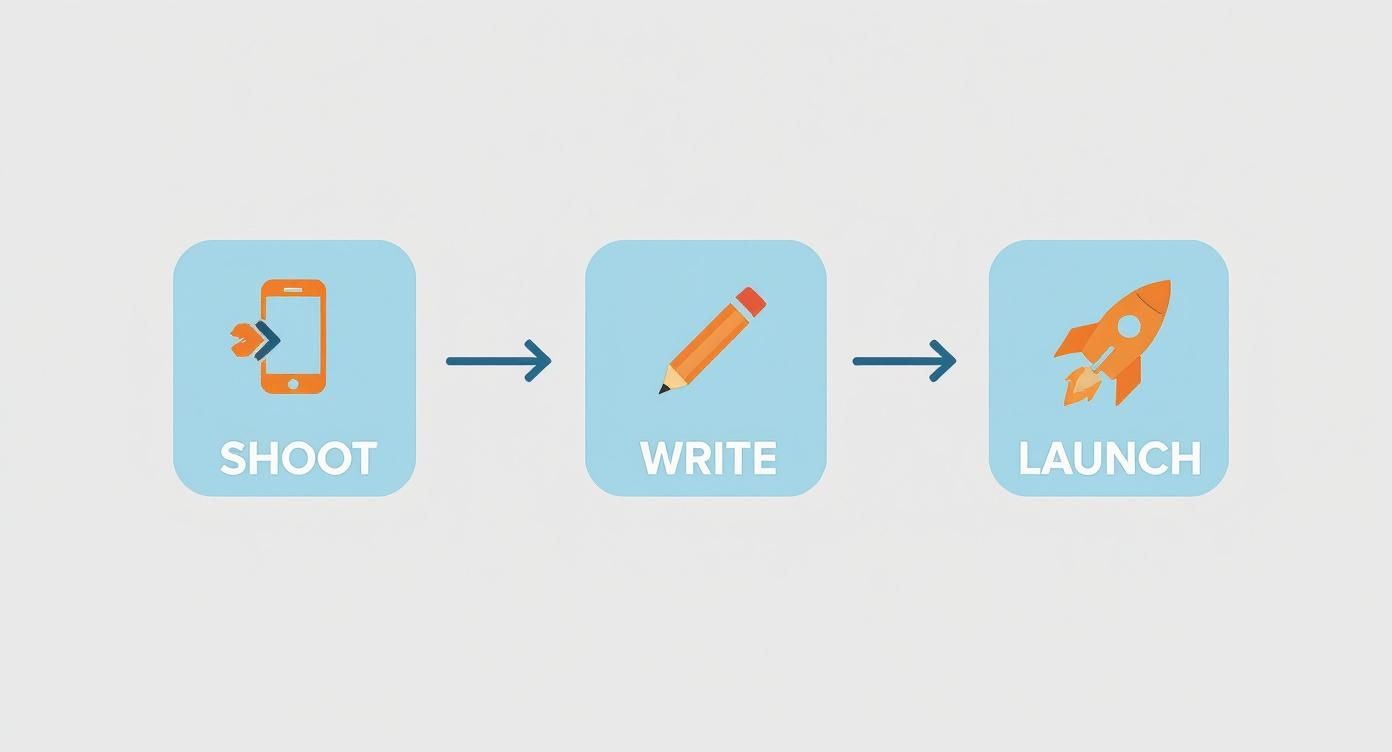
It really boils down to creating great visuals, writing words that connect, and then getting your campaign launched.
The data shows that 94% of small businesses are planning to spend more on digital marketing. But as this report on marketing statistics points out, success isn't about outspending the competition; it's about out-thinking them. A shocking 72% of companies haven't even looked at their ad campaigns in over a month. For a hands-on business owner like you, that's a massive opportunity to get ahead.
Make Social Media Your Secret Weapon
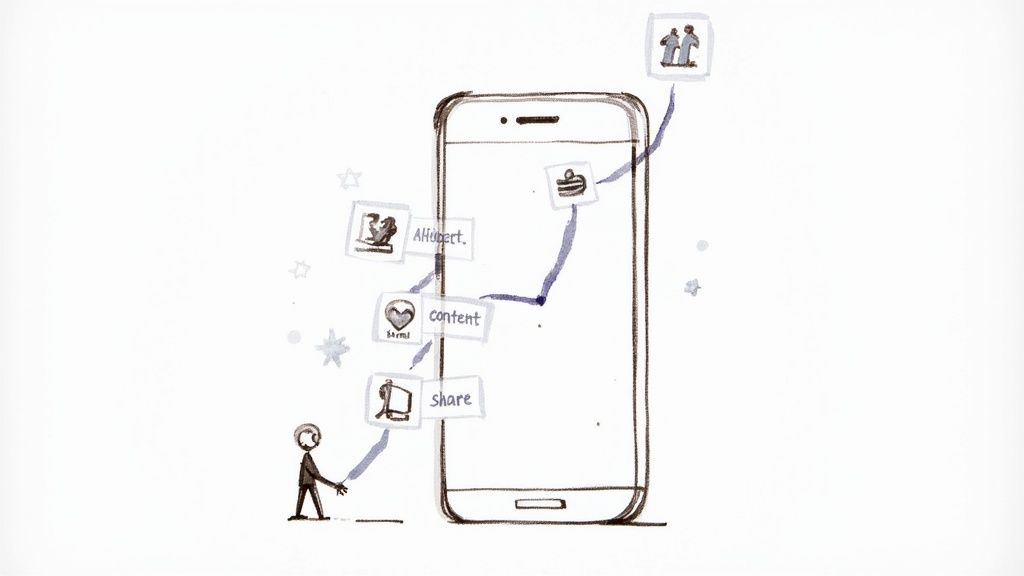
Let's be clear: social media isn't just a place to post your business hours. It's a living, breathing community where your ideal customers hang out every single day. When you learn how to advertise effectively here, you're not just buying ad space; you're becoming a part of their daily scroll, meeting them right where they're most engaged.
The numbers don't lie. Global ad spend on social platforms continues to climb, seeing a 10.9% increase year-over-year. But for a local business like yours, this stat is even more important: 54% of consumers say social media is the #1 way they discover local companies. That’s right—it beats even traditional search engines.
Pick Your Playground
The biggest mistake I see small businesses make is trying to be everywhere at once. It's a surefire path to burnout. Instead, get strategic. Figure out where your target audience actually spends their time and go all-in on one or two platforms.
-
Facebook & Instagram: These are visual-first platforms, making them a goldmine for businesses with a strong aesthetic—think cafes, retail boutiques, or home designers. The real magic, though, is in the ad targeting. You can get hyper-specific, targeting people based on their interests, recent life events, and online behaviors to build an audience that looks exactly like your ideal customer.
-
TikTok: If you think TikTok is just for dancing teenagers, you're missing out. Its algorithm is a powerhouse for organic reach, pushing compelling content to users it knows will be interested. The key here is authenticity. A raw, behind-the-scenes video showing how you make your product will almost always outperform a slick, polished corporate ad.
-
LinkedIn: For my fellow B2B folks, LinkedIn is your non-negotiable platform. It's the digital equivalent of the world's biggest industry conference. This is where consultants, agencies, and anyone selling to other businesses can establish themselves as an expert through thought leadership and professional insights.
Expert Tip: Don't just interrupt the feed—contribute to it. A funny, relatable TikTok from a local plumber is infinitely more memorable and shareable than a generic "call now" ad. Content that entertains, educates, or inspires will always win.
Tap Into Local Micro-Influencers
Forget about chasing celebrities with millions of followers. For a small business, a local micro-influencer can provide a far better return on your investment. We're talking about the people in your community with a dedicated and trusting following, usually between 1,000 and 20,000 people.
Think about that local food blogger who reviews every new restaurant in town, or the neighborhood mom who shares her favorite kid-friendly spots. Their followers see their posts not as paid ads, but as genuine recommendations from a friend. That authenticity is priceless.
Getting started is simpler than you think. A friendly direct message is often all it takes. You can offer them a free product, a complimentary service, or a modest fee for a few posts or an honest review. The cost is low, but the payoff can be huge—putting your business in front of a new, hyper-local audience that's already primed to listen.
This is an incredibly affordable way to build trust and drive real foot traffic. It pairs perfectly with video, too. You can learn more about how this strategy fits into a broader short-form video marketing plan.
Your Top Advertising Questions, Answered
Jumping into advertising often feels like you're trying to learn a completely new language. You know it’s a must for growing your business, but all the jargon, platforms, and strategies can feel pretty overwhelming. My goal here is to cut through the noise and give you straight, practical answers to the questions I hear most from small business owners.
Let's clear up some of the biggest hurdles right now.
How Much Should a Small Business Actually Spend on Ads?
This is the million-dollar question, isn't it? The truth is, there's no magic number that fits everyone. A common rule of thumb you'll hear is to set aside 5-10% of your total revenue for marketing and advertising. If you're in a big growth push or launching something new, you might even nudge that up to 12-15% to really make a splash.
But forget the percentages for a moment. The smartest way to start is to think small and prove the concept first.
You absolutely don't need to throw thousands of dollars at this from day one. Start with a daily budget you are genuinely comfortable with—even if it's just $20 a day for a simple Facebook ad campaign. The goal isn't to get rich overnight; it's to get data. You're simply testing your message, your images, and your audience on a small, manageable scale.
Your entire focus should be on one thing: Return on Ad Spend (ROAS). If you put in $100 and get $400 in sales back, you have a 4:1 ROAS. That’s a formula you can build on. Once you see that your ads are actually making you money, then you can confidently start to increase your spend.
What Are the Most Important Metrics to Watch?
It’s so easy to get lost in what I call "vanity metrics." These are the flashy numbers—impressions, page views, likes—that feel good to look at but don’t tell you if you're actually making money. To really know if your campaigns are working, you have to zero in on the metrics that directly affect your bank account.
Here are the three numbers that truly matter:
- Conversion Rate: This is simply the percentage of people who click your ad and then do the thing you want them to do (buy a product, fill out a form, book a call). A strong conversion rate tells you that your ad and your website are working together perfectly to convince people to act.
- Cost Per Acquisition (CPA): How much does it cost you, in ad spend, to get one new customer? You figure this out by dividing your total ad spend by the number of new customers you got. Knowing your CPA is the only way to know if your campaigns are truly profitable.
- Return on Ad Spend (ROAS): Like I mentioned above, this is the ultimate scoreboard. For every dollar you put into advertising, how many dollars do you get back out? A ROAS of 4:1 ($4 back for every $1 spent) is often seen as a solid benchmark, but it really depends on your industry and margins.
My Advice: Forget the noise. If you obsess over improving your Conversion Rate, CPA, and ROAS, you'll have an incredibly clear picture of how well your advertising is performing.
Should I Run My Own Ads or Hire Someone?
Ah, the classic time vs. money question. When you're just starting out, I’m a huge advocate for learning the ropes and running your own campaigns. There is truly no substitute for the gut feeling you get from seeing firsthand which messages and images connect with your customers.
Think of your first small ad budget as a tuition payment for your own marketing education. Start with an amount you can afford to lose and focus on what you're learning. This hands-on experience will make you a much smarter business owner, and a much better client if you decide to hire help down the road.
The time to bring in a freelancer or an agency is when you've already proven that advertising works for your business. Once your campaigns are bringing in a positive return and you're ready to grow beyond what you can handle yourself, an expert can help you scale. The best part? You'll be able to hand them a playbook of what's already working, which saves everyone time and money.
Ready to create stunning video ads without the complexity or cost? Veo3 AI empowers you to transform simple text prompts or images into professional-quality videos in minutes. Start creating for free and see how easy it is to bring your advertising ideas to life. Explore our powerful, all-in-one platform at https://veo3ai.io today.
Our Verdict
Learning how to advertise small business has never been more accessible thanks to today's AI-powered tools. We recommend starting with one of the beginner-friendly platforms mentioned in this guide, following the step-by-step process outlined above, and experimenting with different settings to find your preferred style. The investment of time to master this skill will pay off in consistently high-quality content.
Related Articles
Continue with more blog posts in the same locale.

Video Subtitle Remover: A Practical Step-by-Step Guide
Learn how to use a video subtitle remover the right way. Detect soft vs burned-in subtitles, extract tracks, and erase hardcoded captions
Read article
Comic Book Effect Made Easy with Veo3 AI Guide
Learn how to create a stunning comic book effect for images and videos with Veo3 AI. Prompts, halftone tips and export settings inside.
Read article
How to Make Short Videos on YouTube That Actually Get Views
Learn how to make short videos on YouTube with AI workflows, editing tips, and SEO tactics that drive real reach in 2026.
Read article