
Veo 4 vs Veo 3: Was ist neu in 2026
Vergleich Veo 4 und Veo 3
Emma Chen · 31 min read · Apr 13, 2026
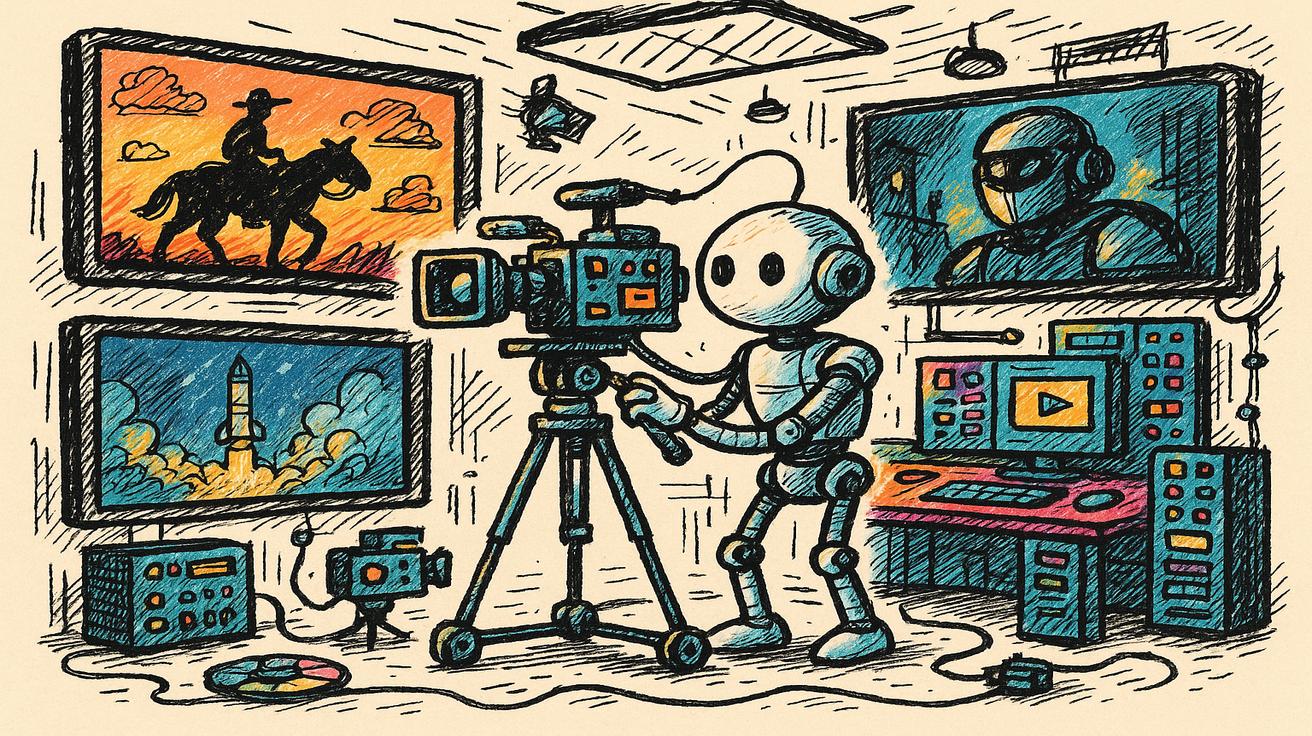
Veo 4 Release. Google has done it again. In April 2026, the tech giant officially released Veo 4, the most advanced AI video generation model in its lineup and possibly in the entire industry. Coming just months after Veo 3.1 was made free for all Google users, Veo 4 raises the bar dramatically with longer videos, storyboarding capabilities, superior character consistency, and multimodal input support.
If you've been following Google's AI video technology, you know that each new version represents a significant leap forward. But Veo 4 is not just an update, it's a full evolution. Let's examine in detail what's new in Veo 4, what capabilities it offers, how to access it, and what makes this model the best choice for content creators in 2026.
What is Veo 4?
Veo 4 is Google's latest AI video generation model, built on transformer architecture and integrated into the Google ecosystem. It is designed to create high-quality video content with up to 4K resolution, lengths of up to two minutes, and advanced understanding of physics, cinematography, and storytelling.
Unlike its predecessor Veo 3, which generated videos up to 8 seconds long, Veo 4 can create video clips up to 120 seconds long—15 times longer. This means you can now create complete short films, explainer videos, advertisements, and even pilot episodes for web series without needing to stitch individual segments together.
Key Features of Veo 4
1. Extended Video Length
- Veo 4 supports videos up to 120 seconds (2 minutes)
- Veo 3 was limited to 8 seconds
- Ideal for short films, explainer content, advertisements, and narrative storytelling
2. Character and Object Consistency
One of the biggest improvements in Veo 4 is character consistency. Early AI video models suffered from flickering and distortion—characters would change appearance, clothing, or facial features between frames. Veo 4 uses advanced object tracking techniques and character embeddings to preserve visual identity throughout the entire video clip.
This is particularly important for:
- Serial storytelling with recurring characters
- Brand mascots and mascots
- Educational content with specific mentors
- Corporate videos maintaining visual identity
3. Advanced Storyboarding Support
Veo 4 supports a storyboard format where creators can specify key frames or sketches to guide the action. This fundamentally changes the video creation process:
- Upload key frames: Upload up to 6 reference images to define scene composition, character poses, and environment setting
- Define transitions: Specify how one frame should smoothly transition to the next
- Automatic in-between generation: Veo 4 will generate the missing intermediate frames, providing smooth transitions that remain true to your vision
The storyboarding functionality works like taming the model: instead of full text-to-video generation, you provide visual anchors that Veo 4 adheres to.
4. Multimodal Inputs: Text + Image
Veo 4 is a multimodal model, meaning it can accept:
- Text prompts to describe a scene
- Images for style, composition, or specific objects
- Combinations of text and images for precise control
This means you can:
- Upload a photo of a location and ask Veo 4 to create a scene taking place there
- Use a character image as visual reference
- Create variations based on existing video by specifying text changes
5. Photorealistic Quality and Extended Resolution
Veo 4 generates video content with up to 4K resolution (3840×2160) at 30 or 60 frames per second. The new upscaler uses iterative improvement to preserve sharpness and avoid artifacts common in artificially upscaled video.
6. Advanced Physics and Cinematography Understanding
The model was trained on an extremely large dataset of high-quality videos, including feature films, documentaries, and professional advertisements. As a result, Veo 4 demonstrates:
- Plausible physics: Correct motion trajectories, gravity, collisions
- Cinematic transitions: Understanding of composition rules, rule of thirds, and cinematic camera movements
- Proper lighting: Natural shadows, reflections, and environmental lighting
- Consistent tempo: Maintaining constant action tempo without random slowdowns or speedups
7. Google Ecosystem Integration
Veo 4 works seamlessly with:
- Google Workspace: Create videos directly from Google Docs, Slides, or Drive
- Vertex AI: API for developers and enterprises
- YouTube: Direct publishing with optimized settings
- Chrome: Built-in access via browser without additional installations
8. Metadata Preservation and Query-Lock
Veo 4 uses a new Query-Lock technique to preserve alignment between text prompt and generated video over longer videos. It periodically "rereads" context to stay true to the original vision, preventing drift that often occurs in long AI generations.
How to Access Veo 4
For Google Users (Free)
- Sign in to your Google account (account must be older than 30 days)
- Go to video.google.com/veo4
- Enter a prompt: Describe the video you want to create
- Customize parameters: Resolution (720p, 1080p, 4K), length (up to 120 seconds), aspect ratio (16:9, 9:16, square)
- Generate and download: Receive video within 2-5 minutes depending on length and resolution
Free Limits (per user):
- Up to 3 generations per day
- Maximum 30 seconds per generation
- Resolution limited to 1080p
- Google watermark (small, bottom right)
- Prompts stored for 30 days
For Developers (Vertex AI API)
For API access:
- Registration: Enable Vertex AI API in Google Cloud Console
- API key: Create a service account key
- Use client library:
For Enterprise (Google Workspace Enterprise)
- Unlimited generations (fair use)
- Maximum 120 seconds per generation
- Resolution up to 4K without limitations
- No watermark
- Advanced storyboard options (up to 6 keyframes)
- Priority processing (3x faster)
- IAM integration for team access control
- Enhanced data security: Prompts and generated videos not used for retraining
Example Prompts for Veo 4
Example 1: Product Advertisement
Prompt: A cinematic 30-second commercial for a premium coffee brand. Open on a close-up of coffee beans roasting in a traditional drum roaster, steam rising. Cut to a barista pulling a perfect espresso shot, crema forming. Show a customer taking their first sip in a modern café, golden hour lighting. End with the product on a marble counter, tagline 'Crafted for Connoisseurs' appears elegantly. Shot on 35mm film, warm color grade, shallow depth of field.
Example 2: Educational Explanation
Prompt: A clear educational video explaining photosynthesis for high school students. Split-screen: left side shows a cross-section of a plant leaf with animated arrows showing sunlight entering. Right side shows molecular animation of CO2 and H2O molecules being converted into glucose and oxygen. Calm, professional voiceover explaining the process. Simple, clean graphics with labels. Duration: 90 seconds.
Example 3: Travel/Storytelling
Prompt: A 2-minute animated story about a paper airplane's journey from a bustling city to a peaceful countryside. First-person perspective from the airplane. Start: launched from a skyscraper office window, drifting between buildings. Middle: caught in a gust, flies over a park with children playing, narrowly avoids a rainstorm. Climax: soars above mountains with birds. Resolution: gently lands in a meadow where a child picks it up. Soft, dreamy animation style, Studio Ghibli-inspired aesthetics.
Frequently Asked Questions
Is Veo 4 completely free?
Yes, there's a free tier with limits (3 generations/day, 30 seconds max, 1080p, watermark). For full unrestricted access, a Google Workspace Enterprise subscription or API usage is required.
How does Veo 4 compare to hiring videographers?
Veo 4 excels for rapid prototyping, A/B testing marketing concepts, and low-budget projects. For high-end commercial productions, professional crews are still superior. However, for many use cases, Veo 4 achieves 85-90% of the quality at less than 5% of the cost.
Can I use Veo 4 videos for commercial projects?
Yes, according to Google's terms, you have commercial usage rights for videos you create via Veo 4. Enterprise plans offer enhanced privacy.
How do I get started with Veo 4 now?
Simply go to video.google.com/veo4 and sign in with your Google account. The free tier allows immediate experimentation.
What content restrictions exist for Veo 4?
Veo 4 uses Google's Safe Content policies, blocking adult content, excessive violence, copyright violations, propaganda, and non-consensual deepfakes. The model is more permissive than competitors for artistic and educational content.
Conclusion
Veo 4 is not just another version number; it's a turning point in AI-based video creation. The ability to generate long, consistent, cinematically impressive videos of up to 2 minutes duration with character consistency and plausible physics makes it a versatile tool for marketers, creators, educators, and entertainment professionals.
Deep integration with the Google ecosystem and generous free tier democratize video production, allowing individuals and small businesses to compete with corporate videographers. At the same time, advanced capabilities for enterprise users and comprehensive APIs make it viable for professional workflows.
With advanced prompt engineering skills and slight post-production, Veo 4 videos achieve 85-90% of the quality of professional shoots in terms of image and motion, for less than 5% of the cost.
As Google plans Veo 4.5 and Veo 5, one thing becomes clear: competition in video generation is heating up, but Veo 4 sets a new standard of length, consistency, and accessibility that will likely not be surpassed in the short term.
Are you ready to create cinematic 2-minute videos with just a few sentences of text? Veo 4 is ready. Just bring your story. Veo 4 Release. Google has done it again. In April 2026, the tech giant officially released Veo 4, the most advanced AI video generation model in its lineup and possibly in the entire industry. Coming just months after Veo 3.1 was made free for all Google users, Veo 4 raises the bar dramatically with longer videos, storyboarding capabilities, superior character consistency, and multimodal input support.
If you've been following Google's AI video technology, you know that each new version represents a significant leap forward. But Veo 4 is not just an update, it's a full evolution. Let's examine in detail what's new in Veo 4, what capabilities it offers, how to access it, and what makes this model the best choice for content creators in 2026.
What is Veo 4?
Veo 4 is Google's latest AI video generation model, built on transformer architecture and integrated into the Google ecosystem. It is designed to create high-quality video content with up to 4K resolution, lengths of up to two minutes, and advanced understanding of physics, cinematography, and storytelling.
Unlike its predecessor Veo 3, which generated videos up to 8 seconds long, Veo 4 can create video clips up to 120 seconds long—15 times longer. This means you can now create complete short films, explainer videos, advertisements, and even pilot episodes for web series without needing to stitch individual segments together.
Key Features of Veo 4
1. Extended Video Length
- Veo 4 supports videos up to 120 seconds (2 minutes)
- Veo 3 was limited to 8 seconds
- Ideal for short films, explainer content, advertisements, and narrative storytelling
2. Character and Object Consistency
One of the biggest improvements in Veo 4 is character consistency. Early AI video models suffered from flickering and distortion—characters would change appearance, clothing, or facial features between frames. Veo 4 uses advanced object tracking techniques and character embeddings to preserve visual identity throughout the entire video clip.
This is particularly important for:
- Serial storytelling with recurring characters
- Brand mascots and mascots
- Educational content with specific mentors
- Corporate videos maintaining visual identity
3. Advanced Storyboarding Support
Veo 4 supports a storyboard format where creators can specify key frames or sketches to guide the action. This fundamentally changes the video creation process:
- Upload key frames: Upload up to 6 reference images to define scene composition, character poses, and environment setting
- Define transitions: Specify how one frame should smoothly transition to the next
- Automatic in-between generation: Veo 4 will generate the missing intermediate frames, providing smooth transitions that remain true to your vision
The storyboarding functionality works like taming the model: instead of full text-to-video generation, you provide visual anchors that Veo 4 adheres to.
4. Multimodal Inputs: Text + Image
Veo 4 is a multimodal model, meaning it can accept:
- Text prompts to describe a scene
- Images for style, composition, or specific objects
- Combinations of text and images for precise control
This means you can:
- Upload a photo of a location and ask Veo 4 to create a scene taking place there
- Use a character image as visual reference
- Create variations based on existing video by specifying text changes
5. Photorealistic Quality and Extended Resolution
Veo 4 generates video content with up to 4K resolution (3840×2160) at 30 or 60 frames per second. The new upscaler uses iterative improvement to preserve sharpness and avoid artifacts common in artificially upscaled video.
6. Advanced Physics and Cinematography Understanding
The model was trained on an extremely large dataset of high-quality videos, including feature films, documentaries, and professional advertisements. As a result, Veo 4 demonstrates:
- Plausible physics: Correct motion trajectories, gravity, collisions
- Cinematic transitions: Understanding of composition rules, rule of thirds, and cinematic camera movements
- Proper lighting: Natural shadows, reflections, and environmental lighting
- Consistent tempo: Maintaining constant action tempo without random slowdowns or speedups
7. Google Ecosystem Integration
Veo 4 works seamlessly with:
- Google Workspace: Create videos directly from Google Docs, Slides, or Drive
- Vertex AI: API for developers and enterprises
- YouTube: Direct publishing with optimized settings
- Chrome: Built-in access via browser without additional installations
8. Metadata Preservation and Query-Lock
Veo 4 uses a new Query-Lock technique to preserve alignment between text prompt and generated video over longer videos. It periodically "rereads" context to stay true to the original vision, preventing drift that often occurs in long AI generations.
How to Access Veo 4
For Google Users (Free)
- Sign in to your Google account (account must be older than 30 days)
- Go to video.google.com/veo4
- Enter a prompt: Describe the video you want to create
- Customize parameters: Resolution (720p, 1080p, 4K), length (up to 120 seconds), aspect ratio (16:9, 9:16, square)
- Generate and download: Receive video within 2-5 minutes depending on length and resolution
Free Limits (per user):
- Up to 3 generations per day
- Maximum 30 seconds per generation
- Resolution limited to 1080p
- Google watermark (small, bottom right)
- Prompts stored for 30 days
For Developers (Vertex AI API)
For API access:
- Registration: Enable Vertex AI API in Google Cloud Console
- API key: Create a service account key
- Use client library:
For Enterprise (Google Workspace Enterprise)
- Unlimited generations (fair use)
- Maximum 120 seconds per generation
- Resolution up to 4K without limitations
- No watermark
- Advanced storyboard options (up to 6 keyframes)
- Priority processing (3x faster)
- IAM integration for team access control
- Enhanced data security: Prompts and generated videos not used for retraining
Example Prompts for Veo 4
Example 1: Product Advertisement
Prompt: A cinematic 30-second commercial for a premium coffee brand. Open on a close-up of coffee beans roasting in a traditional drum roaster, steam rising. Cut to a barista pulling a perfect espresso shot, crema forming. Show a customer taking their first sip in a modern café, golden hour lighting. End with the product on a marble counter, tagline 'Crafted for Connoisseurs' appears elegantly. Shot on 35mm film, warm color grade, shallow depth of field.
Example 2: Educational Explanation
Prompt: A clear educational video explaining photosynthesis for high school students. Split-screen: left side shows a cross-section of a plant leaf with animated arrows showing sunlight entering. Right side shows molecular animation of CO2 and H2O molecules being converted into glucose and oxygen. Calm, professional voiceover explaining the process. Simple, clean graphics with labels. Duration: 90 seconds.
Example 3: Travel/Storytelling
Prompt: A 2-minute animated story about a paper airplane's journey from a bustling city to a peaceful countryside. First-person perspective from the airplane. Start: launched from a skyscraper office window, drifting between buildings. Middle: caught in a gust, flies over a park with children playing, narrowly avoids a rainstorm. Climax: soars above mountains with birds. Resolution: gently lands in a meadow where a child picks it up. Soft, dreamy animation style, Studio Ghibli-inspired aesthetics.
Frequently Asked Questions
Is Veo 4 completely free?
Yes, there's a free tier with limits (3 generations/day, 30 seconds max, 1080p, watermark). For full unrestricted access, a Google Workspace Enterprise subscription or API usage is required.
How does Veo 4 compare to hiring videographers?
Veo 4 excels for rapid prototyping, A/B testing marketing concepts, and low-budget projects. For high-end commercial productions, professional crews are still superior. However, for many use cases, Veo 4 achieves 85-90% of the quality at less than 5% of the cost.
Can I use Veo 4 videos for commercial projects?
Yes, according to Google's terms, you have commercial usage rights for videos you create via Veo 4. Enterprise plans offer enhanced privacy.
How do I get started with Veo 4 now?
Simply go to video.google.com/veo4 and sign in with your Google account. The free tier allows immediate experimentation.
What content restrictions exist for Veo 4?
Veo 4 uses Google's Safe Content policies, blocking adult content, excessive violence, copyright violations, propaganda, and non-consensual deepfakes. The model is more permissive than competitors for artistic and educational content.
Conclusion
Veo 4 is not just another version number; it's a turning point in AI-based video creation. The ability to generate long, consistent, cinematically impressive videos of up to 2 minutes duration with character consistency and plausible physics makes it a versatile tool for marketers, creators, educators, and entertainment professionals.
Deep integration with the Google ecosystem and generous free tier democratize video production, allowing individuals and small businesses to compete with corporate videographers. At the same time, advanced capabilities for enterprise users and comprehensive APIs make it viable for professional workflows.
With advanced prompt engineering skills and slight post-production, Veo 4 videos achieve 85-90% of the quality of professional shoots in terms of image and motion, for less than 5% of the cost.
As Google plans Veo 4.5 and Veo 5, one thing becomes clear: competition in video generation is heating up, but Veo 4 sets a new standard of length, consistency, and accessibility that will likely not be surpassed in the short term.
Are you ready to create cinematic 2-minute videos with just a few sentences of text? Veo 4 is ready. Just bring your story. Veo 4 Release. Google has done it again. In April 2026, the tech giant officially released Veo 4, the most advanced AI video generation model in its lineup and possibly in the entire industry. Coming just months after Veo 3.1 was made free for all Google users, Veo 4 raises the bar dramatically with longer videos, storyboarding capabilities, superior character consistency, and multimodal input support.
If you've been following Google's AI video technology, you know that each new version represents a significant leap forward. But Veo 4 is not just an update, it's a full evolution. Let's examine in detail what's new in Veo 4, what capabilities it offers, how to access it, and what makes this model the best choice for content creators in 2026.
What is Veo 4?
Veo 4 is Google's latest AI video generation model, built on transformer architecture and integrated into the Google ecosystem. It is designed to create high-quality video content with up to 4K resolution, lengths of up to two minutes, and advanced understanding of physics, cinematography, and storytelling.
Unlike its predecessor Veo 3, which generated videos up to 8 seconds long, Veo 4 can create video clips up to 120 seconds long—15 times longer. This means you can now create complete short films, explainer videos, advertisements, and even pilot episodes for web series without needing to stitch individual segments together.
Key Features of Veo 4
1. Extended Video Length
- Veo 4 supports videos up to 120 seconds (2 minutes)
- Veo 3 was limited to 8 seconds
- Ideal for short films, explainer content, advertisements, and narrative storytelling
2. Character and Object Consistency
One of the biggest improvements in Veo 4 is character consistency. Early AI video models suffered from flickering and distortion—characters would change appearance, clothing, or facial features between frames. Veo 4 uses advanced object tracking techniques and character embeddings to preserve visual identity throughout the entire video clip.
This is particularly important for:
- Serial storytelling with recurring characters
- Brand mascots and mascots
- Educational content with specific mentors
- Corporate videos maintaining visual identity
3. Advanced Storyboarding Support
Veo 4 supports a storyboard format where creators can specify key frames or sketches to guide the action. This fundamentally changes the video creation process:
- Upload key frames: Upload up to 6 reference images to define scene composition, character poses, and environment setting
- Define transitions: Specify how one frame should smoothly transition to the next
- Automatic in-between generation: Veo 4 will generate the missing intermediate frames, providing smooth transitions that remain true to your vision
The storyboarding functionality works like taming the model: instead of full text-to-video generation, you provide visual anchors that Veo 4 adheres to.
4. Multimodal Inputs: Text + Image
Veo 4 is a multimodal model, meaning it can accept:
- Text prompts to describe a scene
- Images for style, composition, or specific objects
- Combinations of text and images for precise control
This means you can:
- Upload a photo of a location and ask Veo 4 to create a scene taking place there
- Use a character image as visual reference
- Create variations based on existing video by specifying text changes
5. Photorealistic Quality and Extended Resolution
Veo 4 generates video content with up to 4K resolution (3840×2160) at 30 or 60 frames per second. The new upscaler uses iterative improvement to preserve sharpness and avoid artifacts common in artificially upscaled video.
6. Advanced Physics and Cinematography Understanding
The model was trained on an extremely large dataset of high-quality videos, including feature films, documentaries, and professional advertisements. As a result, Veo 4 demonstrates:
- Plausible physics: Correct motion trajectories, gravity, collisions
- Cinematic transitions: Understanding of composition rules, rule of thirds, and cinematic camera movements
- Proper lighting: Natural shadows, reflections, and environmental lighting
- Consistent tempo: Maintaining constant action tempo without random slowdowns or speedups
7. Google Ecosystem Integration
Veo 4 works seamlessly with:
- Google Workspace: Create videos directly from Google Docs, Slides, or Drive
- Vertex AI: API for developers and enterprises
- YouTube: Direct publishing with optimized settings
- Chrome: Built-in access via browser without additional installations
8. Metadata Preservation and Query-Lock
Veo 4 uses a new Query-Lock technique to preserve alignment between text prompt and generated video over longer videos. It periodically "rereads" context to stay true to the original vision, preventing drift that often occurs in long AI generations.
How to Access Veo 4
For Google Users (Free)
- Sign in to your Google account (account must be older than 30 days)
- Go to video.google.com/veo4
- Enter a prompt: Describe the video you want to create
- Customize parameters: Resolution (720p, 1080p, 4K), length (up to 120 seconds), aspect ratio (16:9, 9:16, square)
- Generate and download: Receive video within 2-5 minutes depending on length and resolution
Free Limits (per user):
- Up to 3 generations per day
- Maximum 30 seconds per generation
- Resolution limited to 1080p
- Google watermark (small, bottom right)
- Prompts stored for 30 days
For Developers (Vertex AI API)
For API access:
- Registration: Enable Vertex AI API in Google Cloud Console
- API key: Create a service account key
- Use client library:
For Enterprise (Google Workspace Enterprise)
- Unlimited generations (fair use)
- Maximum 120 seconds per generation
- Resolution up to 4K without limitations
- No watermark
- Advanced storyboard options (up to 6 keyframes)
- Priority processing (3x faster)
- IAM integration for team access control
- Enhanced data security: Prompts and generated videos not used for retraining
Example Prompts for Veo 4
Example 1: Product Advertisement
Prompt: A cinematic 30-second commercial for a premium coffee brand. Open on a close-up of coffee beans roasting in a traditional drum roaster, steam rising. Cut to a barista pulling a perfect espresso shot, crema forming. Show a customer taking their first sip in a modern café, golden hour lighting. End with the product on a marble counter, tagline 'Crafted for Connoisseurs' appears elegantly. Shot on 35mm film, warm color grade, shallow depth of field.
Example 2: Educational Explanation
Prompt: A clear educational video explaining photosynthesis for high school students. Split-screen: left side shows a cross-section of a plant leaf with animated arrows showing sunlight entering. Right side shows molecular animation of CO2 and H2O molecules being converted into glucose and oxygen. Calm, professional voiceover explaining the process. Simple, clean graphics with labels. Duration: 90 seconds.
Example 3: Travel/Storytelling
Prompt: A 2-minute animated story about a paper airplane's journey from a bustling city to a peaceful countryside. First-person perspective from the airplane. Start: launched from a skyscraper office window, drifting between buildings. Middle: caught in a gust, flies over a park with children playing, narrowly avoids a rainstorm. Climax: soars above mountains with birds. Resolution: gently lands in a meadow where a child picks it up. Soft, dreamy animation style, Studio Ghibli-inspired aesthetics.
Frequently Asked Questions
Is Veo 4 completely free?
Yes, there's a free tier with limits (3 generations/day, 30 seconds max, 1080p, watermark). For full unrestricted access, a Google Workspace Enterprise subscription or API usage is required.
How does Veo 4 compare to hiring videographers?
Veo 4 excels for rapid prototyping, A/B testing marketing concepts, and low-budget projects. For high-end commercial productions, professional crews are still superior. However, for many use cases, Veo 4 achieves 85-90% of the quality at less than 5% of the cost.
Can I use Veo 4 videos for commercial projects?
Yes, according to Google's terms, you have commercial usage rights for videos you create via Veo 4. Enterprise plans offer enhanced privacy.
How do I get started with Veo 4 now?
Simply go to video.google.com/veo4 and sign in with your Google account. The free tier allows immediate experimentation.
What content restrictions exist for Veo 4?
Veo 4 uses Google's Safe Content policies, blocking adult content, excessive violence, copyright violations, propaganda, and non-consensual deepfakes. The model is more permissive than competitors for artistic and educational content.
Conclusion
Veo 4 is not just another version number; it's a turning point in AI-based video creation. The ability to generate long, consistent, cinematically impressive videos of up to 2 minutes duration with character consistency and plausible physics makes it a versatile tool for marketers, creators, educators, and entertainment professionals.
Deep integration with the Google ecosystem and generous free tier democratize video production, allowing individuals and small businesses to compete with corporate videographers. At the same time, advanced capabilities for enterprise users and comprehensive APIs make it viable for professional workflows.
With advanced prompt engineering skills and slight post-production, Veo 4 videos achieve 85-90% of the quality of professional shoots in terms of image and motion, for less than 5% of the cost.
As Google plans Veo 4.5 and Veo 5, one thing becomes clear: competition in video generation is heating up, but Veo 4 sets a new standard of length, consistency, and accessibility that will likely not be surpassed in the short term.
Are you ready to create cinematic 2-minute videos with just a few sentences of text? Veo 4 is ready. Just bring your story. Veo 4 Release. Google has done it again. In April 2026, the tech giant officially released Veo 4, the most advanced AI video generation model in its lineup and possibly in the entire industry. Coming just months after Veo 3.1 was made free for all Google users, Veo 4 raises the bar dramatically with longer videos, storyboarding capabilities, superior character consistency, and multimodal input support.
If you've been following Google's AI video technology, you know that each new version represents a significant leap forward. But Veo 4 is not just an update, it's a full evolution. Let's examine in detail what's new in Veo 4, what capabilities it offers, how to access it, and what makes this model the best choice for content creators in 2026.
What is Veo 4?
Veo 4 is Google's latest AI video generation model, built on transformer architecture and integrated into the Google ecosystem. It is designed to create high-quality video content with up to 4K resolution, lengths of up to two minutes, and advanced understanding of physics, cinematography, and storytelling.
Unlike its predecessor Veo 3, which generated videos up to 8 seconds long, Veo 4 can create video clips up to 120 seconds long—15 times longer. This means you can now create complete short films, explainer videos, advertisements, and even pilot episodes for web series without needing to stitch individual segments together.
Key Features of Veo 4
1. Extended Video Length
- Veo 4 supports videos up to 120 seconds (2 minutes)
- Veo 3 was limited to 8 seconds
- Ideal for short films, explainer content, advertisements, and narrative storytelling
2. Character and Object Consistency
One of the biggest improvements in Veo 4 is character consistency. Early AI video models suffered from flickering and distortion—characters would change appearance, clothing, or facial features between frames. Veo 4 uses advanced object tracking techniques and character embeddings to preserve visual identity throughout the entire video clip.
This is particularly important for:
- Serial storytelling with recurring characters
- Brand mascots and mascots
- Educational content with specific mentors
- Corporate videos maintaining visual identity
3. Advanced Storyboarding Support
Veo 4 supports a storyboard format where creators can specify key frames or sketches to guide the action. This fundamentally changes the video creation process:
- Upload key frames: Upload up to 6 reference images to define scene composition, character poses, and environment setting
- Define transitions: Specify how one frame should smoothly transition to the next
- Automatic in-between generation: Veo 4 will generate the missing intermediate frames, providing smooth transitions that remain true to your vision
The storyboarding functionality works like taming the model: instead of full text-to-video generation, you provide visual anchors that Veo 4 adheres to.
4. Multimodal Inputs: Text + Image
Veo 4 is a multimodal model, meaning it can accept:
- Text prompts to describe a scene
- Images for style, composition, or specific objects
- Combinations of text and images for precise control
This means you can:
- Upload a photo of a location and ask Veo 4 to create a scene taking place there
- Use a character image as visual reference
- Create variations based on existing video by specifying text changes
5. Photorealistic Quality and Extended Resolution
Veo 4 generates video content with up to 4K resolution (3840×2160) at 30 or 60 frames per second. The new upscaler uses iterative improvement to preserve sharpness and avoid artifacts common in artificially upscaled video.
6. Advanced Physics and Cinematography Understanding
The model was trained on an extremely large dataset of high-quality videos, including feature films, documentaries, and professional advertisements. As a result, Veo 4 demonstrates:
- Plausible physics: Correct motion trajectories, gravity, collisions
- Cinematic transitions: Understanding of composition rules, rule of thirds, and cinematic camera movements
- Proper lighting: Natural shadows, reflections, and environmental lighting
- Consistent tempo: Maintaining constant action tempo without random slowdowns or speedups
7. Google Ecosystem Integration
Veo 4 works seamlessly with:
- Google Workspace: Create videos directly from Google Docs, Slides, or Drive
- Vertex AI: API for developers and enterprises
- YouTube: Direct publishing with optimized settings
- Chrome: Built-in access via browser without additional installations
8. Metadata Preservation and Query-Lock
Veo 4 uses a new Query-Lock technique to preserve alignment between text prompt and generated video over longer videos. It periodically "rereads" context to stay true to the original vision, preventing drift that often occurs in long AI generations.
How to Access Veo 4
For Google Users (Free)
- Sign in to your Google account (account must be older than 30 days)
- Go to video.google.com/veo4
- Enter a prompt: Describe the video you want to create
- Customize parameters: Resolution (720p, 1080p, 4K), length (up to 120 seconds), aspect ratio (16:9, 9:16, square)
- Generate and download: Receive video within 2-5 minutes depending on length and resolution
Free Limits (per user):
- Up to 3 generations per day
- Maximum 30 seconds per generation
- Resolution limited to 1080p
- Google watermark (small, bottom right)
- Prompts stored for 30 days
For Developers (Vertex AI API)
For API access:
- Registration: Enable Vertex AI API in Google Cloud Console
- API key: Create a service account key
- Use client library:
For Enterprise (Google Workspace Enterprise)
- Unlimited generations (fair use)
- Maximum 120 seconds per generation
- Resolution up to 4K without limitations
- No watermark
- Advanced storyboard options (up to 6 keyframes)
- Priority processing (3x faster)
- IAM integration for team access control
- Enhanced data security: Prompts and generated videos not used for retraining
Example Prompts for Veo 4
Example 1: Product Advertisement
Prompt: A cinematic 30-second commercial for a premium coffee brand. Open on a close-up of coffee beans roasting in a traditional drum roaster, steam rising. Cut to a barista pulling a perfect espresso shot, crema forming. Show a customer taking their first sip in a modern café, golden hour lighting. End with the product on a marble counter, tagline 'Crafted for Connoisseurs' appears elegantly. Shot on 35mm film, warm color grade, shallow depth of field.
Example 2: Educational Explanation
Prompt: A clear educational video explaining photosynthesis for high school students. Split-screen: left side shows a cross-section of a plant leaf with animated arrows showing sunlight entering. Right side shows molecular animation of CO2 and H2O molecules being converted into glucose and oxygen. Calm, professional voiceover explaining the process. Simple, clean graphics with labels. Duration: 90 seconds.
Example 3: Travel/Storytelling
Prompt: A 2-minute animated story about a paper airplane's journey from a bustling city to a peaceful countryside. First-person perspective from the airplane. Start: launched from a skyscraper office window, drifting between buildings. Middle: caught in a gust, flies over a park with children playing, narrowly avoids a rainstorm. Climax: soars above mountains with birds. Resolution: gently lands in a meadow where a child picks it up. Soft, dreamy animation style, Studio Ghibli-inspired aesthetics.
Frequently Asked Questions
Is Veo 4 completely free?
Yes, there's a free tier with limits (3 generations/day, 30 seconds max, 1080p, watermark). For full unrestricted access, a Google Workspace Enterprise subscription or API usage is required.
How does Veo 4 compare to hiring videographers?
Veo 4 excels for rapid prototyping, A/B testing marketing concepts, and low-budget projects. For high-end commercial productions, professional crews are still superior. However, for many use cases, Veo 4 achieves 85-90% of the quality at less than 5% of the cost.
Can I use Veo 4 videos for commercial projects?
Yes, according to Google's terms, you have commercial usage rights for videos you create via Veo 4. Enterprise plans offer enhanced privacy.
How do I get started with Veo 4 now?
Simply go to video.google.com/veo4 and sign in with your Google account. The free tier allows immediate experimentation.
What content restrictions exist for Veo 4?
Veo 4 uses Google's Safe Content policies, blocking adult content, excessive violence, copyright violations, propaganda, and non-consensual deepfakes. The model is more permissive than competitors for artistic and educational content.
Conclusion
Veo 4 is not just another version number; it's a turning point in AI-based video creation. The ability to generate long, consistent, cinematically impressive videos of up to 2 minutes duration with character consistency and plausible physics makes it a versatile tool for marketers, creators, educators, and entertainment professionals.
Deep integration with the Google ecosystem and generous free tier democratize video production, allowing individuals and small businesses to compete with corporate videographers. At the same time, advanced capabilities for enterprise users and comprehensive APIs make it viable for professional workflows.
With advanced prompt engineering skills and slight post-production, Veo 4 videos achieve 85-90% of the quality of professional shoots in terms of image and motion, for less than 5% of the cost.
As Google plans Veo 4.5 and Veo 5, one thing becomes clear: competition in video generation is heating up, but Veo 4 sets a new standard of length, consistency, and accessibility that will likely not be surpassed in the short term.
Are you ready to create cinematic 2-minute videos with just a few sentences of text? Veo 4 is ready. Just bring your story.
Related Articles
Continue with more blog posts in the same locale.
Sportliche Highlight-Videos mit Veo 3 KI erstellen (2026)
Beeindruckende Sport-Highlight-Videos mit Veo 3 KI erstellen. Dynamische Actionaufnahmen, Zeitlupensequenzen und dramatische Wiederholungen per KI-Prompt generieren.
Read article
Kurzfilm mit Veo 3 KI drehen – Anleitung 2026
Professionelle Kurzfilme mit Veo 3 KI erstellen: Schritt-für-Schritt-Anleitung mit Prompts, Workflow-Tipps und Filmtechniken.
Read article
So erstellen Sie Dokumentarvideos mit Veo 3 AI (Leitfaden 2026)
Erstelle überzeugende Dokumentarfilme mit Veo 3 AI. Lerne Prompting-Techniken, Erzählstrukturen, realistische Footage-Generierung und Tipps zur Nachbearbeitung.
Read article