
AI Marketing Jobs: Your 2026 Guide to Roles and Salaries
Explore the top AI marketing jobs in 2026. This guide covers roles, required skills, salary ranges, and how to transition into this fast-growing field.
Veo3 AI · 16 min read · Jun 19, 2026

AI competence now changes pay, not just workflows. In a 2026 analysis of nearly 7,600 marketing roles, jobs that mentioned AI paid 20.26% more on average, and the premium for general marketing roles reached 32.19% according to Reboot Online's AI in marketing analysis. That's the cleanest signal in the market right now. Employers aren't treating AI as a nice-to-have line on a resume anymore. They're pricing it into hiring.
That shift matters because most conversations about AI marketing jobs are still stuck on tools. The primary change is in job design. Teams are hiring fewer people to do repetitive execution and more people who can direct systems, judge outputs, connect data, and ship campaigns without losing brand control.
I've seen the strongest candidates win when they stop presenting themselves as “someone who uses ChatGPT” and start showing how they improve workflow quality, campaign speed, segmentation logic, reporting clarity, or creative throughput. That's what gets attention in interviews now.
The New Marketing Landscape Redefined by AI
Marketing has become a labor transition story, not just a productivity story. An ADWEEK report citing Anthropic's occupational exposure ranking placed marketing specialists fifth among 800 occupations most exposed to AI displacement, and noted that 65% of tasks performed by marketing professionals are eventually replaceable with AI operations according to ADWEEK's coverage of AI exposure in marketing work.
That sounds alarming if you think in job titles. It makes more sense if you think in tasks.
Most marketing teams still need demand generation, content strategy, lifecycle campaigns, reporting, paid media management, and brand stewardship. What's changing is who handles the repetitive pieces. First drafts, pattern spotting, basic segmentation, routine reporting, and standard optimizations are increasingly handled by AI-supported workflows. The marketer's role shifts upward toward judgment, orchestration, and accountability.

What the role shift looks like in practice
A content marketer used to be judged on volume and consistency. Now that same person may be judged on whether they can build a content system that turns one campaign brief into email variants, landing page drafts, ad hooks, repurposed social assets, and a measurement plan.
A paid media manager used to spend more time in manual testing and reporting. Now the stronger operator is the one who knows how to structure inputs, evaluate model suggestions, identify false positives, and decide when automation is helping versus hiding weak strategy.
Practical rule: If a task is repetitive, rules-based, and easy to template, assume employers expect AI assistance. If a task requires trade-off decisions, brand sensitivity, or cross-functional alignment, that's where your value rises.
What employers actually want now
The market doesn't need more marketers who can produce machine-generated content on command. It needs marketers who can do three harder things:
- Direct systems: Build workflows that combine prompts, approvals, analytics, and distribution.
- Interpret output: Spot weak reasoning, generic copy, compliance risk, and bad creative fits.
- Tie work to outcomes: Show why the automation improved campaign quality, speed, targeting, or learning.
That's why AI marketing jobs increasingly favor people who operate like strategic leads even when their title looks tactical. The strongest candidates aren't competing with AI. They're managing it.
Mapping the Most Common AI Marketing Jobs
Job title terminology is inconsistent right now. Different companies use different labels for similar work. One firm posts for an AI Marketing Specialist. Another wants a Growth Automation Manager. A third wants a Content Strategist with AI workflow experience. Underneath the naming differences, the work usually falls into a few repeatable categories.
The salary progression is clear in CXL's benchmarks. AI Marketing Specialist roles range from $55K–$100K, Senior AI Marketers from $150K–$260K+, and Director or Head of AI in Marketing roles can reach $230K–$600K+, based on CXL's AI in marketing career guide.
Common role patterns
| Role Title | Core Responsibilities | Typical Salary Range (USD) |
|---|---|---|
| AI Marketing Specialist | Uses AI tools across content, research, campaign support, testing, and workflow execution | $55K–$100K |
| Senior AI Marketer | Owns strategy, experimentation, channel integration, process design, and performance analysis | $150K–$260K+ |
| Director or Head of AI in Marketing | Sets AI adoption strategy, governance, team workflows, vendor choices, and operating standards | $230K–$600K+ |
That table gives the formal salary ladder, but most hiring managers also recruit for hybrid versions of these roles. These are the ones I see most often.
AI marketing manager
This person usually sits between channel teams and operations. They identify manual work, redesign workflows, test AI-supported execution, and standardize what gets adopted across the department.
A normal day might include reviewing campaign briefs, improving a prompt library, setting up approval steps for generated content, and working with RevOps or analytics on cleaner campaign data. Mid-sized SaaS firms and enterprise teams hire this role when AI use has become broad enough to create inconsistency.
Growth data analyst with AI fluency
This is one of the highest-value combinations in the current market. The work centers on interpreting campaign performance, building audience logic, identifying trends, and turning messy data into decisions.
These candidates stand out when they can explain not just dashboards, but the action layer. What changed because of the insight? Which audience was redefined? Which creative angle got retired? Which sequence got rebuilt?
Creative AI specialist
This role is often misunderstood. It's not “person who makes AI art.” It's a marketer who can translate campaign strategy into scalable creative concepts across formats, then keep quality high as output volume rises.
For portfolio work, this often includes motion tests, ad concepting, variant generation, and rough campaign visualization. If you want a practical example of where this is heading, it helps to study how marketers are already using generative video in campaign workflows through guides like how to create marketing videos.
Hiring managers rarely care whether your title was exactly the same as their posting. They care whether you've already solved a similar problem.
ML product marketer and automation-focused roles
At more technical companies, marketing roles are moving closer to product, data, and lifecycle systems. You may see titles tied to AI search, automation, lifecycle orchestration, or experimentation.
These jobs favor candidates who can do the following well:
- Translate technical capability: Explain an AI product or feature in business terms.
- Run structured tests: Compare messages, offers, audiences, and onboarding flows.
- Manage handoffs: Work across engineering, analytics, sales, and creative without slowing execution.
If you're trying to pick a lane, don't start with the title. Start with the work you want to own every week.
The High-Value Skills and Tools That Get You Hired
Most candidates overinvest in prompt engineering and underinvest in system thinking. That's a mistake.
The market already assumes you can use ChatGPT, Claude, Gemini, or similar tools at a basic level. That's table stakes now. The stronger differentiator is whether you can connect AI output to segmentation, personalization, experimentation, and reporting.
William & Mary describes AI marketing strategists as people who bridge marketing and technology, with value stemming from connecting customer data, segmentation logic, and automated decisioning into a reliable pipeline in its overview of how AI is shaping digital marketing roles. That's exactly where hiring gets more selective.
Table stakes versus real differentiators

The easiest way to evaluate your own readiness is to separate common skills from scarce ones.
Table stakes
- Basic prompt writing
- AI-assisted drafting
- Summarizing research
- Repurposing content formats
- Familiarity with common AI interfaces
Differentiators
- Building segmentation logic from customer signals
- Designing AI-assisted workflows with approvals and QA
- Running experiments that change budget or messaging decisions
- Turning model outputs into reporting that executives can trust
- Protecting brand voice and compliance under faster production cycles
The tool stack employers care about
Specific tools change fast, so don't anchor your value to one interface. Anchor it to categories and use cases.
- Generative text tools: Useful for ideation, drafting, clustering feedback, and producing variants.
- Analytics tools: Essential for deciding whether generated work improves campaign quality.
- Automation platforms: Where AI becomes operational instead of experimental.
- CRM and lifecycle systems: The place where personalization either works or falls apart.
- Creative generation tools: Increasingly relevant for storyboards, ad concepts, and motion drafts.
If you want a broad view of the creative side of the stack, this roundup of best AI tools for content creators is useful for seeing how different categories support different parts of the workflow.
What gets noticed in hiring
Candidates get interviews for tool familiarity. They get hired for judgment.
The best interview answer in this market is not “I used an AI tool.” It's “I redesigned a workflow, reduced manual work, improved consistency, and kept the team in control of quality.”
That means your examples should sound like this:
- Workflow ownership: You built a campaign production process with drafting, review, and revision steps.
- Decision quality: You caught weak outputs before they reached customers and explained why.
- Business connection: You linked AI use to segmentation, testing, customer experience, or reporting clarity.
The candidate who treats AI like a faster keyboard blends into the pack. The candidate who treats it like an operating layer stands out.
Understanding Salary Expectations and Market Demand
AI marketing pay has split into two tiers. Employers pay standard marketing salaries for candidates who can prompt a tool. They pay more for candidates who can redesign how work gets produced, reviewed, tested, and shipped.
That distinction matters more than title inflation.

Why some roles command a premium
Hiring managers are buying output capacity, but they are also buying risk control. A marketer who can cut production time in half and keep brand, legal, and performance standards intact is more valuable than someone who only produces more assets.
I've hired for this difference. The stronger candidates usually show evidence that they can run a bigger slice of the funnel with the same headcount. They can brief faster, generate first drafts, structure testing, catch weak claims, and keep reporting clean enough for decisions. That wider scope is what pushes compensation up.
The flip side is real too. Some companies now expect one person to cover what used to be shared across content, operations, and analytics. Higher pay can come with broader ownership, less training, and tighter performance scrutiny. Candidates should read that trade-off clearly before they accept a title that sounds advanced but is really three jobs compressed into one.
What demand looks like right now
Demand is strongest for marketers who can connect AI to revenue, retention, or production efficiency. Roles tied to pipeline generation, lifecycle performance, paid media testing, content operations, and marketing ops tend to stay open because the business case is easier to defend.
Pure execution roles are under more pressure. If a job mostly involves drafting basic copy, resizing assets, or summarizing notes, expect heavier competition and weaker salary growth. If a job includes process design, QA, experimentation, or cross-functional coordination, expect better long-term upside.
That is why candidates should evaluate job descriptions like operating documents, not branding copy.
Look for signs of real authority: ownership of experimentation, responsibility for reporting, collaboration with sales or product, and language about workflow improvement. A posting that asks you to use AI for content assistance is different from one that expects you to improve campaign throughput across channels. If you want a practical benchmark for how teams frame production efficiency, this guide on scaling content creation with AI workflows is useful context.
How to judge salary ranges intelligently
Use salary ranges as one input, not the whole decision.
A lower base can still be the better role if it gives you direct ownership of systems, testing, and measurable business results you can use in your next interview. A higher base can be a poor bet if the company has no review process, no clean data, and no clarity on what success looks like. In AI marketing, messy environments often burn people out fast because the team expects speed without governance.
Location still affects compensation, but hiring language often reveals more than geography alone. If you're comparing regional markets with remote openings, it helps to explore Singapore digital marketing roles and study how employers describe scope, tooling, and strategic ownership.
What to say when salary comes up
Frame your value around business impact and operating range.
Good candidates say, “I improved campaign throughput while maintaining review quality,” or “I built a testing workflow that gave the team more variants without creating reporting noise.” That signals maturity. It also gives the employer a reason to place you above candidates who only list tools.
Specificity wins here. Name the process you improved, the team friction you removed, and the metric you influenced. That is usually what separates market-rate offers from stronger ones.
Your Roadmap for Transitioning into AI Marketing
The hardest truth in this market is that entry-level work is under pressure first. Independent reporting on Stanford research found that early-career workers aged 22 to 25 in sales and marketing saw roughly a 20% net loss in headcount after ChatGPT's release, as covered by Social Media Examiner's reporting on AI and junior marketing roles.
That means you can't rely on the old path of doing repetitive execution for a year or two and gradually earning more strategic responsibility. You need proof of judgment earlier.

Build a portfolio around systems, not samples
A weak portfolio shows outputs. A strong portfolio shows how you think.
Don't upload five random AI-generated ads and call it a strategy portfolio. Build compact project cases that explain the business problem, your workflow, your decisions, your QA process, and what you'd improve next.
Three portfolio projects are enough if they're done well:
-
Lifecycle workflow project
Create a re-engagement campaign for a fictional or real brand. Show audience segments, email logic, message variants, review rules, and the way you'd monitor quality. -
Search and content operations project
Build a topic cluster, draft outlines, create optimization notes, and explain where AI helped and where human editing was required. -
Creative campaign concept project
Develop a campaign brief, then create visual concept assets or short generative video sequences to express the idea across paid social, landing pages, and organic channels.
A portfolio idea that works now
Generative video is useful because it lets you show both creativity and modern workflow fluency. One strong project is a concept campaign for a product launch or seasonal promotion.
Structure it like this:
- The brief: Define audience, offer, and message hierarchy.
- The concept: Explain the emotional angle and the call to action.
- The asset system: Produce a short concept video, supporting copy, thumbnails, hooks, and channel adaptations.
- The review layer: Note what would need brand, legal, or performance review before launch.
For candidates building volume efficiently, resources on how to scale content creation can help you think in systems instead of isolated assets.
How to talk about your work in interviews
Most candidates narrate projects as software demos. That's the wrong frame.
Say what problem existed, what trade-offs you faced, what the AI could do well, where it needed supervision, and how your process protected quality. Hiring managers remember candidates who sound accountable.
Interview rule: Tell the story of the decision, not the story of the prompt.
A strong answer might include:
- why you chose one audience over another
- where generated output was too generic
- how you edited for voice and positioning
- what metric or business question the project was designed to support
Here's a useful reference point for how generative video fits modern creative workflows:
<iframe width="100%" style="aspect-ratio: 16 / 9;" src="https://www.youtube.com/embed/btLZQzynfoA" frameborder="0" allow="autoplay; encrypted-media" allowfullscreen></iframe>
A realistic transition plan
If you're moving from traditional marketing into AI marketing jobs, keep it simple.
- Month one: Learn one text tool, one analytics environment, and one automation or creative tool well enough to complete a real project.
- Month two: Build two portfolio cases with clear business framing.
- Month three: Rewrite your resume and LinkedIn profile around workflows, systems, and decisions.
- Ongoing: Keep one live sandbox project so you always have something current to discuss.
That approach works better than chasing every new tool release. Employers want evidence of applied thinking, not endless experimentation without outcomes.
Smart Job Search Strategies for AI Marketing Roles
General job boards are still useful, but they're noisy. The best AI marketing jobs often appear inside three places first: specialist communities, company career pages, and referrals from operators already doing the work.
That changes how you should search. Don't just apply for “AI marketing” titles. Search combinations like growth automation, lifecycle AI, marketing operations, AI content systems, experimentation, personalization, and AI search optimization. Many strong roles won't use the headline you expect.
Fix your resume for the actual screening process
Most resumes in this category fail because they sound inflated and vague. “Used AI to improve marketing efficiency” tells a recruiter almost nothing.
Instead, describe the workflow. Mention the function, the system, and your judgment. Examples include building AI-assisted campaign briefs, supporting segmentation logic, managing content QA, coordinating reporting, or running experimentation processes.
Use keywords naturally in your experience section:
- AI-assisted content operations
- marketing automation
- personalization
- segmentation
- experimentation
- lifecycle marketing
- analytics
- workflow design
- prompt development
- cross-functional collaboration
Use networking like an operator, not a spectator
Commenting “great post” on LinkedIn won't help. Bringing a real point of view might.
Post short breakdowns of your portfolio projects. Share what worked, what failed, where AI output needed heavy editing, or how you structured a campaign workflow. The people hiring in this space respond better to evidence of thinking than to generic enthusiasm.
A candidate with a visible body of practical work often gets remembered before they formally apply.
Be selective about platforms and process
The job hunt itself is getting more automated, so your process should get sharper too. It's worth taking time to compare AI-powered job search platforms and decide which ones help you tailor outreach, track applications, and improve relevance rather than spray your resume everywhere.
A focused search usually works better than a high-volume one. Pick a shortlist of target companies, study their stack and hiring language, then tailor your materials around the problems they seem to be solving.
What hiring managers look for fast
They usually make an early judgment on four points:
- Can this person explain AI work clearly
- Have they done more than generate content
- Do they understand measurement and workflow control
- Would I trust them around brand risk and execution
If your resume, portfolio, and outreach answer those four questions quickly, you'll move further than candidates with longer tool lists.
Future-Proofing Your Marketing Career
AI marketing jobs will keep changing, and that's exactly why rigid career plans break down fast. The safer bet is to become the kind of marketer who can learn new tools, judge output, connect data to action, and keep strategy human.
The market is rewarding people who can supervise systems without losing taste, clarity, or accountability. Build that combination and you won't just stay relevant. You'll be more useful, more credible, and harder to replace.
If you want a practical way to build portfolio-ready creative assets, Veo3 AI is worth testing. It gives marketers a fast way to turn prompts or images into professional video concepts, which makes it useful for campaign mockups, social content drafts, and interview portfolio projects.
Related Articles
Continue with more blog posts in the same locale.
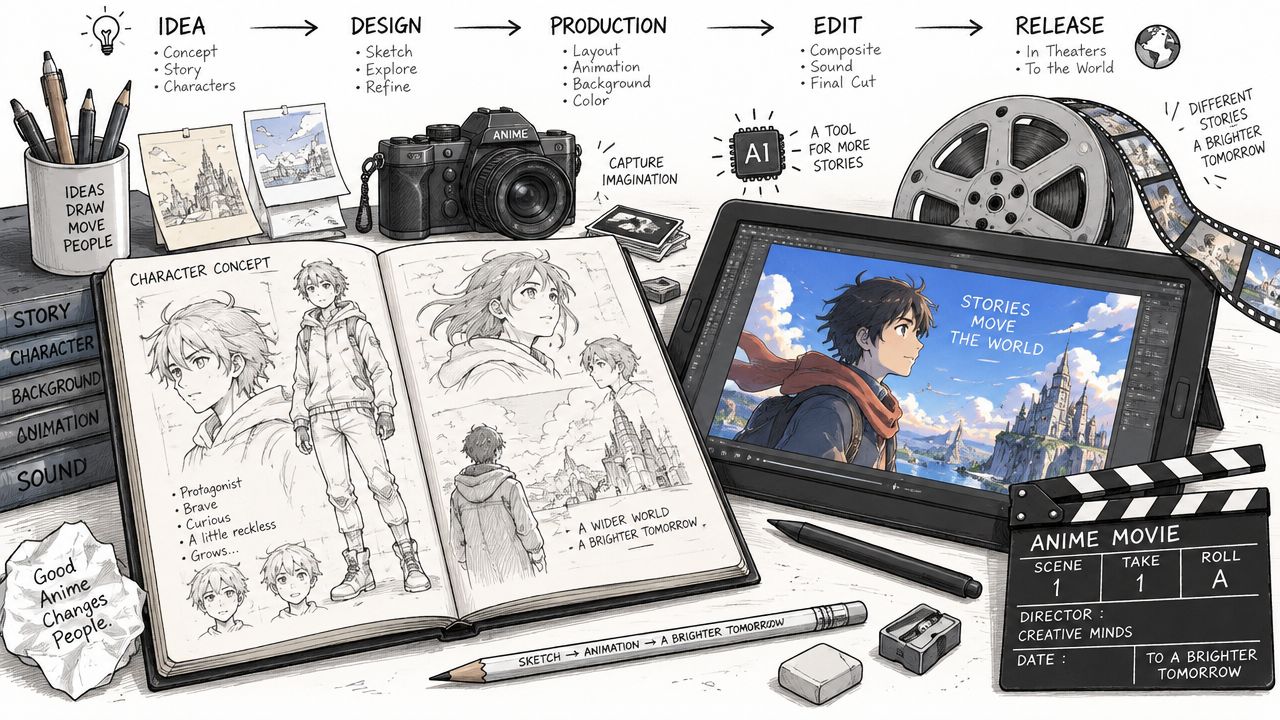
How to Make Anime Movies from Idea to Release
Learn how to make anime movies from concept to distribution with AI workflows, Veo3 prompts, and pro pipeline tips for indie creators.
Read article
Best Time to Upload Video on YouTube: A Data-Driven Guide
Discover the best time to upload video on YouTube. Learn how to read analytics, run timing experiments, and schedule uploads for maximum reach.
Read article
How to Change the Lighting in Photos and Video Fast
Learn how to change the lighting in photos and video with Veo3 AI prompts, color controls, and relighting tips for natural, cinematic results.
Read article