
Les meilleures alternatives à Sora après l’arrêt de Sora par OpenAI (2026)
Vous cherchez une alternative à Sora en 2026 ? Voici ce qui s’est passé après la fermeture de Sora et pourquoi Veo3 AI s’impose désormais.
Emma Chen · 7 min read · Mar 26, 2026
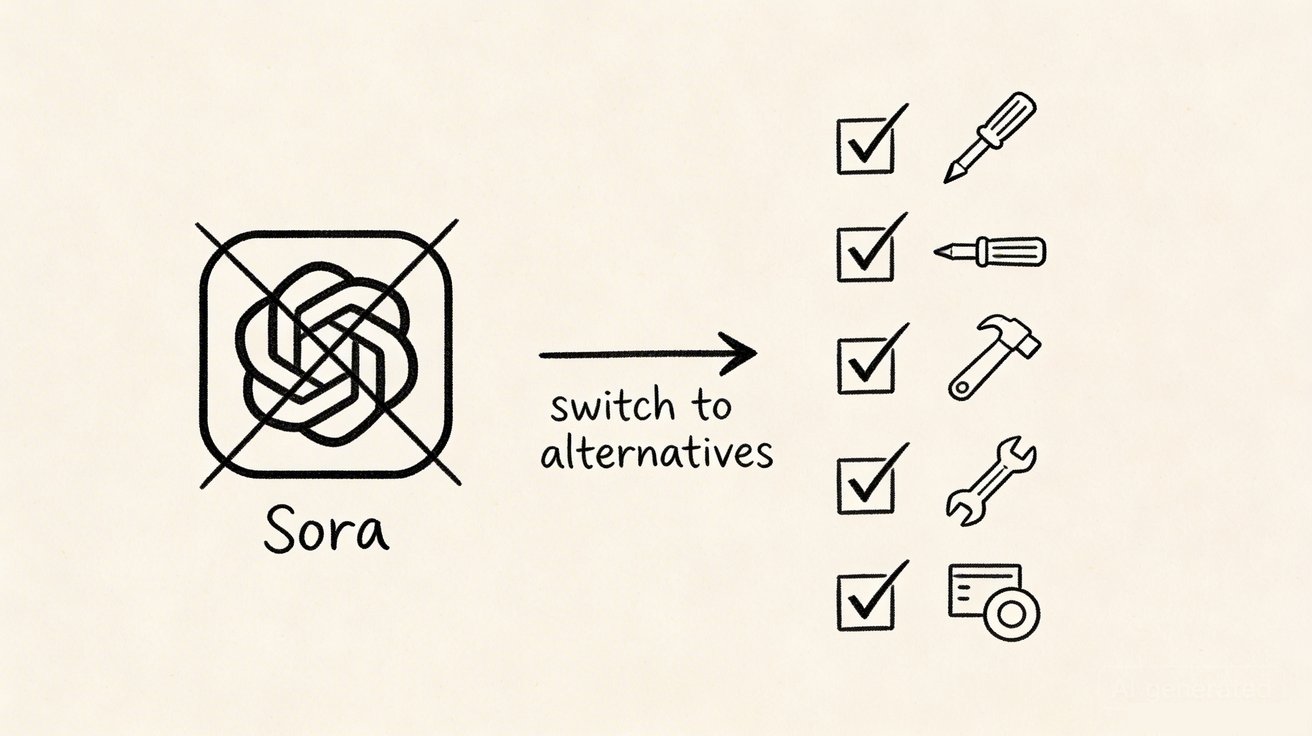
Méta-description : OpenAI a fermé Sora en mars 2026. Voici les meilleures alternatives à Sora avec des comparaisons honnêtes — Veo3 AI, Runway, Kling, Pika et plus encore.
OpenAI a fermé Sora le 24 mars 2026. L'application, l'API et l'expérience mobile ont toutes disparu. Le partenariat présumé avec Disney à 1 milliard de dollars ? Aussi enterré.
Cela laisse des millions de créateurs à la recherche d'un vrai remplaçant. Ce guide classe les meilleures alternatives à Sora en 2026 en fonction de ce qui compte vraiment : disponibilité, qualité de sortie, prix et adéquation au flux de travail.
Les 5 meilleures alternatives à Sora en 2026
1. Veo3 AI — Meilleur remplacement global de Sora
Pourquoi il gagne : Veo3 AI est construit autour du modèle Veo 3 — qui produit actuellement certaines des sorties vidéo IA de la plus haute qualité disponibles. La plateforme enveloppe cette puissance dans une interface adaptée aux créateurs avec des flux de travail texte-vers-vidéo et image-vers-vidéo.
Ce qui le distingue :
- Texte-vers-vidéo — décrivez une scène, sélectionnez des paramètres, générez des clips cinématographiques
- Image-vers-vidéo — animez des photos de produits, des cadres de storyboard ou de l'art conceptuel
- Basé sur Veo 3 de Google DeepMind, connu pour la génération audio native et une forte cohérence de scène
- Sortie Full HD 1080p adaptée au marketing, au contenu social et au travail de production
- Gratuit à essayer — aucune carte de crédit requise
Où il est honnête sur ses limites :
- Les temps de génération peuvent être plus longs pour les paramètres de qualité les plus élevés
- Pas d'éditeur vidéo intégré (exportez et modifiez dans votre outil existant)
Idéal pour : Les créateurs qui veulent une qualité supérieure sans configuration complexe. Les marketeurs testant des concepts publicitaires. Les équipes e-commerce animant des photos de produits.
→ Essayer Veo3 AI gratuitement
2. Runway Gen-3 Alpha — Meilleur pour le contrôle créatif
Pourquoi c'est important : L'environnement d'édition de Runway est le plus complet du secteur. Motion brush, préréglages de caméra et montage intégré vous permettent de faire plus dans la plateforme de génération.
Compromis : Plus cher ($15/mois), courbe d'apprentissage plus raide, niveau gratuit limité (~3 clips). Mais si vous avez besoin d'un contrôle précis sur le mouvement et la composition, Runway est difficile à battre.
3. Kling 2.0 — Meilleur pour la vitesse et le rapport qualité-prix
Pourquoi c'est important : Kling (de Kuaishou) offre une forte qualité de mouvement au prix le plus bas. La génération est rapide et le niveau gratuit se recharge quotidiennement (66 crédits/jour).
Compromis : L'interface anglaise est difficile à utiliser. Moins précis pour les compositions de scènes détaillées. Mais pour le volume et l'itération rapide, Kling est imbattable à $5,99/mois.
4. Pika 2.0 — Meilleur pour les créateurs sociaux occasionnels
Pourquoi c'est important : L'interface la plus simple du marché. De l'idée au clip en moins d'une minute. 150 crédits quotidiens gratuits.
Compromis : La qualité de sortie est en retrait par rapport à Veo3 AI et Runway pour les travaux soignés. Pas idéal pour la production au niveau des marques.
5. Seedance — Meilleure plateforme multi-modèles
Pourquoi c'est important : Seedance offre 4+ modèles (Seedance 2.0, Veo 3.1, Kling 3.0, Seedance 1.5) dans un seul espace de travail. Idéal pour les équipes qui veulent comparer les résultats de différents modèles.
Compromis : Jack-of-all-trades, maître d'aucun. La qualité individuelle des modèles peut ne pas correspondre aux plateformes dédiées.
Tableau de comparaison rapide
| Outil | Idéal pour | Niveau gratuit | Qualité de sortie | Prix |
|---|---|---|---|---|
| Veo3 AI | Qualité générale | ✅ Gratuit | ⭐⭐⭐⭐⭐ | Gratuit + plans payants |
| Runway | Contrôle créatif | ✅ Limité | ⭐⭐⭐⭐ | $15/mois |
| Kling | Vitesse & valeur | ✅ Rechargement quotidien | ⭐⭐⭐⭐ | $5,99/mois |
| Pika | Usage occasionnel | ✅ Limite quotidienne | ⭐⭐⭐ | $10/mois |
| Seedance | Multi-modèles | ✅ Crédits gratuits | ⭐⭐⭐⭐ | $9,90/mois |
Pourquoi OpenAI a-t-il fermé Sora ?
- Pivot stratégique vers la robotique — OpenAI réaffecte ses ressources d'ingénierie
- L'accord Disney a échoué — Un partenariat de contenu présumé à 1 milliard de dollars est tombé à l'eau
- Les coûts de calcul étaient brutaux — La génération de vidéo est extrêmement coûteuse par clip
- La concurrence s'est déplacée rapidement — Veo 3, Kling, Runway ont tous réalisé des améliorations majeures pendant que Sora était débattu en interne
Comment évaluer un remplacement de Sora
Après la fermeture de Sora, la confiance des créateurs s'est déplacée du prestige de la marque vers cinq critères pratiques :
- Peut-on l'utiliser maintenant ? Si cela nécessite une liste d'attente, cela ne résout pas votre problème aujourd'hui.
- La sortie est-elle publiable ? « Artefact intéressant » n'est pas un livrable.
- Peut-on itérer rapidement ? Le travail créatif nécessite plusieurs tentatives. La vitesse compte.
- Que coûte le test ? Les niveaux gratuits sont importants. Personne ne veut s'engager à $200/mois sans essai.
- Existera-t-il dans 6 mois ? Après Sora, c'est la question de base.
Guide de migration : de Sora à Veo3 AI
Étape 1 : Accédez à Veo3 AI et créez un compte gratuit.
Étape 2 : Testez texte-vers-vidéo avec un prompt similaire à ce que vous auriez utilisé dans Sora. Essayez des prompts spécifiques — « vue aérienne de falaises côtières au coucher du soleil, lent mouvement de drone vers l'avant, étalonnage cinématographique » produit de meilleurs résultats que « vidéo cool de l'océan ».
Étape 3 : Si vous avez des ressources visuelles (photos de produits, art conceptuel, storyboards), testez image-vers-vidéo. Les résultats sont souvent plus prévisibles car le modèle a une ancre visuelle.
Étape 4 : Comparez les sorties. Générez le même concept sur Veo3 AI et un autre outil. Voyez lequel correspond à votre standard de qualité.
Étape 5 : Une fois que vous avez trouvé un flux de travail qui fonctionne, passez à un plan payant adapté à votre volume.
Conclusion
Sora est parti. Le marché de la vidéo IA ne l'est pas. La meilleure alternative à Sora dépend de vos priorités :
- Meilleure qualité : Veo3 AI
- Meilleur contrôle : Runway
- Meilleure valeur : Kling
- Meilleure simplicité : Pika
Pour la plupart des créateurs qui repartent de zéro après la fermeture, Veo3 AI est le point de départ le plus solide — haute qualité, gratuit à tester, et construit autour des flux de travail dont les créateurs ont réellement besoin.
Vous cherchez d'autres outils vidéo IA? Découvrez Les meilleures alternatives à Sora après l’arrêt de Sora par OpenAI (2026), une autre excellente plateforme de génération de vidéo par IA.
FAQ
Quelle est la meilleure alternative à Sora en 2026 ?
Veo3 AI pour la qualité globale et la facilité d'utilisation. Runway pour le contrôle créatif. Kling pour la vitesse et le budget.
Existe-t-il une alternative gratuite à Sora ?
Oui. Veo3 AI, Kling et Pika offrent tous un accès gratuit. Veo3 AI est gratuit sans carte. Kling a le niveau gratuit quotidien continu le plus généreux.
Pourquoi Sora a-t-il été fermé ?
OpenAI a pivoté vers la robotique, un accord Disney présumé à 1 milliard de dollars a échoué, et les coûts de calcul pour la vidéo étaient difficiles à justifier sans forte traction commerciale.
Peut-on encore utiliser Sora ?
Non. L'application, l'API et l'expérience mobile sont tous abandonnés.
Quelle alternative à Sora a la meilleure qualité de sortie ?
Veo3 AI, basé sur le modèle Veo 3 de Google DeepMind, produit certaines des vidéos IA de la plus haute qualité accessibles aux utilisateurs.
Prêt à commencer ? Essayez Veo3 AI gratuitement — texte-vers-vidéo et image-vers-vidéo, aucune carte de crédit requise.
Related Articles
Continue with more blog posts in the same locale.

Guide du filigrane Veo 3 : Obtenez des vidéos IA sans filigrane en 2026
Comprenez les filigranes Veo 3 et apprenez comment obtenir des vidéos sans filigrane grâce aux niveaux payants officiels et à l'accès API. Guide complet pour les créateurs professionnels en 2026.
Read article
Veo 3 Génération de Vidéos Longues : Créez des Vidéos IA Prolongées en 2026
Créez des vidéos longue durée avec Veo 3 en 2026. Apprenez l'enchaînement de scènes, les techniques de cohérence et les workflows pratiques pour créer des vidéos IA étendues pour YouTube et bien plus encore.
Read article
Guide d'animation Veo 3 : Créez des animations IA époustouflantes en 2026
Apprenez à créer des animations époustouflantes avec Veo 3 en 2026. Ce guide complet couvre les styles d'animation, les techniques de prompt et des exemples concrets pour la création d'animations par IA.
Read article