
Seedance 2.0 gratuito vs Veo 3 gratuito em 2026: acesso, qualidade e limites
Uma comparação prática de 2026 entre Seedance 2.0 gratuito e Veo 3 gratuito: acesso, qualidade de saída, limites, fluxos de trabalho e quando escolher cada opção gratuita de vídeo com IA.
Emma Chen · 16 min read · May 2, 2026
A demanda de busca por trás de seedance 2.0 grátis é prática, não teórica. As pessoas não estão perguntando apenas se um modelo de vídeo com IA parece impressionante. Elas querem saber como obter acesso, o que podem criar com créditos limitados, quais prompts valem a pena testar e como evitar desperdiçar um dia em clipes que não podem ser editados ou publicados. Este guia foi escrito para criadores, profissionais de marketing, estudantes, fundadores indie e pequenas equipes que estão testando vídeo com IA sem se comprometer com um plano pago e precisam de um fluxo de trabalho claro para 2026 na comparação de acesso gratuito.
A forma mais segura de pensar sobre este tema é simples: use a geração de vídeo com IA como um sistema de produção controlado. Um bom fluxo de trabalho define a tarefa, prepara referências, escreve prompts, testa o resultado, revisa riscos e só então escala. Isso importa quer você esteja comparando ferramentas gratuitas, planejando um storyboard longo ou criando clipes de prévia de aplicativo. A promessa deste guia é ajudar você a escolher o fluxo de trabalho gratuito mais seguro antes de gastar créditos ou tempo de produção.
As palavras-chave alvo abordadas neste guia incluem seedance 2.0 grátis, veo 3 grátis, seedance grátis vs veo 3, comparação de geradores de vídeo com IA gratuitos. O artigo não inventa números privados de benchmark nem afirma que as regras de acesso são permanentes. Produtos de vídeo com IA mudam rapidamente, então a vantagem durável é um fluxo de trabalho que você pode repetir e verificar. Para métodos de produção relacionados ao Veo 3, veja prompts de controle de câmera do Veo 3, fluxo de trabalho com referência de imagem no Veo 3, guia de prompts de áudio nativo do Veo 3.
Resposta rápida
Para comparar o acesso gratuito, a abordagem vencedora não é perseguir o prompt mais longo nem o clipe único mais chamativo. A abordagem vencedora é definir uma tarefa de vídeo estreita, gerar cenas curtas e controladas, manter os fatos importantes fora do modelo quando a precisão importa e avaliar o resultado com uma checklist. Neste caso específico, o uso principal é testar clipes curtos, comparar o comportamento dos prompts, aprender os fundamentos da geração de vídeo e decidir qual ferramenta merece trabalho de produção pago. O principal risco é presumir que qualquer plano gratuito seja ilimitado, permanentemente atual ou adequado para toda carga de trabalho comercial.
Um bom primeiro teste tem cinco partes: um público, um objetivo, uma referência visual ou regra de estilo, uma instrução de movimento e um critério de revisão. Se o resultado não conseguir passar pelo critério de revisão, não escale o conceito. Reescreva o prompt, simplifique a cena ou altere o material de origem. Isso é mais lento do que clicar em gerar repetidamente, mas economiza créditos e cria ativos que sobrevivem à edição.
Tabela de decisão
| Ponto de decisão | Orientação prática | O que evitar |
|---|---|---|
| Melhor primeiro teste | Seedance 2.0 Free geralmente serve bem para exploração rápida de texto para vídeo ou imagem para vídeo. | Veo 3 Free é útil quando você quer especificamente testar um fluxo de prompts no estilo Veo. |
| Risco de acesso | Verifique a página atual de login do Seedance e as regras de créditos antes de planejar uma campanha. | Verifique o caminho atual da conta do Veo 3, a disponibilidade por região e o comportamento dos créditos diários. |
| Foco de qualidade | Bom para clipes conceituais rápidos, ideias de movimento de produto e rascunhos de cenas em estilo social. | Bom para aprender controle cinematográfico por prompt e testar fluxos de trabalho orientados ao Veo. |
| Mentalidade sobre limites | Trate os créditos gratuitos como capacidade de pesquisa, não como um orçamento de produção garantido. | Trate as gerações gratuitas como capacidade de validação, não como inventário ilimitado de publicação. |
| Melhor gatilho para upgrade | Faça upgrade quando você tiver cenas repetíveis, assets de marca ou entregáveis para clientes. | Faça upgrade quando precisar de testes em lote confiáveis, maior controle ou consistência comercial. |
Use a tabela como um filtro de pré-produção. Se o projeto não tiver uma fonte clara da verdade, uma regra clara de revisão e um destino claro de exportação, pause antes de gerar. A maioria dos projetos fracos de vídeo com IA falha porque o prompt tenta resolver estratégia, direção criativa, precisão do produto e estrutura de edição ao mesmo tempo.
Fluxo de trabalho prático
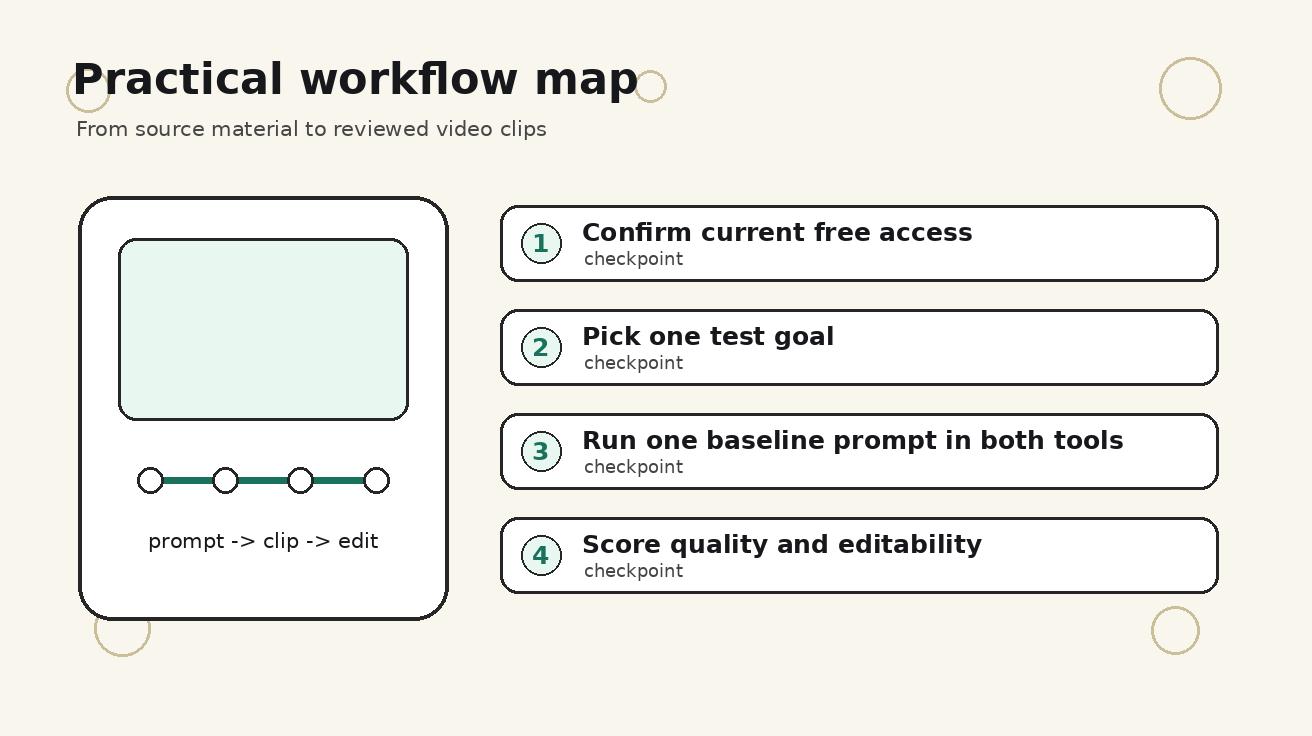
- Confirme o acesso gratuito atual. Use isso como um ponto de verificação antes de passar para a próxima geração.
- Escolha um objetivo de teste. Use isso como um ponto de verificação antes de passar para a próxima geração.
- Execute um prompt de referência nas duas ferramentas. Use isso como um ponto de verificação antes de passar para a próxima geração.
- Avalie qualidade e editabilidade. Use isso como um ponto de verificação antes de passar para a próxima geração.
- Escolha o fluxo pago somente após resultados repetíveis. Use isso como um ponto de verificação antes de passar para a próxima geração.
Cada ponto de verificação deve produzir um pequeno artefato. Esse artefato pode ser um prompt, uma pasta de screenshots, um cartão de tomada, uma checklist de QA ou um plano simples de edição. O objetivo é tornar o fluxo de trabalho inspecionável. Se um colega entrar depois, ele deve entender por que cada clipe existe e como ele apoia o vídeo final.
Etapa 1: defina o trabalho do vídeo antes de abrir o gerador
Comece escrevendo uma declaração de trabalho em uma frase: 'Este vídeo ajuda [público] a entender [ação] para que possam [resultado].' Para Seedance 2.0 free, essa frase impede que o projeto se desvie para uma vitrine genérica de vídeo com IA. Quanto mais preciso for o trabalho, mais fácil será avaliar se um clipe gerado é útil.
Uma boa declaração de trabalho inclui o canal. Um embed de blog, hero de landing page de produto, prévia da App Store, teste de social pago, modal de onboarding e e-mail de Customer Success precisam de ritmos diferentes. Se as mesmas cenas de origem forem reutilizadas em vários canais, planeje as variantes com antecedência. Deixe espaço visual suficiente para legendas, evite detalhes críticos na borda do quadro e não dependa de texto gerado ser legível.
A declaração de trabalho também deve incluir uma condição de falha. Por exemplo: o clipe falha se a interface mudar de forma, se a afirmação sobre o produto não puder ser sustentada, se a identidade do personagem mudar entre tomadas, se a mensagem de acesso gratuito sugerir uso ilimitado ou se a cena não puder ser cortada em uma edição limpa. Condições de falha tornam a revisão mais rápida porque a equipe não debate gosto quando o asset é factualmente inutilizável.
Etapa 2: prepare o material de origem e os limites
Vídeo com IA fica mais forte quando o material de entrada é específico. Prepare screenshots, referências de produto, cores de marca aprovadas, exemplos de legendas, notas de cena e exemplos de movimento de que você gosta. Também prepare limites negativos: sem métricas falsas, sem UI inventada, sem logos aleatórios, sem afirmações ilegíveis, sem personagens extras, sem texto surpresa e sem alterações na tela do produto, a menos que o clipe seja apenas conceitual.
Para trabalhos baseados em referência, rotule os assets com nomes simples. Use nomes como start-screen, action-screen, success-screen, brand-style e forbidden-examples. Isso parece básico, mas ajuda na escrita do prompt porque cada cena pode se referir ao asset correto. Quando uma geração falha, você consegue isolar se o problema veio do prompt, da referência ou do movimento solicitado.
Se o projeto envolver um produto real, remova dados privados antes de usar screenshots. Substitua nomes de clientes, e-mails, tokens, números de receita, rótulos de roadmap interno e recursos ainda não lançados. Um clipe bonito não é utilizável se vazar informações ou mostrar um recurso ao qual os usuários não têm acesso.
Etapa 3: use modelos de prompt em vez de improvisar
Modelo 1:
Um clipe limpo de demonstração de produto de [produto] resolvendo [problema] para [usuário], um assunto, uma ação, câmera estável, luz natural, sem texto falso de UI legível.
Modelo 2:
Abertura de um vídeo social curto em que [usuário] descobre [benefício], movimento realista, gancho visual conciso, fundo simples, sem afirmações exageradas.
Modelo 3:
Imagem para vídeo: anime esta imagem de referência com movimento sutil de câmera, preserve o formato e as cores do produto, sem novo texto, sem elementos de interface distorcidos.
Esses modelos são intencionalmente restritos. Eles não pedem uma campanha inteira em uma única instrução. Eles pedem uma cena que possa ser revisada. Depois que uma cena funcionar, crie variações alterando uma variável por vez: movimento de câmera, iluminação, ação do sujeito, duração da cena ou imagem de referência. Se você mudar tudo de uma vez, perde a capacidade de aprender com o resultado.
Etapa 4: crie um scorecard de comparação ou checklist
Um scorecard transforma seedance 2.0 free de um experimento subjetivo em uma decisão de produção. Avalie cada geração em uma escala simples de um a cinco para correspondência ao prompt, clareza visual, continuidade, editabilidade, precisão do produto, segurança de marca e adequação ao canal. Não avalie apenas a beleza. O clipe mais bonito ainda pode falhar se criar problemas de edição ou representar o produto de forma incorreta.
Aqui está um checklist prático que você pode copiar para uma planilha:
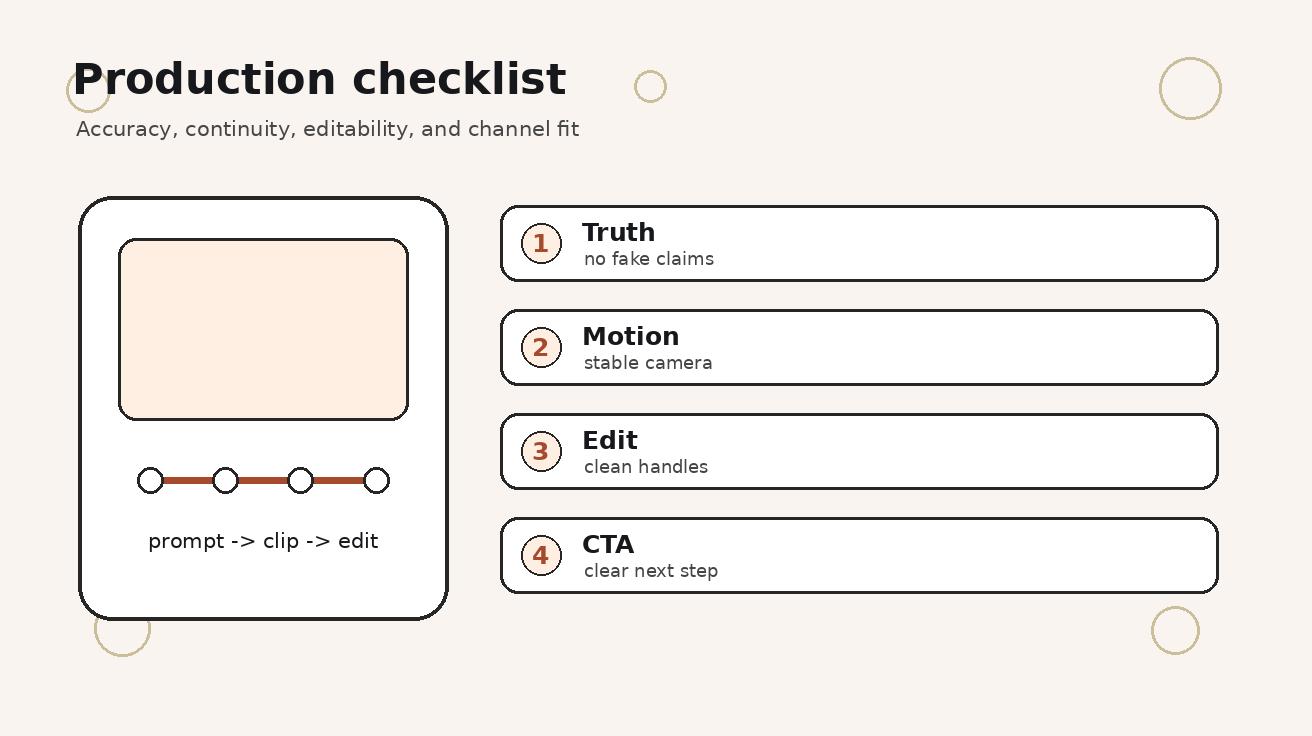
- O clipe corresponde à tarefa de uma frase?
- O assunto principal fica claro nos primeiros dois segundos?
- As telas do produto, logotipos e objetos estão estáveis o suficiente para o caso de uso?
- O clipe evita dados falsos, afirmações falsas ou resultados sem suporte?
- O editor consegue cortar o início e o fim sem perder o sentido?
- Há espaço para legendas, chamadas de UI ou subtítulos?
- A cena se conecta naturalmente ao take anterior e ao próximo?
- Um espectador vendo pela primeira vez entenderia qual ação deve tomar em seguida?
Etapa 5: revise a primeira geração como um editor
A primeira geração não é o asset final. Revise-a como um editor montando uma timeline. Procure o primeiro frame utilizável, o último frame utilizável, o momento de movimento mais forte e qualquer parte que possa confundir o espectador. Salve notas sempre no mesmo idioma: manter, cortar, regenerar ou rejeitar. Rótulos consistentes tornam o trabalho em lote mais rápido.
Quando um clipe estiver próximo, mas ainda não for utilizável, evite reescrever o prompt inteiro. Identifique a falha exata. Se a câmera se moveu demais, reduza a instrução de câmera. Se a interface mudou, enfatize layout estável e nenhum elemento inventado. Se o clipe parecer genérico, adicione uma referência de origem mais forte ou contexto do usuário. Se a cena estiver ocupada demais, remova ações secundárias.
Para projetos com múltiplos takes, verifique a sequência de edição a cada dois ou três clipes. Não espere até que vinte clipes sejam gerados para descobrir que nada se encaixa na montagem. A continuidade em vídeos de AI é mais fácil de proteger quando cada novo take é avaliado em relação à timeline, não contra uma janela de pré-visualização isolada.
Variações de prompt para testes de produção
Crie variações controladas em torno da mesma ideia. Abaixo estão tipos práticos de variação que funcionam em projetos de comparação, storyboard e prévia de app:
- Variação de câmera: tripé estático, aproximação lenta, sensação de documentário com câmera na mão, tracking no nível da tela ou tomada aérea da área de trabalho.
- Variação de ritmo: ação imediata, preparação de um segundo, revelação antes e depois ou abertura com o resultado primeiro.
- Variação de referência: guiada por captura de tela, guiada por foto do produto, guiada por referência de personagem ou guiada por moodboard.
- Variação de canal: corte vertical para redes sociais, incorporação horizontal em blog, prévia de anúncio quadrado ou enquadramento de dispositivo seguro para App Store.
- Variação de risco: precisão rigorosa do produto, apenas atmosfera conceitual, sem texto legível ou espaço em branco pronto para legendas.
A melhor versão muitas vezes é a versão mais controlada, não a mais dramática. Se o objetivo é educação, onboarding ou confiança no produto, os espectadores precisam de clareza antes do espetáculo. Use movimento cinematográfico apenas quando ele apoiar a mensagem.
Links internos e próximos passos
Se o seu próximo gargalo for movimento de câmera, leia os prompts de controle de câmera do Veo 3 em /blog/veo-3-camera-control-prompts-2026. Se o seu próximo gargalo for consistência de referência, leia o fluxo de trabalho de referência de imagem do Veo 3 em /blog/veo-3-image-reference-workflow-2026. Se o seu próximo gargalo for áudio, diálogo ou design de som, leia o guia de prompt de áudio nativo do Veo 3 em /blog/veo-3-native-audio-prompt-guide-2026.
O próximo passo prático é criar um pequeno pacote de teste: três prompts, três clipes gerados, uma ficha de avaliação e um rascunho editado. Isso é suficiente para decidir se vale a pena escalar o fluxo de trabalho. Se o pacote de teste falhar, corrija o fluxo de trabalho antes de aumentar o volume.
Erros comuns
Erro 1: tratar acesso gratuito ou de teste como garantia de produção
Acesso, créditos, velocidade da fila, regras de exportação e termos comerciais podem mudar. Sempre verifique a página atual do produto e o estado da conta antes de prometer um prazo a um cliente ou equipe.
Erro 2: pedir cenas demais em um único prompt
Um prompt grande pode produzir algo impressionante, mas é mais difícil de reparar. Prompts curtos de cena são mais fáceis de comparar, gerar novamente e editar em uma sequência coerente.
Erro 3: confiar em texto legível gerado
Legendas importantes, preços, nomes de produtos, avisos legais e chamadas para ação devem ser adicionados na edição. O texto gerado costuma ser pouco confiável e pode criar problemas de conformidade.
Erro 4: pular a checklist de revisão
Sem uma checklist, as equipes aprovam o clipe que parece mais novo, em vez do clipe que resolve a tarefa. Mantenha o scorecard próximo ao prompt e atualize-o após cada geração.
FAQ
O Seedance 2.0 Free é melhor que o Veo 3 Free?
Depende da tarefa. O Seedance 2.0 Free pode ser melhor para testes rápidos e exploratórios de vídeo com IA, enquanto o Veo 3 Free é útil quando você quer praticar um fluxo de prompts orientado ao Veo. Sempre verifique o acesso e os limites atuais antes de planejar a produção.
Posso usar créditos gratuitos de vídeo com IA para trabalhos de clientes?
Tenha cautela. Créditos gratuitos são melhores para testes, briefings e rascunhos. Para entregas a clientes, verifique os termos comerciais atuais, o comportamento da marca d’água, a qualidade de exportação e os limites da conta da ferramenta específica que você usa.
O que devo comparar primeiro: acesso, qualidade ou limites?
Comece pelo acesso, porque uma ferramenta que você não consegue acessar de forma confiável não pode sustentar um workflow. Depois compare qualidade, editabilidade, velocidade de geração e limites práticos de créditos.
Veo 3 Free significa geração ilimitada de vídeos com Veo 3?
Não. O acesso gratuito geralmente tem limites, e esses limites podem mudar. Trate qualquer plano gratuito como um caminho de teste, a menos que a página atual do produto confirme explicitamente o contrário.
Qual é o melhor prompt para um teste justo?
Use um prompt curto com um assunto, uma ação, um ambiente e uma instrução de câmera. Evite pedir um anúncio complexo com várias cenas na primeira comparação.
Devo escolher a ferramenta com o melhor clipe individual?
Não necessariamente. Escolha a ferramenta que produz resultados repetíveis e editáveis em vários prompts, porque a confiabilidade na produção importa mais do que uma geração sortuda.
Recomendação final
Para seedance 2.0 free, crie um pequeno workflow controlado antes de escalar. Defina a tarefa, prepare referências, use templates de prompt restritos, avalie os resultados e mantenha a edição final honesta. Os criadores que vencerão com vídeo de IA em 2026 não serão as pessoas que gerarem mais clipes. Serão as pessoas que transformarem a geração em um sistema de produção repetível.
Notas de produção para equipes
Crie uma pasta compartilhada para cada projeto. Coloque prompts, imagens de origem, clipes gerados, clipes rejeitados, scorecards, exportações finais e notas em subpastas separadas. Isso evita a reutilização acidental de gerações fracas e torna possível a otimização posterior.
Nomeie cada clipe gerado com a data, o número da cena, a versão do prompt e o status de revisão. Um nome simples como scene-03-v02-keep é mais útil do que um título aleatório de download. Quando um stakeholder perguntar por que um clipe foi escolhido, o sistema de nomenclatura oferece uma trilha de auditoria.
Mantenha um changelog de prompts. Escreva uma linha após cada variação explicando o que mudou e o que melhorou ou quebrou. Com o tempo, isso se torna uma biblioteca privada de prompts mais valiosa do que listas genéricas de prompts, porque reflete exatamente seu público, produto e restrições de canal.
Separe a revisão criativa da revisão factual. Um designer pode revisar clima, movimento e composição. Um product owner deve revisar a veracidade da interface. Um profissional de marketing deve revisar a afirmação e o CTA. Um revisor jurídico ou de políticas pode ser necessário para setores regulamentados. Não peça que uma única pessoa identifique todos os riscos.
Exporte um rascunho em baixa resolução antes de gastar tempo no polimento. O rascunho revela se a história realmente funciona. Se a sequência estiver confusa na qualidade de rascunho, cores melhores, imagens mais nítidas ou movimentos mais dramáticos não resolverão o problema estratégico.
Após publicar, continue medindo. Para um artigo de blog, monitore impressões, cliques e correspondência de consultas. Para um vídeo de produto, monitore taxa de visualização, click-through, ativação ou tickets de suporte. O vídeo com AI não está concluído quando parece bom; ele está concluído quando cumpre a função para a qual foi criado.
Quando o primeiro rascunho estiver próximo de ser utilizável, melhore-o com uma segunda passagem focada em vez de começar de novo. Mantenha a ordem de cenas aprovada, preserve o melhor frame e altere apenas a variável fraca. Esse hábito protege a continuidade, reduz a fadiga de revisão e oferece à equipe um registro mais limpo do que realmente melhorou a performance.
Related Articles
Continue with more blog posts in the same locale.
O Gemini Omni é gratuito? Planos, limites e acesso
O Gemini Omni é gratuito? Entenda o que o Google diz oficialmente sobre acesso ao Gemini Omni, planos Google AI, créditos do Flow, implementação no YouTube, limites e pontos ainda
Read article
Preço do Gemini Omni: é gratuito ou pago?
Preço do Gemini Omni explicado: acesso sem custo, planos Google AI Plus, Pro e Ultra, créditos do Flow, limites e o que ainda não está oficialmente confirmado.
Read article
API do Gemini Omni: disponibilidade, preço e acesso para desenvolvedores
Disponibilidade da API do Gemini Omni explicada: o que o Google confirmou oficialmente, o que ainda é desconhecido, sinais de preço, acesso para desenvolvedores e etapas seguras de
Read article