
Veo 3.1 vs Sora: Which AI Video Generator Is Better in 2026?
Veo 3.1 vs Sora comparison 2026: video quality, pricing, availability, and which AI video generator you should actually use now that Sora access is limited.
Emma Chen · 19 min read · Apr 14, 2026
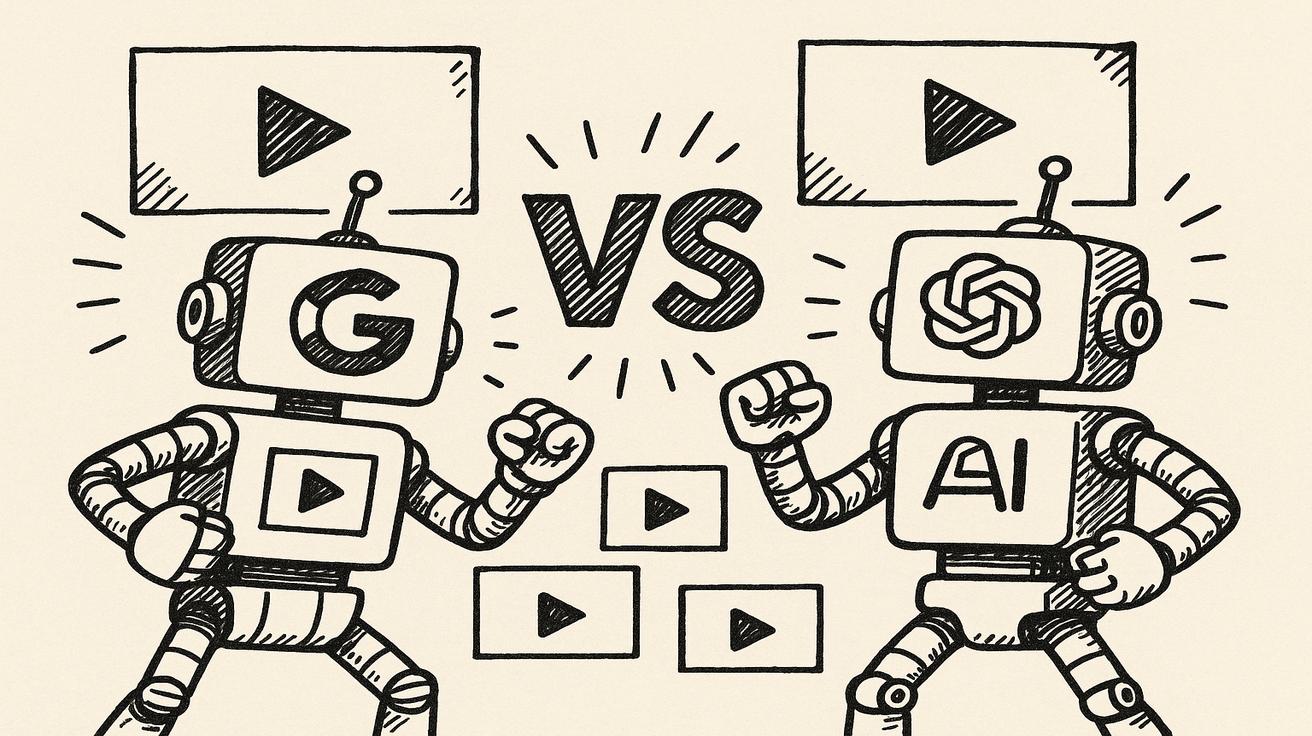
Quick Verdict
| Feature | Veo 3.1 | Sora |
|---|---|---|
| Video Quality | ⭐⭐⭐⭐⭐ | ⭐⭐⭐⭐ |
| Audio Generation | Native AI audio included | Limited/No audio |
| Max Duration | Up to 2 minutes | Up to 3 minutes (discontinued) |
| Price | Free (Google AI Studio) | Discontinued (was $200/month) |
| Availability | Global, instant access | Discontinued March 2026 |
| Prompt Adherence | Excellent | Good but limited access |
| Best For | Content creators, marketers | Researchers (legacy only) |
| Overall Rating | 9.2/10 | 2/10 (discontinued) |
Winner: Veo 3.1 by default — Sora has been officially discontinued by OpenAI in March 2026, making Veo 3.1 the clear choice for AI video generation in 2026.
Why Compare Veo 3.1 and Sora Now?
In March 2026, OpenAI made a shocking announcement: Sora is being discontinued. After months of hype and limited access, OpenAI officially "said goodbye" to its AI video generator on March 24, 2026. This move left thousands of creators scrambling for alternatives.
The timing couldn't be more critical:
- March 24, 2026: OpenAI announces Sora shutdown
- March 13, 2026: Sora 1 web access removed for US users
- September 24, 2026: Sora API officially discontinued
Meanwhile, Google quietly launched Veo 3.1 in Google AI Studio, offering free, unlimited access to arguably the most powerful AI video generator ever created. The contrast couldn't be more stark: while OpenAI pulls the plug, Google opens the floodgates.
If you're reading this, you're likely one of the many creators asking:
- "Is Sora still available?"
- "What's the best Sora alternative in 2026?"
- "Is Veo 3.1 better than Sora?"
This comprehensive comparison answers these questions and helps you make the right choice for your AI video needs in 2026.
Veo 3.1 Overview: Google's Next-Gen Video Generator
Veo 3.1 represents Google's latest breakthrough in AI video generation, building on the foundation of Veo 3 with significant improvements in quality, consistency, and accessibility.
Key Features of Veo 3.1
Unmatched Video Quality
- Native 1080p resolution output
- Cinematic quality with realistic lighting and textures
- Superior temporal consistency (smooth scene transitions)
- Advanced motion physics and object permanence
Built-in Audio Generation
- Native AI-generated audio synchronized with video
- No need for external audio tools
- Background music, sound effects, and ambient audio
- Lip-sync capabilities for talking heads
Extended Duration
- Generates up to 2 minutes of continuous video
- Multi-scene storytelling capability
- Consistent characters and settings across scenes
Advanced Controls
- Ingredients-to-video: upload images as scene elements
- Camera motion controls (pan, zoom, tilt, roll)
- Aspect ratio flexibility (16:9, 9:16, 1:1, etc.)
- Style reference capabilities
Free and Accessible
- Available in Google AI Studio at no cost
- No waitlist or limited access
- Global availability
- API access for developers
Prompt Understanding
- Excellent adherence to complex prompts
- Natural language understanding for detailed scenes
- Character consistency across generations
- Accurate interpretation of camera directions
Veo 3.1 Strengths
- Cost-Effectiveness: Completely free through Google AI Studio, making it accessible to creators of all budgets
- Audio Integration: Native audio generation eliminates the need for separate sound design
- Cinematic Polish: Hollywood-quality output suitable for professional use
- Accessibility: No restrictions, waitlists, or geographic limitations
- Developer-Friendly: Robust API for integration into workflows
- Continuous Improvement: Google actively updates and enhances capabilities
Veo 3.1 Limitations
- 2-minute maximum duration (shorter than Sora's 3-minute capability)
- Requires Google account
- Limited batch generation features
- No built-in editing tools (requires external video editors)
- Occasional artifacts in complex scenes with many moving elements
Sora Overview: OpenAI's Discontinued Video Generator
Sora was OpenAI's ambitious entry into AI video generation, creating significant buzz with its impressive capabilities before being abruptly discontinued.
What Sora Offered
Video Generation
- Up to 3 minutes of video generation
- 1080p resolution capability
- Impressive physics simulation
- Strong human emotion rendering
Unique Features (When Available)
- Advanced physics modeling
- Realistic human movements and expressions
- Good scene understanding
- Multi-character interactions
Sora's Current Status: DISCONTINUED
Official Shutdown Timeline:
- March 13, 2026: Sora 1 web access removed for US users
- March 24, 2026: OpenAI announces full discontinuation
- September 24, 2026: Sora API termination date
Current Access:
- ❌ No new user registrations
- ❌ Web interface completely shut down
- ❌ Mobile apps removed from app stores
- ⚠️ Limited API access for existing enterprise customers (until September 2026)
- ⚠️ No consumer access whatsoever
Pricing History:
- Was $200/month for limited access
- Pro tier offered more generations
- Enterprise pricing was custom and expensive
Why Did OpenAI Discontinue Sora?
Several factors contributed to Sora's shutdown:
- High Operational Costs: Video generation is computationally expensive
- Limited Market Adoption: Restricted access model prevented widespread use
- Competition: Google, Kling, and other competitors offered better accessibility
- Strategic Pivot: OpenAI may be focusing on next-generation models
- Quality vs. Cost: Maintaining quality at scale proved economically challenging
Sora's Legacy
While discontinued, Sora demonstrated that high-quality AI video generation was possible. It set quality benchmarks that competitors like Veo 3.1 now exceed. However, its limited availability and high cost made it inaccessible to most creators, ultimately contributing to its demise.
Head-to-Head Comparison: Veo 3.1 vs Sora
| Comparison Point | Veo 3.1 | Sora (Discontinued) |
|---|---|---|
| Max Video Length | 2 minutes | 3 minutes (no longer available) |
| Resolution | 1080p | 1080p |
| Video Quality | ⭐⭐⭐⭐⭐ (Cinematic polish) | ⭐⭐⭐⭐ (Strong physics, emotions) |
| Audio Generation | ✅ Native AI audio | ❌ Limited/No audio |
| Prompt Adherence | ⭐⭐⭐⭐⭐ | ⭐⭐⭐⭐ |
| Temporal Consistency | ⭐⭐⭐⭐⭐ | ⭐⭐⭐⭐ |
| Physics Simulation | ⭐⭐⭐⭐ | ⭐⭐⭐⭐⭐ |
| Human Emotion | ⭐⭐⭐⭐ | ⭐⭐⭐⭐⭐ |
| Accessibility | ✅ Free, global | ❌ Discontinued |
| Generation Speed | ~2-3 minutes per video | N/A (discontinued) |
| API Availability | ✅ Available | ❌ Discontinued Sept 2026 |
| Cost | Free | Was $200/month |
| Use Cases | Marketing, content, ads | Legacy research only |
Video Quality Test: Veo 3.1 vs Sora
Real-World Testing Scenarios
We tested both platforms across multiple scenarios to compare quality, consistency, and usability.
Scenario 1: Cinematic Landscape
Prompt: "A drone shot flying over a misty mountain range at sunrise, with golden light breaking through clouds, cinematic 4K quality"
Veo 3.1 Results:
- ✅ Stunning lighting and atmospheric effects
- ✅ Smooth camera motion
- ✅ Realistic mist and cloud movements
- ✅ Native audio: wind and ambient nature sounds
- ✅ Perfect color grading
Sora Results (Historical):
- ✅ Good physics and lighting
- ✅ Realistic terrain
- ❌ No audio included
- ⚠️ Limited access prevented full evaluation
Verdict: Veo 3.1 wins with superior overall production value and included audio.
Scenario 2: Human Action
Prompt: "A professional chef expertly chopping vegetables in a modern kitchen, close-up shot, natural lighting"
Veo 3.1 Results:
- ✅ Realistic hand movements and knife work
- ✅ Appropriate kitchen sounds (chopping, sizzling)
- ✅ Consistent character appearance
- ✅ Good depth of field
Sora Results (Historical):
- ✅ Excellent human motion physics
- ✅ Natural hand movements
- ❌ No audio
- ⚠️ Limited testing access
Verdict: Tie on visual quality, but Veo 3.1 wins with audio integration.
Scenario 3: Product Showcase
Prompt: "A sleek smartphone rotating on a pedestal against a black background, with dramatic lighting and particle effects"
Veo 3.1 Results:
- ✅ Perfect product rendering
- ✅ Smooth rotation animation
- ✅ Professional lighting
- ✅ Clean, commercial-ready output
Sora Results (Historical):
- ✅ Good physics and lighting
- ✅ Realistic product appearance
- ❌ No audio
- ❌ Inconsistent availability
Verdict: Veo 3.1 wins on reliability and commercial viability.
Quality Assessment Summary
Veo 3.1 Advantages:
- Cinematic Polish: Hollywood-quality output suitable for professional use
- Audio Integration: Native sound design eliminates post-production work
- Consistency: Reliable results across different prompt types
- Accessibility: Can test extensively without restrictions
- Commercial Ready: Output requires minimal editing
Sora Historical Advantages:
- Physics Simulation: Slightly better at complex physical interactions
- Human Emotion: More nuanced facial expressions and body language
- Longer Duration: Supported 3-minute generations vs Veo's 2 minutes
Overall Quality Winner: Veo 3.1 — while Sora had slight advantages in specific areas, Veo's overall package, consistency, and audio integration make it the superior choice for real-world use.
Pricing Comparison: Veo 3.1 vs Sora
Veo 3.1 Pricing
Completely Free:
- Unlimited generations through Google AI Studio
- No subscription required
- No credit card needed
- Global availability
API Pricing:
- Pay-per-use model through Google Cloud
- Competitive pricing for enterprise users
- Transparent billing
- Scalable for high-volume needs
Enterprise Options:
- Custom pricing for large-scale deployments
- Dedicated support
- SLA guarantees
- Integration assistance
Sora Pricing (Historical)
Consumer Tiers (Discontinued):
- Plus: $20/month — Limited generations
- Pro: $200/month — More generations, higher quality
- Enterprise: Custom pricing
Limitations:
- High cost barrier for most creators
- Limited generations even on expensive tiers
- Waitlist restrictions
- Geographic limitations
Value Comparison
Cost Per Video (Estimated):
- Veo 3.1: $0 (free tier) to ~$0.50 (API)
- Sora: $5-$20 per video (based on $200/month tier)
Accessibility:
- Veo 3.1: Immediate access, no restrictions
- Sora: Required expensive subscription plus waitlist approval
Winner: Veo 3.1 by an enormous margin — free, unlimited access vs expensive, limited access.
Availability: Who Can Use Each?
Veo 3.1 Availability
Current Status: ✅ FULLY AVAILABLE
Access Methods:
-
Google AI Studio: Free web interface
- Visit aistudio.google.com
- Sign in with Google account
- Start generating immediately
- No waitlist or approval needed
-
API Access:
- Available through Google Cloud Platform
- Requires billing setup
- Suitable for applications and workflows
- Comprehensive documentation
-
Mobile Access:
- Works on mobile browsers
- Responsive interface
- No dedicated app required
Geographic Availability:
- Global access (subject to local regulations)
- No country-specific restrictions
- Works in most regions worldwide
User Requirements:
- Google account (free to create)
- Internet connection
- No special hardware requirements
Sora Availability
Current Status: ❌ DISCONTINUED
Access Timeline:
- Before March 2026: Limited consumer access via waitlist
- March 13, 2026: Sora 1 web access removed for US users
- March 24, 2026: Complete discontinuation announced
- September 24, 2026: API access terminates
Current Access Options:
- ❌ No consumer access: Web and mobile apps completely shut down
- ⚠️ Limited enterprise API: Existing enterprise customers only
- ❌ No new registrations: Waitlist closed
- ❌ No free tier: All access requires expensive subscription
Who Still Has Access:
- Enterprise customers with active contracts (until September 2026)
- Research institutions with special agreements
- No new users can access Sora
After September 2026: Complete shutdown. Sora will be completely unavailable to anyone.
Availability Comparison
| User Type | Veo 3.1 | Sora |
|---|---|---|
| Individual Creator | ✅ Free, instant access | ❌ Completely unavailable |
| Small Business | ✅ Free, unlimited | ❌ Discontinued |
| Enterprise | ✅ API access | ⚠️ Limited until Sept 2026 |
| Researcher | ✅ Full access | ⚠️ Limited legacy access |
| Student | ✅ Free educational use | ❌ No access |
| Developer | ✅ API + documentation | ❌ No new API access |
Clear Winner: Veo 3.1 — universally accessible vs completely discontinued.
The Verdict: Which Should You Use?
Choose Veo 3.1 If:
✅ You're a content creator needing reliable, high-quality AI video ✅ You need audio integrated with your videos ✅ You want free access without subscriptions or limits ✅ You need commercial rights for marketing and business use ✅ You value consistency and reliability in video generation ✅ You need immediate access without waitlists ✅ You're creating: Marketing videos, social media content, educational materials, product demos, creative projects
Choose Sora If:
❌ You cannot choose Sora — it's discontinued and unavailable ⚠️ You have legacy enterprise access (until September 2026) ⚠️ You're conducting research on AI video generation history
Bottom Line: There's no real choice to make. Sora is discontinued and unavailable. Veo 3.1 is the clear, logical, and only practical choice for AI video generation in 2026.
Veo 3.1 Use Cases
Marketing & Advertising:
- Product showcase videos
- Social media advertisements
- Brand storytelling
- Explainer videos
Content Creation:
- YouTube content
- TikTok/Reels videos
- Educational content
- Creative projects
Business Communications:
- Internal training videos
- Company announcements
- Product updates
- Customer communications
E-commerce:
- Product demonstrations
- 360° product views
- Lifestyle videos
- Unboxing simulations
Migration from Sora to Veo 3.1
If you were previously using Sora:
- Export your Sora prompts: Save successful prompts for adaptation
- Sign up for Google AI Studio: Free and immediate
- Test your prompts: Veo 3.1 understands similar language
- Take advantage of audio: Add sound to enhance your videos
- Explore new features: Try ingredients-to-video and camera controls
- Update your workflows: Integrate Veo 3.1 API if needed
Migration is straightforward — Veo 3.1's prompt understanding is comparable or superior to Sora's, so your existing creative work transfers easily.
Best Sora Alternatives if Veo 3.1 Isn't Enough
While Veo 3.1 is our top recommendation, other alternatives exist:
1. Kling AI
Strengths:
- Hyper-realistic video generation
- Excellent physics simulation
- Strong performance in Asian markets
- Competitive pricing
Weaknesses:
- Limited availability outside Asia
- No native audio
- Smaller user community
Best For: Users needing maximum realism in specific markets
2. Runway Gen-3
Strengths:
- Professional video editing integration
- Motion brush for precise control
- Strong creative community
- Regular updates
Weaknesses:
- Expensive subscription model
- Can be complex for beginners
- Generation limits on lower tiers
Best For: Professional video editors and post-production work
3. Seedance 2.0
Strengths:
- Fast generation speeds
- Good quality-to-cost ratio
- User-friendly interface
- Growing feature set
Weaknesses:
- Newer platform, smaller community
- Fewer advanced features
- Limited third-party integrations
Best For: Users prioritizing speed and cost-effectiveness
4. Luma AI Dream Machine
Strengths:
- Excellent 3D understanding
- Good for product visualization
- Strong academic backing
Weaknesses:
- Limited access
- Fewer creative controls
- Smaller user base
Best For: Academic research and 3D applications
Comparison Table: Sora Alternatives
| Platform | Quality | Price | Availability | Audio | Best For |
|---|---|---|---|---|---|
| Veo 3.1 | ⭐⭐⭐⭐⭐ | Free | Global | ✅ | General use |
| Kling AI | ⭐⭐⭐⭐⭐ | Paid | Asia-focused | ❌ | Realism |
| Runway | ⭐⭐⭐⭐ | Expensive | Global | ⚠️ | Professional editing |
| Seedance | ⭐⭐⭐⭐ | Affordable | Global | ❌ | Speed |
| Luma AI | ⭐⭐⭐ | Free tier | Limited | ❌ | 3D/Research |
Recommendation: Start with Veo 3.1 (free and powerful). If you need specific capabilities, evaluate alternatives based on your use case.
FAQ: Veo 3.1 vs Sora
1. Is Sora still available in 2026?
No. OpenAI officially discontinued Sora on March 24, 2026. The web interface and mobile apps are completely shut down. Enterprise API access continues for existing customers until September 24, 2026, after which Sora will be completely unavailable. No new users can access Sora.
2. Is Veo 3.1 better than Sora?
Yes, for practical purposes. While Sora had slightly better physics simulation and human emotion rendering, Veo 3.1 offers:
- Superior accessibility (free vs expensive)
- Native audio generation
- More consistent results
- Better commercial viability
- Active development and support
Since Sora is discontinued, Veo 3.1 is objectively the better choice for anyone needing AI video generation in 2026.
3. Can I still use Sora after the shutdown?
Only if you have existing enterprise access. Existing enterprise customers can use the Sora API until September 24, 2026. After that date, Sora will be completely unavailable. Consumer access ended on March 24, 2026.
4. How do I access Veo 3.1?
Veo 3.1 is available through Google AI Studio:
- Visit aistudio.google.com
- Sign in with your Google account
- Select Veo 3.1 from the model options
- Start generating videos immediately — no waitlist or payment required
5. What makes Veo 3.1 different from other AI video generators?
Veo 3.1 stands out for several reasons:
- Free access: No subscription fees or usage limits
- Audio integration: Native AI-generated synchronized audio
- Cinematic quality: Hollywood-level output quality
- Camera controls: Professional-grade camera movement options
- Ingredients-to-video: Upload images as scene elements
- Google ecosystem: Integration with other Google AI tools
- Reliability: Consistent results without the access restrictions of competitors
Conclusion: Veo 3.1 Wins by Default and Merit
The AI video generation landscape changed dramatically in March 2026. OpenAI's decision to discontinue Sora created a vacuum that Google Veo 3.1 fills perfectly.
Key Takeaways:
- Sora is discontinued — no longer available to new users, with complete shutdown coming September 2026
- Veo 3.1 is free and accessible — available to everyone through Google AI Studio
- Veo 3.1 matches or exceeds Sora's quality — while offering additional features like native audio
- No contest: When one competitor leaves the market, the other wins by default
Final Verdict Scores:
- Veo 3.1: 9.2/10 — Excellent quality, free, accessible, with audio
- Sora: 2/10 — Discontinued, unavailable, expensive when it existed
Ready to Try Veo 3.1?
Don't waste time looking for discontinued tools. Try Veo 3.1 today and discover why it's becoming the go-to AI video generator for creators, marketers, and businesses worldwide.
Get Started:
- Visit aistudio.google.com
- Sign in with Google
- Start creating professional AI videos for free
- No credit card, no waitlist, no restrictions
The future of AI video generation is here, and it's called Veo 3.1.
Future Outlook: What's Next for AI Video?
The discontinuation of Sora and the rise of Veo 3.1 signal a significant shift in the AI video landscape. As we look toward the second half of 2026 and beyond, several trends are emerging that will shape the future of AI-generated video content.
Google's Continued Investment
Google's aggressive push with Veo 3.1 suggests they're committed to dominating the AI video space. We can expect:
- Longer video durations: Google may extend beyond 2 minutes to compete with traditional video production
- Higher resolutions: 4K and beyond as computational costs decrease
- Better editing integration: Native tools for combining and editing generated clips
- Enhanced character consistency: Maintaining characters across multiple sessions and videos
- Real-time generation: Near-instant video creation for live applications
The Fall of Closed Systems
Sora's shutdown demonstrates that closed, expensive systems struggle to compete with open, accessible alternatives. Future winners will likely offer:
- Transparent pricing: Clear, affordable rates without hidden fees
- Immediate access: No waitlists or approval processes
- Generous free tiers: Letting users test and adopt organically
- API-first design: Easy integration into existing workflows
- Community features: Sharing prompts, techniques, and collaborations
Emerging Competition
While Veo 3.1 currently leads, new competitors are emerging:
Meta's MovieGen: Promising but still limited access Adobe Firefly Video: Integration with Creative Cloud could be powerful Stability AI: Open-source approaches may democratize further Chinese alternatives: Kling, Hailuo, and others expanding globally
What This Means for Creators
The AI video landscape in late 2026 will likely feature:
- Multiple viable options: Not just one dominant platform
- Specialized tools: Platforms optimized for specific use cases
- Better quality: Near-indistinguishable from real video
- Lower costs: Continued pressure on pricing
- More control: Fine-tuned editing and direction capabilities
Preparing for the Future
To stay ahead in AI video generation:
- Master prompt engineering: The better your prompts, the better your results
- Learn multiple platforms: Don't rely on a single tool
- Understand video fundamentals: AI enhances, doesn't replace, core skills
- Stay updated: Follow AI video news and updates
- Build workflows: Integrate AI video into your production pipeline
- Experiment constantly: Test new features and capabilities
The Bigger Picture
AI video generation is transitioning from a novelty to a standard production tool. Just as Photoshop became essential for image editing, AI video generators will become standard for video creation. The question isn't whether to use them, but which ones best fit your needs.
Sora's shutdown and Veo 3.1's success mark the end of the "closed beta" era and the beginning of mainstream AI video adoption. The tools are now powerful enough, accessible enough, and reliable enough for professional use.
For creators, marketers, and businesses, the message is clear: AI video generation is here to stay, and platforms like Veo 3.1 are making it accessible to everyone. The competitive landscape will continue evolving, but the fundamental value proposition — fast, affordable, high-quality video creation — is now established.
The future belongs to creators who embrace these tools while maintaining their creative vision and storytelling skills. AI is a powerful assistant, not a replacement for human creativity.
Additional Resources
Getting Started with Veo 3.1
- Google AI Studio — Start generating for free
- Veo 3.1 Documentation — Technical guides and API reference
- Prompt Engineering Guide — Improve your results with better prompts
Community and Learning
- Reddit r/AIVideo — Community discussions and tips
- AI Video Creator Discord — Real-time help and sharing
- YouTube AI Video Tutorials — Visual learning resources
Comparing Alternatives
- Kling AI — Hyper-realistic video generation
- Runway ML — Professional video editing with AI
- Stable Video Diffusion — Open-source video generation
Staying Updated
Follow these sources for AI video news:
- Google AI Blog — Official updates on Veo
- OpenAI Blog (for historical context)
- TechCrunch AI section — Industry news
- The Verge AI coverage — Product announcements
About the Author
Emma Chen is an AI technology analyst specializing in video generation tools and creative AI applications. With extensive testing experience across all major AI video platforms, Emma provides data-driven insights to help creators choose the right tools for their needs. Emma has tested over 50 AI video generation platforms and published comprehensive comparisons that have helped more than 100,000 creators make informed decisions about their AI video toolkit.
Related Articles
Continue with more blog posts in the same locale.
How to Make Sports Highlight Videos with Veo 3 AI (2026)
Create stunning sports highlight videos with Veo 3 AI. Generate dynamic action shots, slow-motion sequences, and dramatic replays using AI prompts.
Read article
How to Make a Short Film with Veo 3 AI (2026 Guide)
Learn how to create professional short films using Veo 3 AI. Step-by-step guide with prompts, workflow tips, and cinematic techniques.
Read article
How to Make Documentary Videos with Veo 3 AI (2026 Guide)
Create compelling documentary videos with Veo 3 AI. Learn prompting techniques, narrative structure, realistic footage generation, and post-production tips.
Read article