
How to Make Anime Videos with Veo 3 (2026 Prompts & Workflow)
A complete system for making anime and stylized-cartoon videos with Veo 3: prompt framework, copy-paste style vocabulary, five full prompt examples, character consistency workflow, audio direction, and a QA checklist.
Emma Chen · 12 min read · Jun 26, 2026
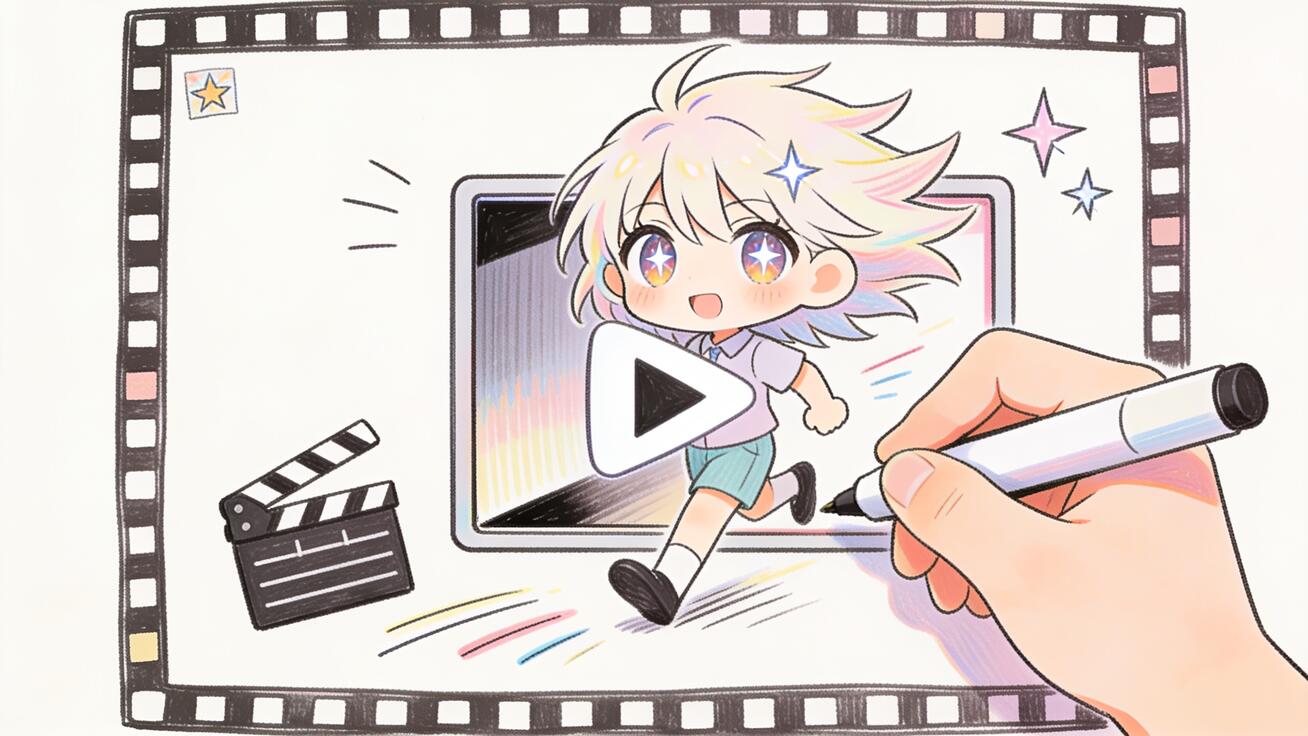
Type "anime" into any AI video tool and you usually get the same disappointment: a vaguely "cartoonish" clip with rubbery motion, dead eyes, and none of the snap that makes real anime feel alive. The gap is rarely the model — it is the prompt. Anime is not a single look. It is a stack of specific, nameable choices: cel shading, limited-frame timing, speed lines, hard rim light, exaggerated key poses, and a very particular relationship between sound and motion. Once you learn to spell those choices out, Veo 3 becomes a genuinely capable anime video generator.
This guide is a complete, repeatable system for making anime and stylized-cartoon videos with Veo 3. You will get the anime prompt framework, a copy-paste style vocabulary, five full prompt examples across different sub-genres (shonen action, Ghibli-style slice of life, cyberpunk, chibi, mecha), the workflow for keeping a character consistent across shots, how to use Veo 3's native audio for anime impact, and a QA checklist so you stop wasting credits on clips that "look like AI" instead of anime. Open Veo 3 in another tab and build along as you read.
Why most "anime" AI clips fail
Before the prompts, understand the failure modes — because every fix below targets one of them.
1. Default realism bias. Text-to-video models are trained on a huge amount of live-action footage, so left to their own devices they drift toward photoreal lighting, full-motion physics, and three-dimensional skin. That is the opposite of anime, which leans on flat color fills, hard shadow edges, and stylized motion. If you do not actively push the model toward illustration, it will quietly default to "3D render of a cartoon," which is the uncanny middle ground nobody wants.
2. Missing the timing language. Real anime is animated "on twos and threes" — meaning it deliberately holds frames and snaps between key poses instead of smoothly interpolating every micro-movement. A prompt that says "smooth motion" actively fights the anime look. You want words like snappy key poses, held frames, quick smear on fast actions.
3. Under-specified art style. "Anime style" is too broad. 1990s cel anime, modern digital TV anime, Studio Ghibli watercolor backgrounds, and Saturday-morning Western cartoons are wildly different. The model needs you to pick one and name its concrete features.
4. Audio mismatch. Veo 3 generates native audio in the same pass as the video. Anime has an instantly recognizable sound design — bright orchestral or synth stings, exaggerated whooshes, distinct voice-acting cadence. Ignore the audio prompt and you get realistic ambient sound stapled onto a cartoon, which breaks the illusion immediately.
Keep these four in mind. The framework below is just a structured way to never forget them.
The Veo 3 anime prompt framework
For consistent results, build every anime prompt from six ordered blocks. Think of it as filling in slots rather than writing a sentence.
- Style declaration — the art style, named with concrete features.
- Subject & character design — who, with the design details that read as "anime."
- Action & key poses — what happens, described in anime timing language.
- Camera & composition — shot type and any camera move.
- Lighting & color — the palette and shadow treatment.
- Audio — voice, music, and sound effects in the same anime register.
Here is the skeleton, ready to adapt:
[STYLE] 2D cel-shaded anime, modern digital TV-anime look, flat color fills,
hard-edged cel shadows, clean line art, slight film grain, animated on twos
with snappy key poses (not smooth interpolation).
[SUBJECT] <character: hair, eyes, outfit, distinguishing features in anime
design terms>.
[ACTION] <action with held frames and quick smears on fast movement>.
[CAMERA] <shot size + any move, e.g. dynamic low-angle, slight handheld>.
[LIGHT/COLOR] <palette + rim light + shadow style>.
[AUDIO] <voice tone, music genre, key SFX>.
The order matters. Veo 3 weights the front of the prompt heavily, so leading with the style declaration sets the whole render's intent before it ever reads the action. Many "why is my anime clip realistic" problems disappear simply by moving the style words to the very front.
A copy-paste anime style vocabulary
These are the concrete terms that actually move Veo 3 toward the anime look. Mix and match by sub-genre.
Linework & shading
- cel shading, hard-edged cel shadows, two-tone shading
- clean ink line art, bold confident outlines
- flat color fills, limited color palette
- subtle paper/film grain overlay
Motion & timing
- animated on twos, snappy key poses, held frames
- speed lines, motion smear frames, impact frames
- exaggerated anticipation and follow-through
- "limited animation" feel (not full Disney-smooth)
Anime-specific design cues
- large expressive eyes with highlight glints
- spiky or flowing stylized hair with distinct hair-strand clumps
- simplified noses, expressive eyebrow acting
- emotive symbols (sweat drop, vein-pop anger mark, blush lines) — use sparingly
Lighting
- hard rim light, dramatic backlight
- bloom/glow on highlights, lens flare for emotional beats
- sunset orange-and-teal palette, or cool blue night palette
Drop three or four of these into the relevant framework slot and the difference is immediate.
Five full prompt examples
Each of these is a complete, copy-paste prompt. Generate, then read the "why it works" note so you can adapt it.
1. Shonen action (fight scene)
2D cel-shaded anime, modern shonen action style, bold ink outlines, flat color
fills with hard-edged cel shadows, animated on twos with snappy key poses and
motion smears on fast moves. A teenage swordsman with spiky silver hair, sharp
green eyes, and a torn dark-blue haori leaps toward camera and swings a glowing
katana in a single decisive diagonal slash; hold on the wind-up key pose for a
beat, then a fast smear frame on the swing, then a held impact frame with white
speed lines radiating outward. Dynamic low-angle shot, slight camera shake on
impact. Hard rim light from behind, electric-blue energy glow on the blade,
dramatic dusk sky. Audio: a sharp metallic "shing," a deep impact boom, intense
orchestral-and-taiko battle music, the character shouts a short determined cry.
Why it works: the timing instructions (wind-up hold → smear → impact hold) recreate anime's signature three-beat action rhythm instead of smooth motion. The audio block matches the visual register, so the punch lands.
2. Ghibli-style slice of life
Hand-painted anime in the style of classic Studio-Ghibli-inspired films, soft
watercolor backgrounds, gentle gouache textures, warm natural light, smooth but
calm character animation, muted earthy palette. A young girl in a simple yellow
sundress stands in a green hillside meadow, long grass swaying, her hair and
dress moving gently in the wind as she shields her eyes and looks up at slow
drifting clouds. Wide establishing shot, very slow push-in. Soft afternoon
sunlight, lush layered background of rolling hills and a distant village.
Audio: gentle wind through grass, distant birdsong, a tender solo-piano melody,
no dialogue.
Why it works: Ghibli-style work is the exception to "no smooth motion" — it uses fuller, gentler animation and painterly backgrounds, so we explicitly ask for soft, calm motion and watercolor texture rather than cel shading and speed lines.
3. Cyberpunk / neon anime
2D cel-shaded anime, cyberpunk neon-noir style, sharp clean line art, high
contrast flat colors, hard cel shadows, faint film grain, animated on twos. A
young hacker with an undercut and glowing cyan cybernetic eye walks through a
rain-soaked neon alley at night, holographic signs reflecting in puddles, coat
flaring slightly with each step. Medium tracking shot moving with her, shallow
depth with bokeh neon lights behind. Cool blue-and-magenta palette, hard pink
rim light from a sign, reflective wet surfaces, glowing eye highlight. Audio:
light rain, distant city hum, a moody synthwave bassline, the soft hum of her
cybernetic eye.
Why it works: the palette is doing the heavy lifting. By naming the exact neon color scheme and reflective wet surfaces, the model commits to a stylized night look instead of a muddy realistic one.
4. Chibi / cute comedy
2D anime in cute chibi style, super-deformed proportions, big round heads, tiny
bodies, huge sparkling eyes, thick soft outlines, bright pastel flat colors,
bouncy exaggerated animation with squash and stretch. A tiny chibi cat-girl
gasps in delight at an enormous parfait twice her size, eyes turning to giant
sparkles, a comedic blush and a single bouncing "excited" hop. Centered medium
shot, slight comedic zoom-in on the sparkle-eyes. Bright even lighting, cheerful
pastel kitchen background. Audio: a cute high-pitched delighted gasp, a playful
"ta-da" chime, bouncy ukulele-and-glockenspiel comedy music, a little "nya."
Why it works: chibi is the one place you want squash-and-stretch and bouncy motion. The exaggerated proportions plus comedy audio make it read instantly as cute anime rather than generic 3D cartoon.
5. Mecha (giant robot)
2D cel-shaded anime, 1990s mecha-anime style, detailed mechanical line art,
hard metallic cel shading, flat saturated colors, animated on twos with heavy
weighty motion and impact frames. A towering blue-and-white humanoid mecha
powers up: panel lines glow, thrusters ignite with a burst, and it raises a
massive arm-mounted cannon as energy charges at the muzzle; hold on the charging
key pose, then a brilliant flash. Low dramatic hero angle looking up, slight
ground rumble shake. Hard orange thruster glow against a dark storm sky, intense
energy bloom at the cannon. Audio: deep mechanical servo whirs, a rising charge
hum, an explosive thruster roar, a heroic brass-and-synth mecha theme.
Why it works: weight is the whole point of mecha. Asking for "heavy, weighty motion" and ground rumble plus mechanical SFX gives the robot the mass that makes mecha satisfying.
Workflow: from idea to finished anime sequence
A single 8-second clip is a shot, not a video. Here is how to chain shots into a coherent anime scene.
Step 1 — Lock your style string. Write your style declaration block once (the [STYLE] line) and reuse the exact same wording in every prompt of the sequence. Inconsistent style wording is the number-one cause of clips that don't cut together — one shot comes out cel-shaded, the next comes out 3D, because you described them differently.
Step 2 — Design your character before animating. Write a short "character bible": hair color and shape, eye color, outfit, one or two distinctive features (a scar, a hair clip, a colored ribbon). Keep this text identical across prompts. For tighter consistency, generate one clean anime character portrait first (image-to-video), then use it as a reference image so Veo 3 carries the design forward instead of reinventing the face each shot.
Step 3 — Storyboard in beats. Break your scene into 8-second beats: establishing shot, character reaction, action, payoff. Write one prompt per beat. Keep the style and character text constant; only change action, camera, and audio.
Step 4 — Use first-frame / scene chaining for continuity. When your tool offers frame-to-video or scene-builder chaining, feed the last frame of one clip as the starting frame of the next. This carries pose, lighting, and background forward so cuts feel intentional rather than random.
Step 5 — Generate, select, and assemble. Generate two or three variations per beat, pick the best take, and assemble them in any editor. Add title cards or subtitles in your editor rather than asking Veo 3 to render text, since AI-rendered text is unreliable.
Step 6 — Match cuts to the music. Anime edits land hard on musical beats. If your action clips have impact frames, cut to them on the downbeat. This single editing habit makes amateur anime sequences feel professionally timed.
Getting anime audio right
Veo 3's native audio is a real advantage for anime, where sound design is half the impact — but only if you direct it.
- Voice: describe tone and delivery, not just words. "A short determined battle cry," "a soft shy whisper," "an over-the-top dramatic monologue." Anime voice acting is heightened; ask for it explicitly.
- Music: name the genre and instrumentation. Orchestral-and-taiko for battles, solo piano for emotional beats, synthwave for cyberpunk, bouncy ukulele for comedy. "Anime music" alone is too vague.
- SFX: anime sound effects are exaggerated and iconic. The "shing" of a drawn sword, the whoosh of a fast move, the "ta-da" chime, the dramatic sting on a reveal. List the two or three signature sounds you want.
- Silence as a tool: asking for "no dialogue, just gentle wind and a soft piano" is a legitimate and powerful choice for slice-of-life and emotional shots. Do not over-stuff the audio block.
Common problems and how to fix them
"It looks 3D / rendered, not 2D." Move the style declaration to the very front of the prompt, add "flat color fills" and "hard-edged cel shadows," and explicitly say "2D illustration, not 3D render." Remove any realism words.
"Motion is too smooth and floaty." Add "animated on twos, snappy key poses, held frames." Remove "smooth motion." For action, add "motion smear on fast movement" and describe the wind-up → snap → impact rhythm.
"The face changes between shots." Reuse identical character-bible text, and add a reference image of the character. Avoid re-describing the face differently each time.
"Eyes look dead / off." Add "large expressive anime eyes with bright highlight glints." Eye highlights are a big part of what reads as anime; without them eyes look flat.
"The audio sounds realistic, not anime." Rewrite the audio block with anime instrumentation and exaggerated SFX, and specify the voice delivery style. Realistic ambient sound on a cartoon is jarring.
"Backgrounds are inconsistent." Lock background description in your style/scene text, and use scene chaining so the next clip starts from the previous frame.
Anime vs. Western cartoon: pick the right register
People often lump "anime" and "cartoon" together, but Veo 3 responds to them as different style stacks, and mixing the cues gives you that off-putting in-between look. If you want Japanese anime, lean on cel shading, large highlight-filled eyes, on-twos timing, speed lines, and dramatic rim light. If you want a Western cartoon (think modern streaming-cartoon or classic Saturday-morning), ask instead for thick rubber-hose-friendly outlines, bouncier squash-and-stretch, rounder simplified shapes, brighter even lighting, and looser exaggerated motion. A Pixar/3D-cartoon look is a third register entirely — soft global lighting, rounded volumetric forms, subsurface skin — and you should only reach for it when you explicitly want 3D rather than 2D. Decide which of the three you are making before you write the prompt, then pull cues from only that column. The fastest way to ruin an anime clip is to accidentally borrow a Pixar lighting word.
Use cases worth building
- Anime shorts and web series: chain beats into a 30–60 second scene; consistent style + character bible makes episodic content viable.
- Music videos / AMV-style visuals: anime motion cut to a track is one of the highest-engagement formats on short-video platforms.
- Title sequences and openings: a punchy 8–15 second anime-style intro for a channel or game.
- Character concept tests: animate a character design in a few poses before committing to a full production.
- Stylized ads and explainers: a cartoon/anime register makes product explainers friendlier and more shareable than live action.
- Manga-to-motion: bring a still manga panel or illustration to life as a short animated moment.
Across all of these, the discipline is the same: name the style concretely, keep it constant, direct the timing, and match the audio.
QA checklist before you publish
Run every finished anime clip through this list:
- [ ] Style reads as 2D anime, not a 3D render (flat fills, hard cel shadows, clean lines).
- [ ] Motion timing uses held frames and snappy poses, not floaty interpolation (except deliberately smooth Ghibli-style shots).
- [ ] Character matches the character bible across every shot (hair, eyes, outfit, features).
- [ ] Eyes have highlights and read as expressive anime eyes.
- [ ] Audio is in the anime register — voice delivery, music genre, and signature SFX all match the visuals.
- [ ] Cuts land on the beat and impact frames hit on downbeats.
- [ ] No rendered text artifacts — titles and subtitles added in the editor.
- [ ] Backgrounds are consistent shot to shot.
Final word
Veo 3 will not give you anime by accident — it defaults to realism, and "anime style" alone is not enough direction. But the moment you treat anime as a stack of specific, nameable choices — cel shading, on-twos timing, expressive eyes, exaggerated audio — and lock those choices into a reusable framework, it becomes a fast, controllable way to produce real anime and stylized-cartoon video. Start with one of the five prompts above, lock your style string, build a character bible, and chain your beats. Open Veo 3 and make your first scene.
Related Articles
Continue with more blog posts in the same locale.
How to Make Sports Highlight Videos with Veo 3 AI (2026)
Create stunning sports highlight videos with Veo 3 AI. Generate dynamic action shots, slow-motion sequences, and dramatic replays using AI prompts.
Read article
How to Make a Short Film with Veo 3 AI (2026 Guide)
Learn how to create professional short films using Veo 3 AI. Step-by-step guide with prompts, workflow tips, and cinematic techniques.
Read article
How to Make Documentary Videos with Veo 3 AI (2026 Guide)
Create compelling documentary videos with Veo 3 AI. Learn prompting techniques, narrative structure, realistic footage generation, and post-production tips.
Read article