
Can Veo 3 Edit Existing Videos? How to Change & Transform Footage (2026)
Can Veo 3 edit a video you already have? The honest answer, the 4 real ways to change existing footage, what Veo 3 can't do, the Google Flow workflow, prompts, and alternatives.
Emma Chen · 15 min read · Jun 30, 2026
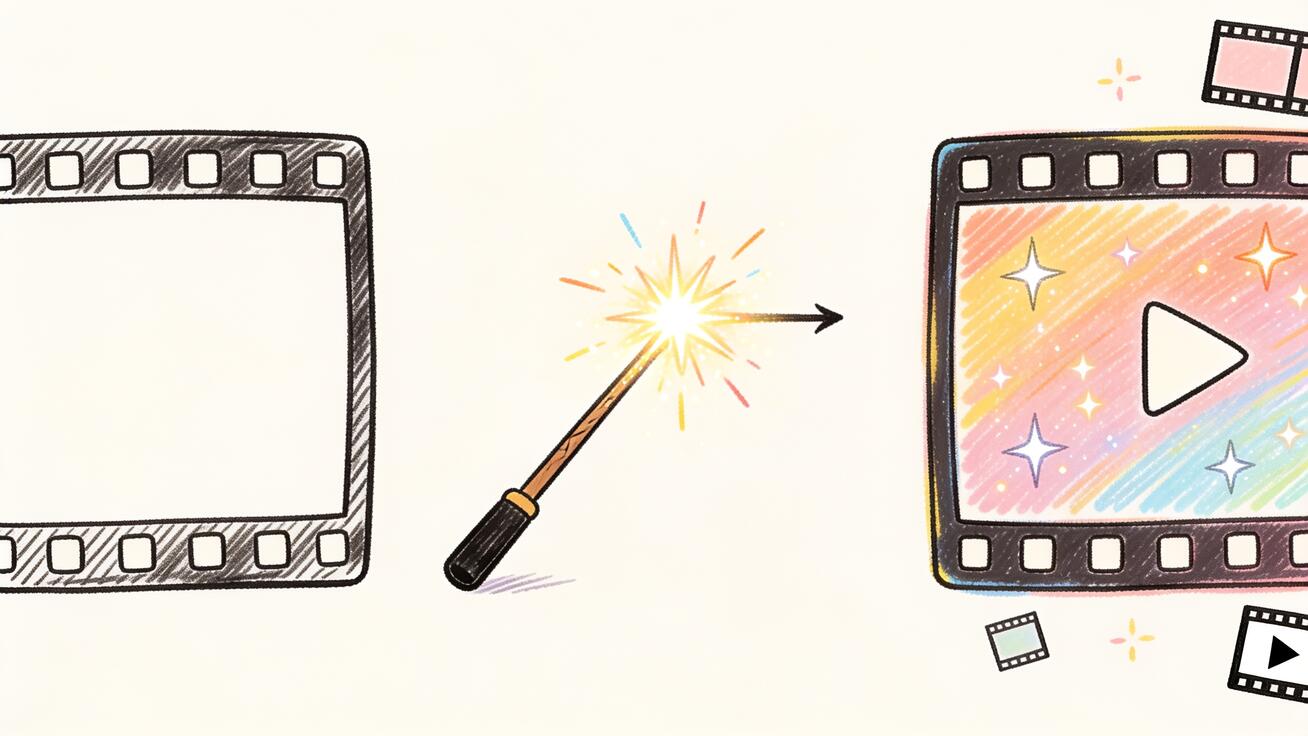
<p>You already have a video — a clip you filmed on your phone, an old render, a short you generated last week — and you want Veo 3 to <em>change</em> it. Swap the background, restyle the whole thing into anime, extend the ending, or fix one awkward second. So the obvious question is: can Veo 3 edit a video you already have, the way CapCut or Premiere edits a timeline? Or the way some AI tools do "video-to-video" restyling?</p>
<p>The honest answer is: <strong>partly, and not in the way most people assume.</strong> Veo 3 is a <em>generative</em> model, not a timeline editor, and it does not yet offer true arbitrary "upload any clip, restyle the whole thing" video-to-video. But there are four real, supported ways to take footage you already have and turn it into something new with Veo 3 — and a handful of clean workarounds for everything those four can't reach. This guide walks through exactly what works, what doesn't, the step-by-step workflow inside Google Flow, prompt examples, and where to combine Veo 3 with a real editor to get the result you actually want.</p>
<h2>What "editing a video" means with Veo 3 (and why the distinction matters)</h2>
<p>There are two completely different things people mean when they say "edit my video," and Veo 3 only does one of them well.</p>
<p><strong>Timeline editing</strong> is what CapCut, Premiere Pro, DaVinci Resolve, and Final Cut do: trimming clips, cutting on the beat, layering text and music, adjusting color, stitching shots into a sequence. This is deterministic — you move a frame, the frame moves. Veo 3 does <strong>none</strong> of this. It has no timeline, no razor tool, no track stack. If your goal is "cut these three clips together and add captions," Veo 3 is the wrong tool and you should reach for an editor.</p>
<p><strong>Generative editing</strong> is changing what's actually <em>in</em> the footage — restyling it, animating a still, continuing a shot, or regenerating a scene from a reference. This is probabilistic: you describe what you want and the model creates new pixels to match. This is where Veo 3 lives, and it's genuinely powerful once you understand the four doors it gives you.</p>
<p>Keep this split in your head for the rest of the article. When someone asks "can Veo 3 change my video," they usually want generative editing — and the next sections show precisely how far that goes.</p>
<h2>The 4 ways Veo 3 can actually change footage you already have</h2>
<h3>1. Image-to-video: turn a frame from your clip into new motion</h3>
<p>Veo 3's image-to-video mode takes a single still image as the <em>first frame</em> and generates motion outward from it. This is the most reliable way to "change" existing footage: export a frame from the video you have (a screenshot, a thumbnail, a freeze on a key moment), feed it to Veo 3 as the start image, and write a prompt describing the new motion, camera move, or action you want.</p>
<p>This doesn't preserve your original clip's motion — it generates fresh motion from that one frame — but it lets you re-animate a moment in a totally new direction. Example use cases:</p>
<ul> <li>You have a static product shot pulled from an old video; Veo 3 turns it into a slow rotating hero shot.</li> <li>You freeze on a character's face and have Veo 3 generate them turning to speak.</li> <li>You take a landscape frame and generate a drifting drone-style push-in.</li> </ul>
<p>The trade-off: you only carry over one frame, so anything that happened in your original motion is gone. You're effectively re-shooting from a single still. For many "change my video" goals — especially when the original clip was just a reference look — that's exactly enough.</p>
<h3>2. Frames-to-video: lock your start and end, regenerate the middle</h3>
<p>Veo 3.1 added <strong>frames-to-video</strong> (sometimes called first-and-last-frame): you supply both a starting image and an ending image, and the model generates the motion that connects them. If you have a video and you want to keep its opening look and its final look but transform what happens between them, this is the closest Veo gets to "editing the middle of my clip."</p>
<p>Pull the first frame and the last frame from your existing footage, hand both to Veo 3.1, and prompt the transition you want. The model invents a believable path between the two anchors. This is excellent for:</p>
<ul> <li>Smoothing a jump cut into a continuous morph.</li> <li>Turning a "before" frame and an "after" frame into a satisfying transformation reveal.</li> <li>Re-timing a movement that felt too fast or too slow in the original.</li> </ul>
<h3>3. Extend: continue a clip past where it ended</h3>
<p>If your "change" is really "make this longer," Veo's extend feature continues an existing generated clip, using its final frames as the seed for the next segment. This keeps the look and subject roughly consistent while adding new seconds. Stack extends and you can push a single 8-second generation into a much longer sequence. Note that extend works most cleanly on clips Veo itself generated; arbitrary uploaded footage is more limited.</p>
<h3>4. Ingredients & reference-guided generation: carry a look or character across</h3>
<p>Veo 3.1's "ingredients to video" lets you upload reference images — a character, an object, a style board — and have the model build a new video that honors them. If what you want to "keep" from your old video is a <em>character's appearance</em> or a <em>visual style</em> rather than the exact footage, pull reference stills from your clip and use them as ingredients. The output is a brand-new generation, but it inherits the elements you fed it, which is often the real intent behind "change my video but keep the character."</p>
<h2>What Veo 3 cannot do to your existing video (be honest with yourself)</h2>
<p>Saving yourself a frustrating afternoon starts with knowing the hard limits. As of 2026, Veo 3 / 3.1 does <strong>not</strong>:</p>
<ul> <li><strong>Restyle an arbitrary uploaded clip end-to-end.</strong> There is no native "upload my 30-second video, output the same motion in Studio Ghibli style" button. True video-to-video restyle of long, arbitrary footage is not a supported Veo feature — that's a different class of tool (see the alternatives section).</li> <li><strong>Trim, cut, or re-sequence.</strong> No timeline. Use a real editor.</li> <li><strong>Edit a single object inside an unchanged scene ("inpaint this logo out").</strong> Object-level video inpainting isn't part of Veo's generation flow.</li> <li><strong>Guarantee frame-perfect continuity</strong> with your source. Because every door above <em>regenerates</em> pixels, expect the output to differ from your original in fine detail — faces, text, and hands especially.</li> <li><strong>Preserve original audio.</strong> Veo 3 generates its own native audio; it won't lift the soundtrack off your uploaded clip.</li> </ul>
<p>If a workflow you read about online promises any of these "natively in Veo 3," treat it with suspicion — it's almost certainly stitching Veo together with another tool, which is exactly what the workaround section below teaches you to do properly.</p>
<h2>Step-by-step: change your video using Veo 3 in Google Flow</h2>
<p>Here's the concrete workflow most creators should follow. Google Flow is the main consumer surface for Veo 3; AI Studio and the Gemini app expose similar generation paths.</p>
<ol> <li><strong>Decide which "door" you need.</strong> One frame re-animated → image-to-video. Keep start + end, change the middle → frames-to-video. Just make it longer → extend. Keep a character/style → ingredients. Pick before you touch the tool.</li> <li><strong>Export the frame(s) you need from your existing video.</strong> Open your clip in any player or editor, scrub to the moment, and export a high-resolution still (PNG or JPG). For frames-to-video, export both the first and last frame you want to anchor.</li> <li><strong>Open Google Flow</strong> and start a new generation. Choose the matching mode (image-to-video, or the frames/ingredients inputs in the Veo 3.1 options).</li> <li><strong>Upload your frame(s).</strong> Drop the still into the start-image slot (and end-image slot for frames-to-video; reference slots for ingredients).</li> <li><strong>Write a precise prompt</strong> describing the change you want. Name the subject, the new action or camera move, the style, and the mood. Specificity is what separates a usable result from a near-miss — see the prompt examples below.</li> <li><strong>Set duration and aspect ratio</strong> to match where the video will live (9:16 for Shorts/Reels/TikTok, 16:9 for YouTube).</li> <li><strong>Generate, then iterate.</strong> Generative editing is rarely one-shot. Re-roll with a tightened prompt, swap the source frame, or adjust the reference. Two or three passes is normal.</li> <li><strong>Download and finish in an editor.</strong> Bring the Veo output into CapCut, Premiere, or Resolve to trim, add captions, layer music, and sequence it with your other footage. Veo makes the new shot; the editor assembles the final video.</li> </ol>
<h2>Prompt examples for transforming existing footage</h2>
<p>When you're re-animating a frame from your own clip, the prompt does the heavy lifting. A few patterns that work well:</p>
<p><strong>Re-animate a static product frame:</strong></p> <blockquote>Starting from this product photo, slowly rotate the bottle 180 degrees on a clean studio turntable, soft top light, shallow depth of field, condensation droplets catching the light, premium commercial look, smooth continuous motion.</blockquote>
<p><strong>Restyle the vibe of a frame:</strong></p> <blockquote>Using this street scene as the first frame, transform the mood into a rainy neon cyberpunk night — wet reflective pavement, magenta and cyan signage, light rain, a slow cinematic dolly forward, moody atmosphere.</blockquote>
<p><strong>Frames-to-video transition (start + end supplied):</strong></p> <blockquote>Generate a smooth 6-second morph from the first frame to the last frame: the closed flower bud opens into full bloom, petals unfurling naturally, soft daylight, gentle camera push-in, seamless continuous motion.</blockquote>
<p><strong>Continue a character moment (image-to-video):</strong></p> <blockquote>From this frame of the woman at the cafe window, have her turn her head toward the camera and smile, then lift her coffee cup, warm natural window light, handheld documentary feel, subtle ambient cafe sound.</blockquote>
<p>Notice the pattern: name the source, name the change, name the camera move, name the look. Vague prompts ("make it cooler") waste generations; concrete ones ("slow dolly forward, neon reflections, light rain") land.</p>
<h2>The practical workaround: treat Veo 3 as a shot generator, not an editor</h2>
<p>The most reliable way to "change your video" with Veo 3 is to stop thinking of it as an editor at all and start thinking of it as a <em>shot factory</em> that feeds a real editor. The pipeline looks like this:</p>
<ol> <li><strong>Identify the shots you want to change</strong> in your existing video.</li> <li><strong>Regenerate each one</strong> through the appropriate Veo door (image-to-video from a frame, frames-to-video, etc.).</li> <li><strong>Drop the new Veo shots back into your editor</strong> (CapCut, Premiere, Resolve) in place of the old ones.</li> <li><strong>Color-match, trim, and re-time</strong> so the new generations sit naturally next to your untouched footage.</li> <li><strong>Layer your own audio</strong> — since Veo generates its own, you'll often mute the Veo track and keep your original sound design.</li> </ol>
<p>This hybrid approach gets you 90% of what people imagine "AI video editing" should be: you keep full editorial control in a tool built for it, and you use Veo only for the thing it's uniquely good at — generating brand-new, photoreal, audio-rich shots on demand. For a deeper comparison of where the generator ends and the editor begins, our Veo 3 vs CapCut breakdown covers the division of labor in detail.</p>
<h2>Best practices when changing footage with Veo 3</h2>
<ul> <li><strong>Start from your highest-quality frame.</strong> The source still is the seed for everything; a sharp, well-lit, high-resolution frame produces a far better generation than a blurry screenshot.</li> <li><strong>Match aspect ratio to the destination</strong> from the first generation rather than cropping later and losing resolution.</li> <li><strong>Expect identity drift.</strong> Faces, logos, and text rarely survive regeneration perfectly. For anything brand-sensitive, plan to composite the real asset back in your editor.</li> <li><strong>Generate a few variants per shot.</strong> Re-rolling with the same prompt yields different motion; pick the best take, like a director reviewing footage.</li> <li><strong>Keep clips short and stack.</strong> Rather than fighting for one long perfect generation, make several clean short shots and assemble them.</li> <li><strong>Mind the content rules.</strong> Veo applies safety filters and may rewrite or refuse prompts involving real public figures, copyrighted characters, or other restricted content — even when transforming your own footage.</li> </ul>
<h2>Alternatives for true video-to-video restyling</h2>
<p>If your actual need is "upload my whole clip and restyle every frame while keeping the original motion" — true video-to-video — Veo 3 isn't built for that today, and you shouldn't force it. That capability lives in a different family of tools: dedicated video-to-video and motion-transfer models that ingest your full clip and repaint it frame by frame. The trade-off is that those tools generally don't match Veo 3's photorealism or its native synchronized audio. A common professional move is to use a video-to-video tool for the restyle pass and Veo 3 for any net-new shots the restyle can't cover, then assemble both in your editor.</p>
<p>For most creators, though, the four Veo doors plus an editor cover the real-world version of "change my video": re-animate a frame, bridge two frames, extend a clip, or carry a character forward — then finish in CapCut. That's the workflow that actually ships.</p>
<h2>Frequently asked questions</h2>
<h3>Can Veo 3 edit a video I upload?</h3> <p>Not as a timeline editor, and not as a full-clip restyler. It can take a <em>frame</em> (or a start-and-end pair, or reference stills) from your video and generate new motion from it. It cannot trim, cut, inpaint objects, or restyle an arbitrary uploaded clip end to end.</p>
<h3>Can Veo 3 change the background of my existing video?</h3> <p>Not on the original footage directly. You can export a frame, regenerate it with a new background via image-to-video, and use that new shot — but Veo won't swap the background on your untouched clip while preserving the original subject motion.</p>
<h3>Does Veo 3 keep my original audio when I change a video?</h3> <p>No. Veo 3 generates its own native audio for each clip. To keep your original sound, mute the Veo track in your editor and layer your source audio back over the new visuals.</p>
<h3>How do I make my Veo 3 video longer?</h3> <p>Use the extend feature, which continues a clip from its final frames. It works most cleanly on clips Veo itself generated; you can stack extends to build a longer sequence.</p>
<h3>What's the best way to restyle an entire video?</h3> <p>For true frame-by-frame restyling of a full clip, use a dedicated video-to-video tool, then bring any net-new shots from Veo 3 and assemble everything in a standard editor. Veo 3 alone is best for generating fresh shots, not blanket-restyling existing footage.</p>
<h3>Is changing a video with Veo 3 free?</h3> <p>Veo 3 generations consume credits on Google's paid plans, with limited free access through AI Studio and trial credits. Re-animating frames counts as new generations, so budget credits per shot you change.</p>
<h3>Why does my changed clip look different from the original?</h3> <p>Because every Veo door <em>regenerates</em> pixels rather than editing your file, the output is a new creation seeded by your frame — not a pixel-preserving copy. Fine details such as faces, hands, small text, and logos are the first things to drift. If exact fidelity matters for part of the frame, composite the real asset back over the Veo shot in your editor instead of expecting the model to reproduce it.</p>
<h3>Can I change just one second of my video with Veo 3?</h3> <p>Not surgically inside the original clip. The practical approach is to isolate the moment, export a frame, regenerate that beat as a fresh short Veo shot, and splice it back into your timeline in an editor. You're replacing the second with a new generation rather than editing the existing pixels in place.</p>
<h2>The bottom line</h2>
<p>Veo 3 can absolutely help you change a video you already have — just not by editing the file in place. Think of it as four powerful doors into <em>regenerating</em> footage: animate a frame, bridge a start and end, extend a clip, or carry a character forward. Pair those doors with a real editor for trimming, sequencing, and audio, and you get a workflow that handles the realistic version of "change my video" beautifully. Know the hard limits — no timeline editing, no full-clip restyle, no object inpainting, no preserved audio — and you'll spend your credits where they actually pay off instead of fighting the tool to do something it was never built for.</p>
Related Articles
Continue with more blog posts in the same locale.
How to Make Sports Highlight Videos with Veo 3 AI (2026)
Create stunning sports highlight videos with Veo 3 AI. Generate dynamic action shots, slow-motion sequences, and dramatic replays using AI prompts.
Read article
How to Make a Short Film with Veo 3 AI (2026 Guide)
Learn how to create professional short films using Veo 3 AI. Step-by-step guide with prompts, workflow tips, and cinematic techniques.
Read article
How to Make Documentary Videos with Veo 3 AI (2026 Guide)
Create compelling documentary videos with Veo 3 AI. Learn prompting techniques, narrative structure, realistic footage generation, and post-production tips.
Read article