
Comment prolonger les vidéos Veo 3 au-delà de 8 secondes (Guide 2026)
Bloqué au mur des 8 secondes dans Veo 3 ? Apprenez à assembler vos clips en une vidéo continue de 30s, 60s ou 2 minutes avec Flow Extend, Frames-to-Video et la boucle de l'API Gemini.
Emma Chen · 16 min read · Jun 25, 2026
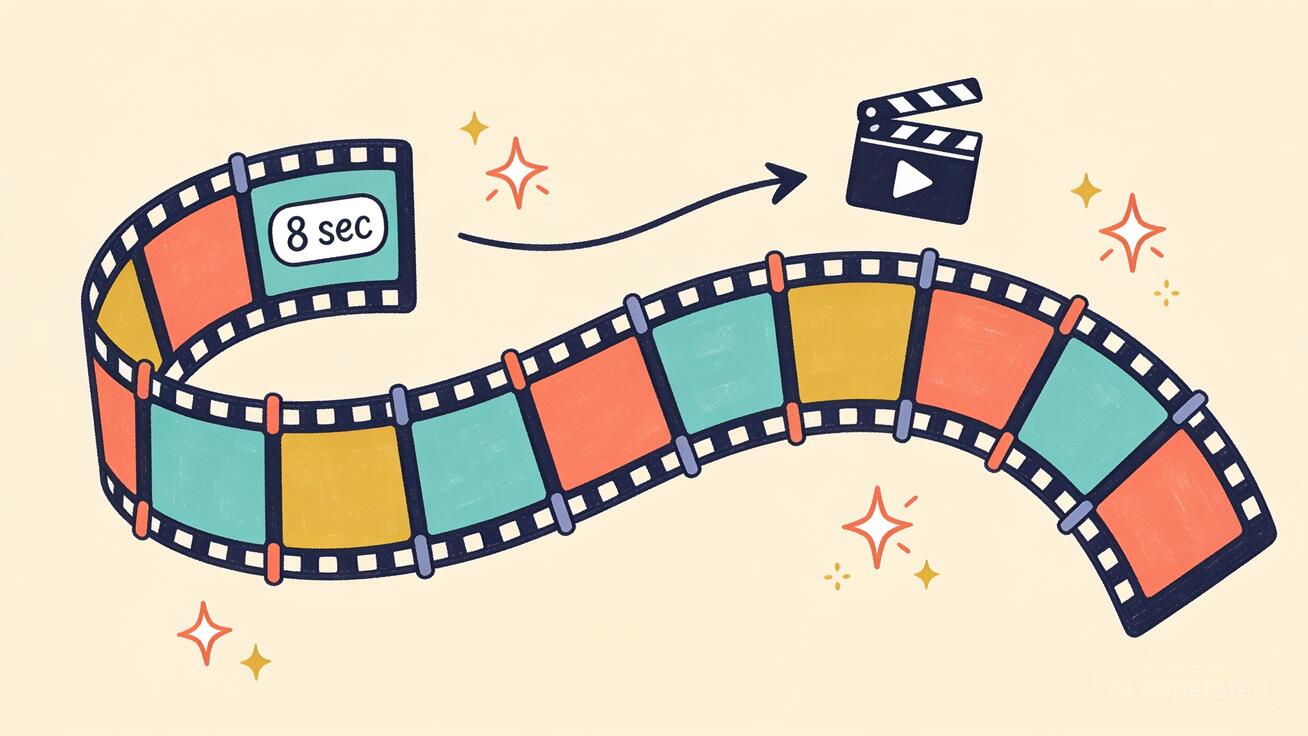
Chaque clip Veo 3 s'arrête à huit secondes. Cette seule limite est la question la plus posée dans toutes les communautés de vidéo par IA : « Comment rendre ma vidéo Veo 3 plus longue que huit secondes sans que le personnage change à mi-chemin ? » La bonne nouvelle, c'est que vous n'êtes pas réellement plafonné à huit secondes — vous êtes plafonné à huit secondes par génération. Avec le bon flux de travail de prolongation, vous pouvez assembler ces générations en une seule vidéo continue et téléchargeable de 30 secondes, 60 secondes ou deux minutes, qui conserve le même visage, la même tenue, le même éclairage et le même son du début à la fin.
Ce guide passe en revue toutes les méthodes fiables pour prolonger une vidéo Veo 3 en 2026 : la fonction Extend intégrée du Flow Scene Builder, la technique d'enchaînement Frames-to-Video plus précise, et la boucle de prolongation via l'API Gemini pour l'automatisation. Vous obtiendrez le chemin de clics exact, des modèles de prompts prêts à copier qui stoppent la dérive du personnage, et les compromis pour choisir la bonne méthode selon votre projet. Si vous débutez avec le modèle, commencez par notre guide Google Flow et Veo 3, puis revenez ici pour franchir le mur des 8 secondes. Vous pouvez ouvrir Veo 3 dans un autre onglet et suivre pas à pas.
Pourquoi Veo 3 plafonne les clips à 8 secondes
Veo 3 génère la vidéo en longueurs de clip fixes — généralement 4 ou 8 secondes — parce que le modèle produit chaque image, plus le son natif, en un seul passage cohérent. Maintenir l'identité du personnage, la physique, l'éclairage et le son synchronisé avec les lèvres stables sur une fenêtre plus longue devient exponentiellement plus difficile, c'est pourquoi Google applique un plafond strict par génération pour protéger la qualité. Le chiffre de 8 secondes n'est pas une astuce de péage ; c'est la fenêtre où Veo 3 a fiablement bonne allure.
La prolongation n'allonge pas une seule génération. Au lieu de cela, elle coud de nouvelles générations de 8 secondes à la fin de la précédente, en utilisant la dernière image (et idéalement le mouvement et le style) du clip A comme amorce du clip B. Bien exécutée, les coutures disparaissent et vous obtenez une seule prise continue. Mal exécutée, le teint de votre personnage se décale, sa veste change de couleur ou l'arrière-plan mute discrètement entre les segments. Tout l'art de prolonger Veo 3 consiste à contrôler cette dérive — et c'est surtout une discipline de prompt et de transfert d'image, pas une limitation logicielle.
Il existe trois voies pratiques vers une vidéo plus longue. Voici comment choisir :
| Méthode | Idéale pour | Conserve la qualité Veo 3 + le son ? | Difficulté |
|---|---|---|---|
| Extend dans Flow (Scene Builder) | Continuations rapides, sans intervention | Oui sur l'Extend actuel de Veo 3.1 ; les anciens boutons « Extend » retombaient sur Veo 2 Fast | Facile |
| Enchaînement Frames-to-Video | Contrôle maximal du transfert | Oui — qualité Veo 3 complète + son natif | Moyen |
| Boucle de prolongation API Gemini | Automatisation, traitement par lots, longues séquences | Oui | Avancé |
Le reste de ce guide traite chaque méthode tour à tour.
Méthode 1 : Extend dans le Flow Scene Builder (la voie facile)
Flow est l'interface de réalisation de Google pour Veo, et son Scene Builder est le moyen le plus simple de dépasser huit secondes. C'est la méthode à utiliser quand vous voulez une continuation rapide et que vous faites confiance au modèle pour faire avancer le mouvement.
Pas à pas
- Générez votre premier clip. Dans Flow, rédigez un prompt complet et générez votre scène d'ouverture de 8 secondes avec Veo 3. Réussissez ce clip du premier coup — chaque prolongation en hérite, donc une ouverture faible se transforme en une séquence faible.
- Ajoutez le clip à une scène. Survolez le clip terminé et choisissez Add to Scene, puis basculez en vue Scene Builder. Là, Flow traite vos clips comme une chronologie plutôt que comme des générations isolées.
- Cliquez sur + et choisissez Extend. À côté de votre clip, cliquez sur l'icône + et sélectionnez Extend. Flow amorce la génération suivante avec la dernière image et le mouvement du segment en cours.
- Décrivez ce qui se passe ensuite. Une nouvelle zone de prompt apparaît. Rédigez une courte continuation — l'action suivante, un mouvement de caméra ou un basculement émotionnel. Si vous voulez que Veo poursuive simplement le mouvement par lui-même, vous pouvez laisser le champ vide, mais vous aurez plus de contrôle en décrivant explicitement le moment suivant.
- Générez et répétez. Cliquez sur Generate. Veo produit un autre clip de 8 secondes qui poursuit le précédent. Répétez l'étape +/Extend pour empiler des segments en une séquence de 30 secondes, 60 secondes ou plus.
- Téléchargez en une seule vidéo. Une fois la séquence terminée, Flow vous permet d'exporter les clips enchaînés en un seul MP4 continu.
Le problème de la dérive (et la solution)
La chose la plus importante à comprendre : Veo ne se souvient pas de votre prompt précédent entre les prolongations. Chaque prolongation est une nouvelle génération qui n'hérite que de l'amorce visuelle, pas de la description. Si votre premier prompt disait « une femme en veste de cuir rouge aux cheveux noirs courts, lumière chaude de l'heure dorée », la prolongation n'en sait rien tant que vous ne le redites pas.
Ainsi, chaque prompt de prolongation doit redonner les éléments non négociables : description du personnage, garde-robe, environnement, éclairage, ambiance et direction sonore. Omettez-les et vous obtenez les défaillances classiques — éclaircissement du teint, la veste qui vire au bordeaux, l'arrière-plan qui échange ses bâtiments. Les redonner à chaque segment est le prix d'une longue vidéo sans couture.
Modèle de prompt de prolongation (à copier et adapter pour chaque segment) :
[MÊME PERSONNAGE : femme, la trentaine, cheveux noirs courts, veste de cuir rouge, créoles argentées]. [MÊME DÉCOR : ruelle de Tokyo détrempée la nuit, enseignes au néon]. [MÊME LUMIÈRE : clé bleue froide avec liseré néon magenta]. NOUVELLE ACTION : elle se tourne vers la caméra et commence à avancer. CAMÉRA : travelling avant lent. SON : bourdonnement urbain lointain, pluie douce, ses pas sur le pavé mouillé.
Gardez les blocs « MÊME » identiques octet par octet sur toutes les prolongations. Seules les lignes NOUVELLE ACTION et CAMÉRA changent. C'est cette discipline qui distingue une prise continue professionnelle d'une vidéo manifestement cousue.
Une note sur la qualité : sur certaines versions antérieures, le bouton Extend de base générait avec Veo 2 Fast — résolution plus basse et sans son —, ce qui poussait beaucoup de créateurs à l'éviter. Sur le Veo 3.1 actuel, Extend conserve la qualité Veo 3 et le son natif. Si une prolongation revient un jour sans son ou visiblement plus douce, c'est votre signal pour passer à la Méthode 2.
Méthode 2 : Enchaînement Frames-to-Video (contrôle maximal)
Quand vous avez besoin du transfert le plus net possible — une animation de produit, une séquence de marque, un récit où le personnage ne doit absolument pas dériver — utilisez Frames-to-Video (la fonction première et dernière image de Veo 3.1) pour contrôler la couture manuellement. C'est la technique sur laquelle s'appuient la plupart des créateurs Veo professionnels pour le travail de longue durée.
L'idée : au lieu de laisser Flow amorcer automatiquement le clip suivant, vous saisissez la dernière image exacte du clip A, vous la donnez à Veo comme première image du clip B et, en option, vous définissez une dernière image cible pour que le modèle sache où le segment doit atterrir. Vous encadrez explicitement chaque nouvelle fenêtre de 8 secondes.
Pas à pas
- Terminez votre premier clip de 8 secondes en qualité Veo 3 complète.
- Enregistrez la dernière image comme asset. Survolez l'image finale du clip, cliquez sur le contrôle + (enregistrer comme asset) et rangez cette image dans vos assets Flow. Cette image figée est votre point de transfert.
- Démarrez une nouvelle génération avec Frames-to-Video. Choisissez l'option Frames to Video. Définissez l'image enregistrée comme première image du nouveau clip.
- (Optionnel) définissez une dernière image. Si vous savez déjà où ce segment doit se terminer — par exemple une pose de fin générée séparément ou une image de référence — définissez-la comme dernière image. Veo interpolera un mouvement fluide et réaliste entre vos deux bornes. Si vous laissez la dernière image ouverte, Veo poursuit librement à partir de la première image.
- Rédigez un prompt de continuation complet. Comme dans la Méthode 1, redonnez chaque bloc « MÊME » plus la nouvelle action et le son. Frames-to-Video verrouille le visuel plus fort, mais le prompt régit toujours le mouvement, la caméra et le son.
- Générez, enregistrez la nouvelle dernière image, répétez. Chaque nouveau clip se termine sur une image que vous enregistrez et injectez dans la génération Frames-to-Video suivante. Enchaînez-en autant que vos crédits le permettent, puis exportez le tout en une seule vidéo continue.
Pourquoi cela bat l'Extend auto pour la précision
Parce que vous contrôlez la première image exacte de chaque segment, la continuité visuelle est verrouillée au niveau du pixel là où cela compte le plus — au point de coupe. L'Extend auto confie cette décision au modèle ; Frames-to-Video vous la confie. Pour tout ce qui part chez un client, l'étape supplémentaire en vaut la peine.
Exemple de prompt de transfert Frames-to-Video :
Première image : [dernière image enregistrée du clip précédent]. Continuer sans couture. MÊME SUJET : écouteurs sans fil noir mat dans un boîtier de charge ouvert sur une surface en marbre. MÊME LUMIÈRE : clé studio douce du dessus, léger reflet sur le marbre. NOUVELLE ACTION : le couvercle du boîtier se ferme lentement, la caméra avance vers le logo de la marque. CAMÉRA : travelling avant macro 50 mm. SON : léger clic mécanique du couvercle, son d'ambiance de studio en fond.
Associez Frames-to-Video à un prompt de base solide tiré de notre guide des prompts Veo 3 et à des prompts de contrôle de caméra réfléchis pour que chaque segment donne l'impression d'avoir été filmé par un seul opérateur en une seule prise.
Méthode 3 : Prolonger via l'API Gemini (automatisation)
Si vous produisez de longues vidéos en volume — disons des dizaines de clips produit de 30 secondes —, cliquer manuellement dans le Scene Builder ne passe pas à l'échelle. L'API Gemini expose l'opération de prolongation de façon programmatique, vous pouvez donc la boucler.
Le schéma est simple :
- Générez un premier clip de 8 secondes à partir d'un prompt texte ou image via l'API.
- Prenez l'état final de la vidéo renvoyée comme amorce d'un appel extend.
- Passez un prompt de continuation (avec vos blocs « MÊME ») pour les 8 secondes suivantes.
- Répétez l'appel extend dans une boucle, en ajoutant chaque nouveau segment.
- Concaténez les segments en un seul fichier.
Selon la documentation Google de 2026, vous pouvez répéter l'opération de prolongation jusqu'à 20 fois, produisant une sortie combinée allant jusqu'à environ 148 secondes (soit deux minutes et demie) dans le flux de l'API Gemini. C'est largement suffisant pour une vidéo explicative, une courte séquence publicitaire ou un récit social — et comme c'est du code, vous pouvez créer un modèle des blocs « MÊME » une fois et le réutiliser sur tout un lot.
# Pseudo-code — schéma de la boucle de prolongation (auth + payloads complets dans le guide de l'API Veo 3)
clip = veo.generate(prompt=base_prompt)          # amorce 8s
segments = [clip]
for beat in continuation_beats:                  # chaque beat redonne les blocs SAME
    clip = veo.extend(video=clip, prompt=beat)   # +8s, amorcé par le clip précédent
    segments.append(clip)
final = concat(segments)                          # une seule vidéo continue
Pour l'authentification, les payloads de requête, les tarifs et les limites de débit, suivez notre guide de l'API Veo 3 dédié — cette méthode suppose que vous y avez déjà configuré l'accès à l'API. La logique de prolongation ci-dessus est la partie que la plupart manquent : la boucle est triviale ; garder les blocs d'identité du prompt stables entre les itérations est ce qui rend la sortie utilisable.
Stopper la dérive du personnage : les règles qui marchent vraiment
Quelle que soit la méthode choisie, la même poignée d'habitudes décide si votre longue vidéo paraît sans couture ou cousue. Elles s'appliquent également à Flow Extend, Frames-to-Video et la boucle API.
- Redonnez l'identité à chaque fois. Personnage, garde-robe, coiffure, traits distinctifs et couleurs clés vont dans chaque prompt de prolongation, idéalement sous forme de blocs entre crochets fixes que vous copiez mot pour mot.
- Verrouillez l'éclairage et la palette par des mots. « Clé bleue froide avec liseré magenta, légèrement désaturée », portée à travers tous les segments, empêche le glissement lent de couleur qui trahit le cousu.
- Gardez le langage de caméra cohérent. Si le clip un est un travelling lent, ne sautez pas vers un panoramique nerveux à l'épaule au clip deux, sauf si l'histoire l'exige. Des mouvements de caméra fluides et apparentés se lisent comme une seule prise continue.
- Portez le lit sonore. Le son natif dérive aussi. Re-spécifiez le son d'ambiance (« bourdonnement urbain lointain, pluie douce ») et tout design sonore récurrent pour que la piste ne saute pas à chaque couture. Voyez notre guide des prompts audio natifs de Veo 3 pour des formulations qui tiennent d'un segment à l'autre.
- Privilégiez Frames-to-Video aux coupes difficiles. Chaque fois qu'une couture tombe sur un moment délicat — un visage qui se tourne, une révélation de produit —, utilisez le transfert par dernière image enregistrée pour que la continuité soit verrouillée au niveau du pixel.
- Générez plusieurs candidats par segment. Les prolongations sont probabilistes. Générez deux ou trois options pour chaque nouveau clip et gardez celle qui dérive le moins avant d'enchaîner le segment suivant. Corriger la dérive tôt coûte moins cher que de la découvrir cinq clips plus loin.
- Planifiez d'abord les beats. Connaissez votre liste de plans avant de commencer à enchaîner. Si votre séquence comporte vraiment plusieurs scènes, notre flux de travail storyboard long format Veo 3 couvre la planification de l'arc narratif, qui se combine naturellement avec la mécanique de prolongation ici.
Cas d'usage réels pour des vidéos de plus de 8 secondes
Franchir le mur des 8 secondes débloque les formats qui comptent vraiment pour le marketing et la narration :
Démos de produit. Huit secondes montrent à peine un produit ; 30 à 45 secondes vous laissent le révéler, le faire pivoter, le montrer en usage et atterrir sur le logo. Enchaînez un plan héros vers un gros plan de fonctionnalité vers un beat lifestyle via Frames-to-Video pour que le produit reste cohérent au pixel près d'une coupe à l'autre.
Publicités courtes et UGC. Une publicité de 15 à 30 secondes a besoin d'une accroche, d'un moment de valeur et d'un appel à l'action. Extend vous laisse construire cette structure en trois actes comme une seule prise Veo 3 continue plutôt que des clips manifestement séparés.
Vidéos explicatives et tutoriels. Parcourez un concept sur 60 secondes avec un présentateur constant ou un personnage animé. Redonnez le bloc personnage à chaque segment, et l'« hôte » reste la même personne du début à la fin.
Récits sociaux. TikTok et Reels récompensent les mini-histoires. Un moment de personnage continu de 20 secondes — établi, développé, résolu — surpasse un seul fragment de 8 secondes parce qu'il raconte un beat complet.
Pièces musicales et d'ambiance. Enchaînez des segments atmosphériques en un long visuel fluide, en portant l'éclairage et le lit sonore à travers chaque prolongation pour un résultat hypnotique et sans couture.
Pour des conseils de cadrage, de résolution et de format spécifiques, notre guide Veo 3 pour Instagram Reels et nos articles de cas d'usage plus larges se marient bien avec le flux de prolongation ci-dessus.
Erreurs fréquentes lors de la prolongation de vidéos Veo 3
- Oublier de redonner le prompt. La cause numéro un de la dérive. Le modèle ne se souvient pas de la description du clip un. Redites-la, à chaque fois.
- Construire sur une ouverture faible. Chaque prolongation hérite du premier clip. Dépensez des générations supplémentaires à perfectionner le segment un avant d'y coudre quoi que ce soit.
- Laisser la couture tomber sur un visage ou un logo. Les moments difficiles à truquer appartiennent au milieu du clip, pas à la coupe. Cadencez vos prolongations pour que les coutures tombent sur un mouvement neutre, ou verrouillez-les avec Frames-to-Video.
- Ignorer la continuité sonore. Une piste qui saute à chaque couture crie « cousu ». Portez le lit d'ambiance à travers les segments.
- Enchaîner trop de segments à l'aveugle. La dérive s'accumule. Vérifiez la continuité tous les deux ou trois segments plutôt que de découvrir un problème après le dixième.
- Utiliser la mauvaise méthode pour la tâche. Extend auto pour la vitesse, Frames-to-Video pour la précision, API pour l'échelle. Imposer une seule méthode à chaque projet gaspille du temps et des crédits.
Foire aux questions
Quelle peut être réellement la durée d'une vidéo Veo 3 ? Chaque génération va jusqu'à 8 secondes, mais en enchaînant des prolongations, vous pouvez construire une seule vidéo continue de 30 secondes, une minute ou plus. Sur l'API Gemini, vous pouvez prolonger jusqu'à 20 fois pour une sortie combinée d'environ 148 secondes.
La prolongation conserve-t-elle la qualité Veo 3 et le son ? Sur le Veo 3.1 actuel, Extend et Frames-to-Video conservent tous deux la qualité Veo 3 complète et le son natif. Si une prolongation revient un jour douce ou silencieuse, passez à la méthode Frames-to-Video, qui préserve toujours la qualité.
Pourquoi mon personnage change-t-il entre les clips ? Parce que Veo ne se souvient pas de votre prompt précédent. Redonnez la description complète du personnage, de la garde-robe, de l'éclairage et du son dans chaque prompt de prolongation pour stopper la dérive.
Quelle est la différence entre Extend et Frames-to-Video ? Extend amorce automatiquement le clip suivant à partir de la dernière image et laisse le modèle continuer. Frames-to-Video vous laisse définir manuellement la première (et l'optionnelle dernière) image exacte de chaque nouveau segment, vous donnant un contrôle de la couture au niveau du pixel — meilleur pour le travail client.
Puis-je prolonger des vidéos sans coder ? Oui. Extend et Frames-to-Video dans le Flow Scene Builder sont entièrement visuels — aucun code nécessaire. La méthode API ne sert qu'à l'automatisation et à la production par lots.
Par où commencer si je débute avec Veo 3 ? Commencez par le guide Google Flow et Veo 3 pour apprendre l'interface, puis le guide des prompts Veo 3 pour les fondamentaux du prompt, et revenez ici pour enchaîner les clips en longues vidéos.
Conclusion
La limite de 8 secondes est réelle mais ce n'est pas un plafond pour votre vidéo finie — seulement pour chaque génération. Choisissez la méthode adaptée à votre projet : Flow Extend pour des continuations rapides sans intervention ; Frames-to-Video quand vous avez besoin de coutures parfaites au pixel près pour un produit ou un client ; et la boucle de prolongation de l'API Gemini quand vous produisez de longues vidéos à l'échelle. Dans les trois, l'artisanat est le même — redonnez le personnage, l'éclairage, la caméra et le son à chaque segment pour que le modèle porte l'identité en avant au lieu de dériver.
Maîtrisez cette discipline et vous pourrez construire des vidéos Veo 3 continues de 30 secondes, 60 secondes et deux minutes qui ressemblent à une seule prise ininterrompue. Ouvrez Veo 3, générez un clip d'ouverture solide et commencez à enchaîner.
Related Articles
Continue with more blog posts in the same locale.

10 Meilleurs Choix : Logiciels de Création Vidéo Gratuits en 2026
Découvrez les meilleurs logiciels de création vidéo gratuits en 2026. Notre guide présente 10 outils incontournables pour les réseaux sociaux, le marketing et la vidéo IA — sans filigrane, sans frais.
Read article
Comment créer des vidéos de temps forts sportifs avec Veo 3 AI (2026)
Créez des vidéos de moments forts sportifs époustouflants avec Veo 3 AI. Générez des plans d'action dynamiques, des séquences au ralenti et des répétitions spectaculaires grâce aux invites IA.
Read article
Comment Réaliser un Court Métrage avec Veo 3 AI (Guide 2026)
Apprenez à créer des courts métrages professionnels avec Veo 3 AI. Guide étape par étape avec des prompts, des conseils de workflow et des techniques cinématographiques.
Read article