
Veo Subscription Cost: Plans, Pricing, and Value
Understand veo subscription cost with a clear breakdown of free vs paid tiers, what each plan includes, and how to evaluate value before you pay.
Veo3 AI · 11 min read · Sep 24, 2026
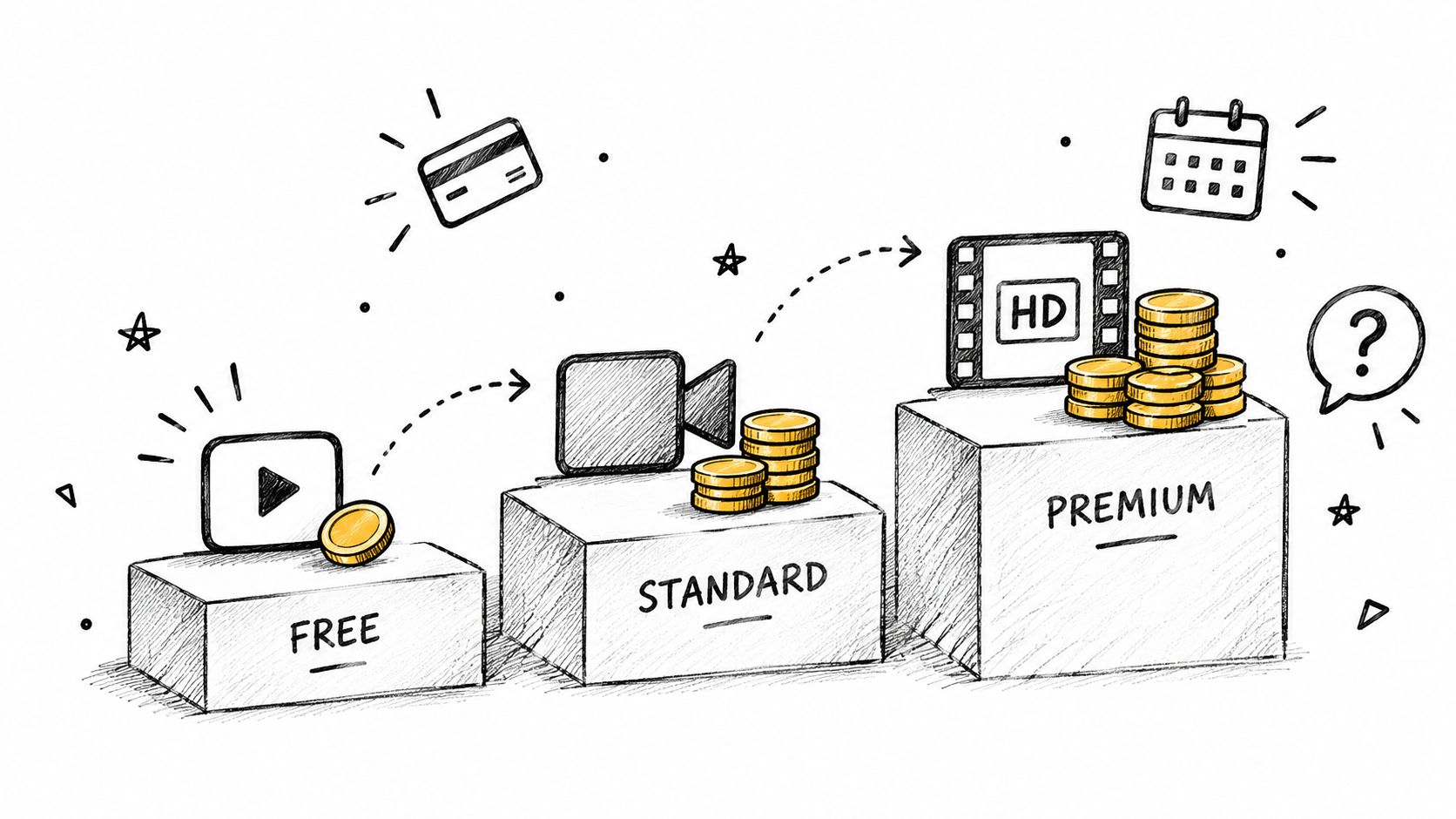
Veo subscription cost starts at $19.99/month on the consumer side, while developer API billing can run from about $0.05 to $0.60 per generated second depending on the mode and quality. Don't compare those as if they're the same product, because they're not. The choice is bundled monthly AI tiers versus per-second credit usage, and the current exact Veo3 AI prices and free credits are intentionally not stated here, so check the live pricing page before you spend anything.
You're probably trying to answer a simple question right now: should you pay a monthly fee, burn credits as you go, or just stop overthinking it and pick the path that won't eat your budget? The trap is that Veo pricing doesn't behave like a normal software subscription. It behaves like a hybrid of recurring access, metered generation, and shifting feature gates.
Table of Contents
- Why Veo Subscription Cost Is Harder Than It Looks
- How Consumer AI Tiers Bundle Veo Access
- Subscription Tiers Versus Per-Second API Billing
- How Credits Translate Subscription Cost Into Real Output
- Which Plan Logic Fits Your Creator Profile
- Billing Terms, Refunds, and Cancellation Reality
- A Pre-Purchase Checklist Before You Pay
<a id="why-veo-subscription-cost-is-harder-than-it-looks"></a>
Why Veo Subscription Cost Is Harder Than It Looks
The first mistake is treating Veo like a single product with a single price. It isn't sold that way. Access now shows up through bundled AI plans, while developer workflows use per-second billing, so the number you see is only the starting point, not the actual cost of output.
That matters because video cost depends on what you generate, not what you sign up for. A monthly plan can look cheap until you realize credits reset every billing cycle, generation modes cost different amounts of capacity, and higher-quality output burns through the pool faster. A per-second model can look flexible until a heavy week of renders turns into a much bigger bill than you expected.
Practical rule: If you can't describe your expected monthly output in clips, seconds, and resolution, you're not ready to judge the plan price yet.
For a wider pricing frame, ClipCreator.ai video pricing breakdown is useful because it shows how fast AI video costs stop being “subscription cheap” and start acting like metered production expense. That's the right mindset here. Stop chasing one magic number and compare two tracks instead, the bundled tier and the usage meter.
The other hidden variable is access path. Veo3 AI works as a separate way to reach Veo-style generation through platform credits, so you're not only comparing what a model can do, you're comparing how the platform packages it. That's why the live pricing page matters more than screenshots, blog posts, or old screenshots from a week ago.
<a id="how-consumer-ai-tiers-bundle-veo-access"></a>
How Consumer AI Tiers Bundle Veo Access
Consumer packaging is where most buyers get confused, because the plan name feels simple while the economics underneath are not. A low-entry tier usually gives you limited generation access, a mid-tier plan opens a larger monthly pool, and a top tier typically adds priority treatment and more generous usage headroom. The label is less important than the credit bucket and what drains it.
The smart way to read any consumer tier is to ask three questions. What else is bundled besides video generation. How many credits do you really control. How fast do your chosen settings consume those credits. If you ignore any one of those, you'll misread the deal.
| Tier | Typical Bundled Features | Video Generation Access | Credit Pool Behavior |
|---|---|---|---|
| Entry tier | Basic AI features, limited generation, lighter usage caps | Enough for occasional tests and short experiments | Small pool, easy to exhaust if you render often |
| Mid-tier plan | Broader AI access, more generation headroom, better output options | Better fit for regular posting and repeat workflows | Larger pooled credits, but still finite each cycle |
| Top tier | Priority access, wider feature bundle, heavier usage allowance | Suited to more consistent production needs | Largest pool, usually designed for frequent generation |
The point isn't that a higher tier is always better. It's that credits-per-dollar of generated video is what matters, not the sticker price on the plan page. If your workflow is mostly short social clips, a middle plan may stretch well enough. If you spend more time experimenting than publishing, a big monthly bundle can waste money without you noticing.
A clean way to think about it is this. A subscription buys predictability, but only if you use the pool. If you don't, you're prepaying for unused capacity. That's the part providers rarely highlight.
<a id="subscription-tiers-versus-per-second-api-billing"></a>
Subscription Tiers Versus Per-Second API Billing
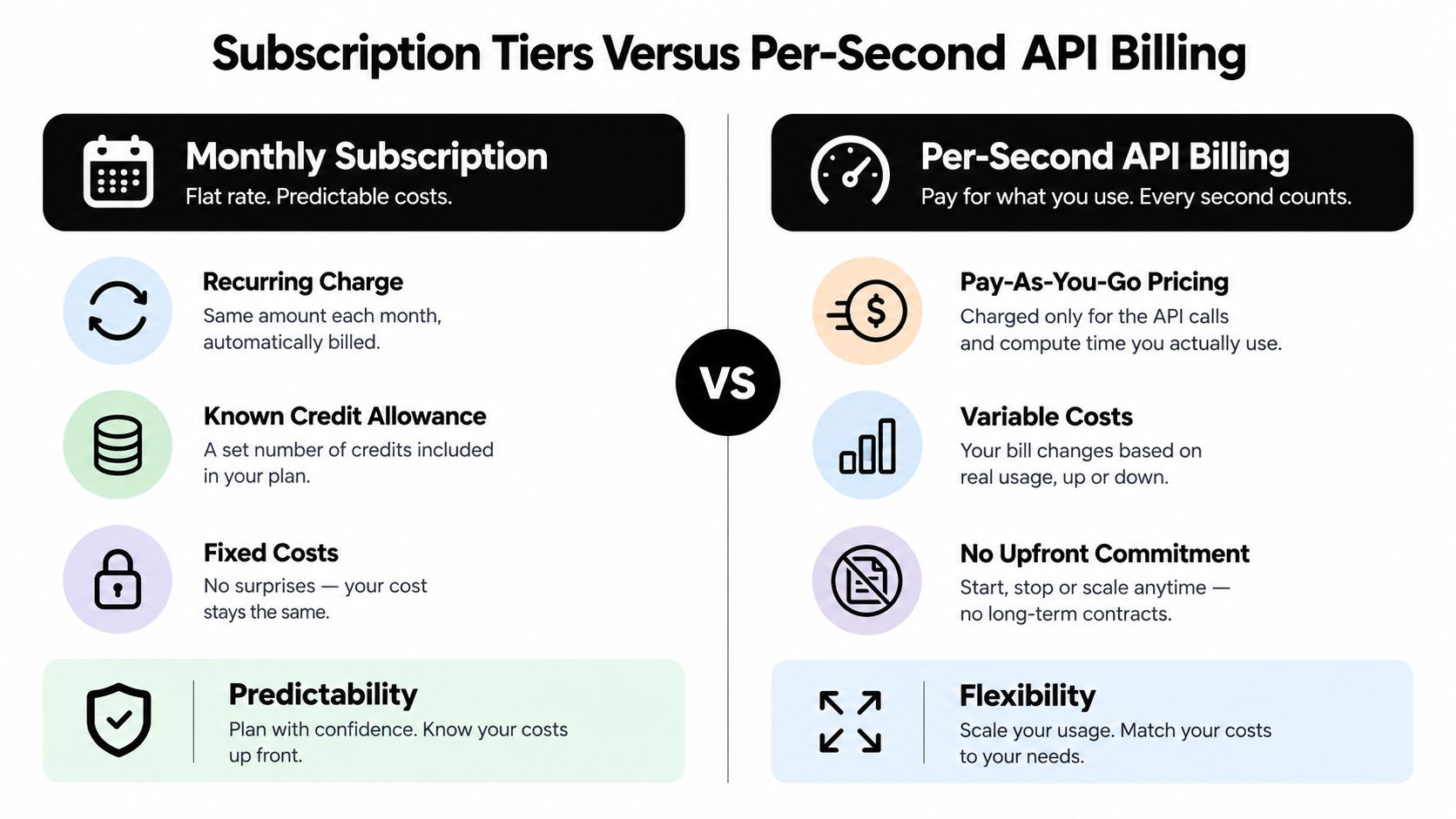
The biggest split in Veo pricing is between people who want a stable monthly bill and people who want pure usage metering. Subscriptions give you a fixed recurring cost plus a set pool of credits. API billing gives you no real ceiling other than your own usage, which is exactly why developers like it and finance teams hate surprises.
<iframe width="100%" style="aspect-ratio: 16 / 9;" src="https://www.youtube.com/embed/2DS5b5sRUaw" frameborder="0" allow="autoplay; encrypted-media" allowfullscreen></iframe>
For steady creators, the monthly model usually wins because the budget is easy to forecast. If you make clips every week, the flat fee is easier to absorb than a variable invoice. If you're only generating occasionally, though, a subscription can become dead weight fast because you're paying for volume you never touch.
Bottom line: Subscription logic wins when output is consistent. Per-second billing wins when output is sporadic, experimental, or built into automation.
The crossover point is simple in practice, even if every provider dresses it up differently. Once your usage becomes frequent enough that you're exhausting a normal monthly pool, the API path can look expensive but still make sense operationally because it scales with actual demand. If you only generate a few clips a month, the same API flexibility is wasted, because you're paying for precision you don't need.
Veo3 AI sits between those two extremes. It follows a credit-and-tier hybrid, so it behaves more like a practical access layer than a pure developer meter. That middle position is useful if you want model access without building around a full engineering workflow, but it still deserves the same hard-nosed cost check.
For buyers comparing a mixed setup, the internal Veo 3 API pricing 2026 page is worth a look because it shows how the usage-based side gets framed alongside subscription logic.
<a id="how-credits-translate-subscription-cost-into-real-output"></a>
How Credits Translate Subscription Cost Into Real Output
Credit systems are where the math gets honest. A subscription fee only matters once you know what the credits buy you, because the same monthly allowance can cover a handful of polished clips or a much larger batch of rough tests. Resolution is the first lever that changes that math, and it usually matters more than people expect.
Adobe Firefly makes this logic obvious. Its Generate Video system charges 100 credits per second at 1080p/24 FPS, 50 credits per second at 720p/24 FPS, and 20 credits per second at 540p/24 FPS (Adobe credit FAQ). That's the right mental model for Veo too, even when the exact plan mechanics differ. Higher quality drains the pool faster, lower quality stretches it further, and the gap gets wider the longer the clip runs.
| Output preset | Approx credits per 8s clip | Clips possible from a 1,000-credit pool |
|---|---|---|
| 1080p/24 FPS | 800 | 1 |
| 720p/24 FPS | 400 | 2 |
| 540p/24 FPS | 160 | 6 |
That table is blunt on purpose. A single eight-second 1080p render can devour most of a modest pool, while the same length at lower resolution leaves room for iteration. If you're running social content, that matters more than fancy plan labels because you usually need multiple tries, not one hero shot.
The most useful habit is to forecast spend before you commit. A practical budgeting framework is laid out in how to forecast AI spend in 2026, and that's exactly the right approach here. Estimate the number of clips you expect, decide the lowest resolution that still works commercially, then test whether the pool survives a normal month instead of your best-case month.
Credits refill on the billing date, not when you run dry. If you're not using the pool regularly, the plan is working against you.
<a id="which-plan-logic-fits-your-creator-profile"></a>
Which Plan Logic Fits Your Creator Profile
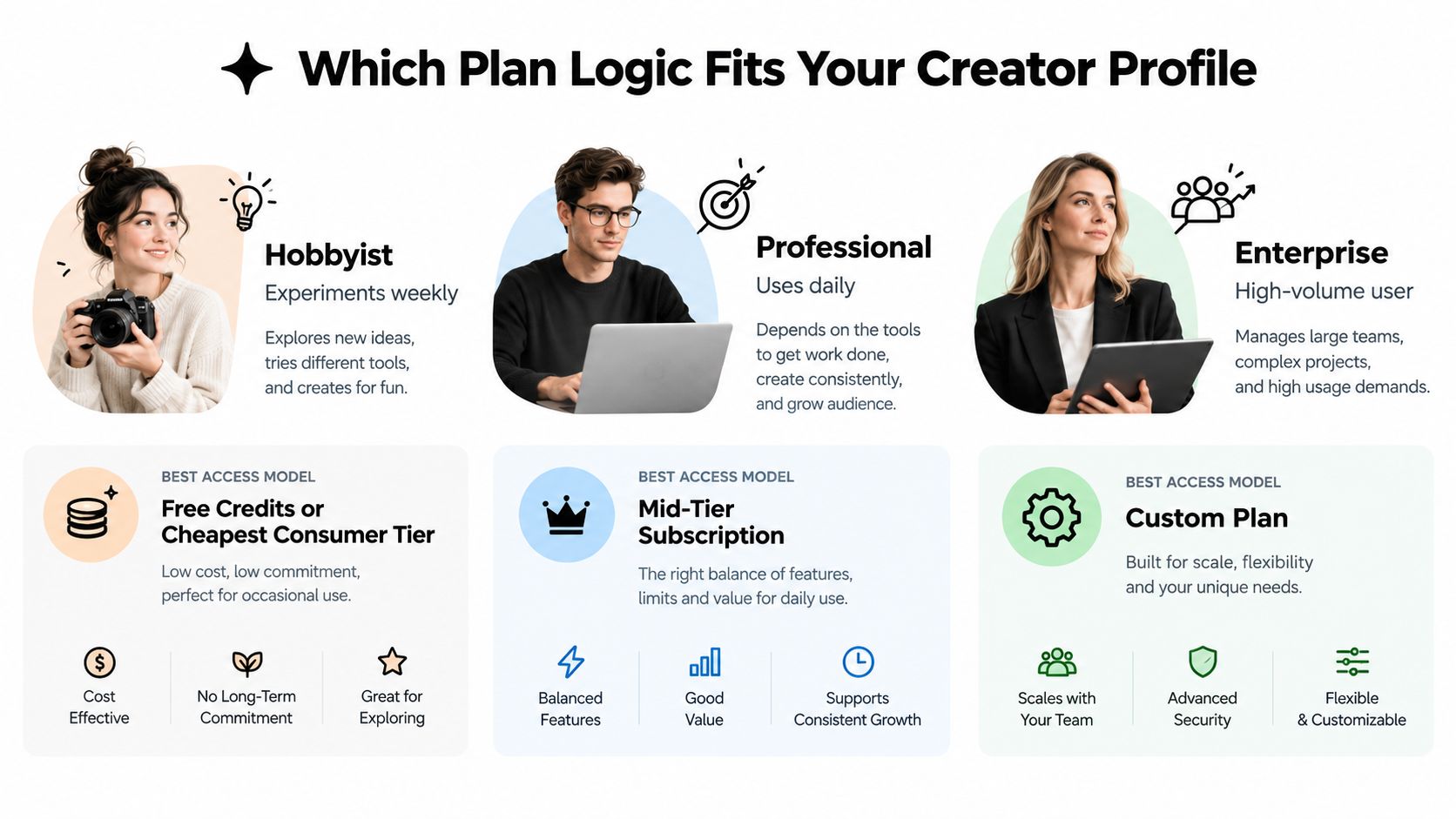
Start with your output pattern, not your ambition. A hobbyist, a solo marketer, and a studio burn through Veo access in very different ways, so the same plan can be smart for one and wasteful for another.
If you only test ideas once or twice a week, stay lean. Free credits or the cheapest consumer tier are enough because your goal is to learn the tool, not keep a production queue moving. Paying for a larger bundle before you know your style is money you will not recover.
If you publish polished clips on a steady schedule, a mid consumer bundle makes more sense. You get enough room for repeat work, and the monthly spend stays easy to defend because the output is predictable. If you keep skipping months, the plan is too large.
High-volume studios should move toward API-style billing. Client revisions, batch experiments, and constant production pressure expose fixed monthly caps fast. Once your team keeps hitting the ceiling, the subscription is no longer convenient, it is slowing the work down.
A credit-and-tier hybrid sits between those two extremes. For creators who want a separate access path while comparing bundled tiers against per-clip economics, Veo3 AI is a practical option to review alongside the main subscription choices.
<a id="billing-terms-refunds-and-cancellation-reality"></a>
Billing Terms, Refunds, and Cancellation Reality
The small print can ruin an otherwise sensible purchase. Monthly plan credits usually reset on the billing cycle, so unused balance doesn't become savings. If you don't consume it, you lose it. That's the whole game.
Top-up credits can behave differently from plan credits, and that distinction matters more than people admit. One platform explicitly says monthly plan credits reset each cycle while top-up packs never expire, which is the kind of rule that should be checked before checkout, not after. Read the expiry logic first, then buy.
Refunds are usually narrow, not generous. SaaS refund policies often use a 7- to 14-day window and many providers prefer account credit or prorated treatment instead of a clean cash refund (SaaS refund management guide). So if you buy, use a bunch of credits, and then change your mind, don't expect the clock to reset for you.
Cancellation only stops the next charge. It rarely gives back already-used credits, and downgrades typically wait until the cycle ends. That means the safest order is simple.
- Check your remaining balance before you cancel anything.
- Finish or export active projects so you don't lose access mid-edit.
- Confirm the downgrade date so you know when the new plan starts.
- Cancel only after you've mapped the next billing event.
<a id="a-pre-purchase-checklist-before-you-pay"></a>
A Pre-Purchase Checklist Before You Pay
Start with volume, not branding. If you don't know how many clips you'll make in a normal month, you can't judge whether a bundle or a meter is the smarter buy. Many people mess up here because they shop on feature lists instead of output patterns.
The second checkpoint is resolution. If your workflow only needs social-friendly output, don't pay for a setup that assumes you'll spend every week rendering heavier files. A plan can look affordable and still be wrong if it's sized for work you're not doing.
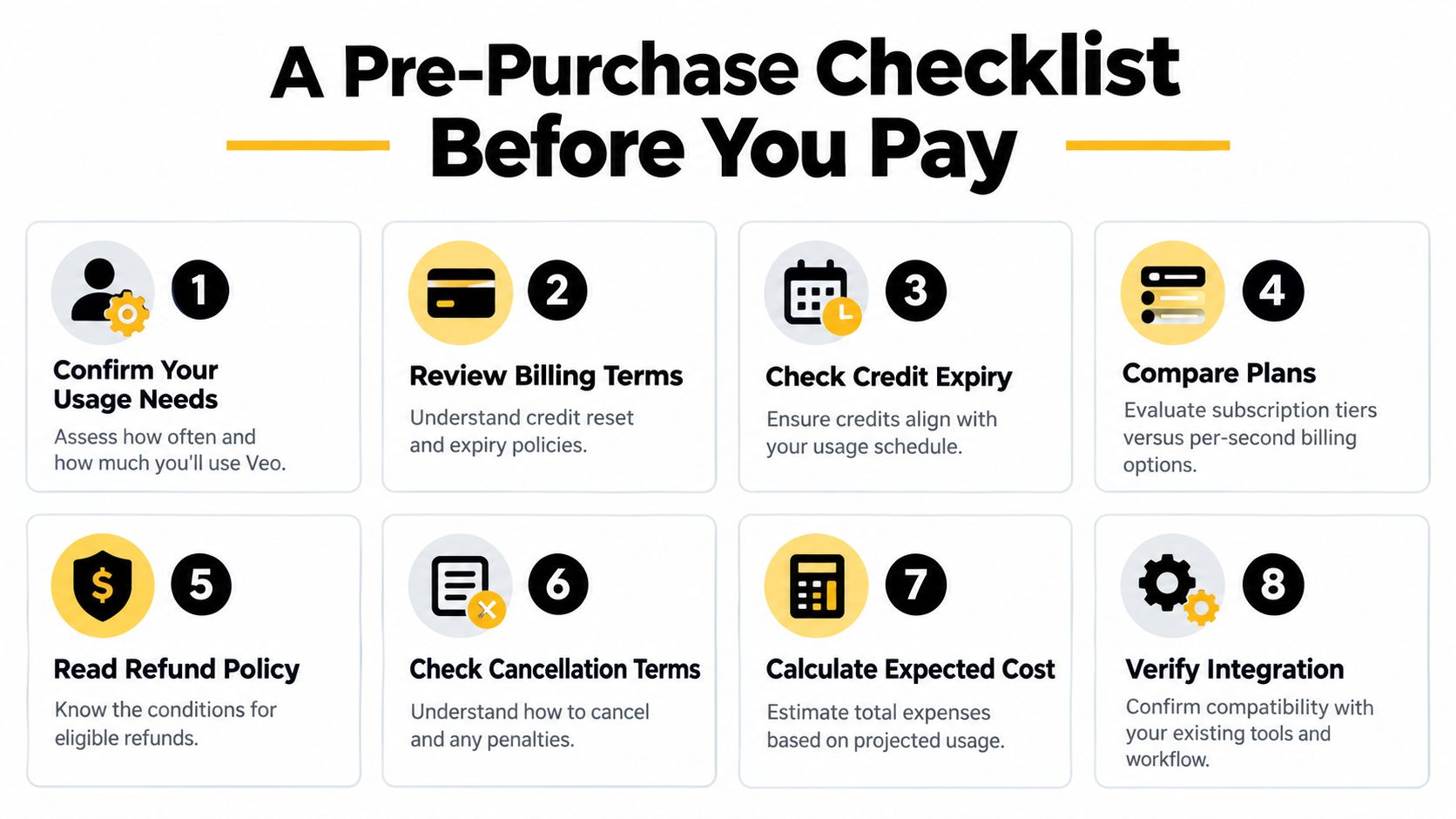
Then check the contract-like details people skip. Review the billing reset date, the credit expiry rule, the refund window, and whether your team needs multiple seats or multiple workspaces. If any of those pieces are unclear, the plan is not clear enough to buy.
Use this final filter before you pay:
- Confirm usage volume so you know whether monthly credits make sense.
- Compare tier cost against projected per-second spend if you expect heavy usage.
- Verify output needs and don't overbuy resolution you won't use.
- Check commercial use rights if the clips will go into client or paid work.
- Review reset and expiry rules so unused credits don't become lost value.
- Confirm team requirements if more than one person will touch the account.
- Test free or trial credits first before committing to a higher tier.
- Revisit the live pricing page because tiers and credit allocations change often.
Veo3 AI gives you a separate path to generate video without forcing you to decode every pricing structure yourself. If you're still weighing bundled tiers against credit-based cost, go to Veo3 AI and check the current access options before you buy the wrong plan.
Related Articles
Continue with more blog posts in the same locale.

Tribute Video Maker Guide: Plan, Create, and Share
Learn how a tribute video maker works and follow a clear process to plan, build, and share heartfelt tribute videos for memorials, birthdays, and milestones.
Read article
What Is AI Marketing and How It Transforms Growth
Learn what is AI marketing, how it works, key use cases, benefits and how to implement it effectively with real examples and tools.
Read article
Karaoke Video Creator Guide to Pro Sing-Along Videos
Learn how a karaoke video creator turns audio and lyrics into pro karaoke videos with Veo3 AI backgrounds, sync tips and export settings.
Read article