
7 Full Shot Examples for AI Video Prompts in 2026
Seven full shot examples for AI video, with prompt ideas, framing notes, movement tips, and use cases for ads, dance, action, and brand content.
Veo3 AI · 14 min read · Nov 16, 2026
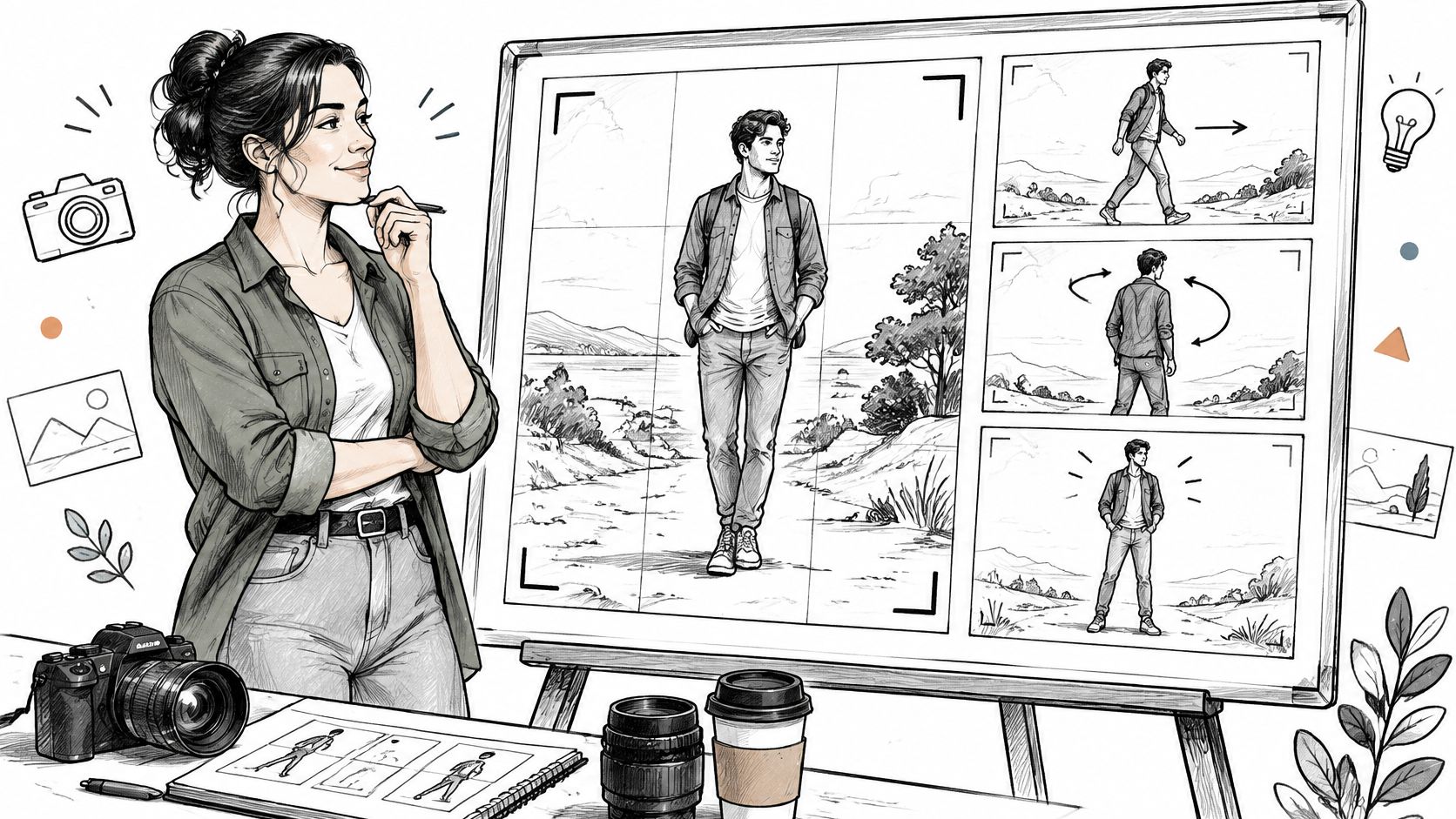
A generated clip opens well: the face reads, the costume holds. Then the camera drifts, the coat changes length, the shoes leave the frame, and the room stops matching the opening shot. The fix usually sits in the framing instruction, not in another stack of adjectives.
A full shot keeps the entire figure and its surroundings visible. It lets you lock the body, outfit, floor contact, and setting into one instruction instead of leaving those relationships for the model to guess. Close framing does different work: it isolates a face, hand, or product detail rather than showing complete physical action, the same logic behind how close-ups highlight mattress texture in product photography.
The seven examples below pair familiar film setups with tested prompt patterns. Each carries a screen reference, a movement note, and a verdict on where the framing holds or breaks down in AI video. Treat every prompt as a starting point. No model reproduces the same result twice, so the pattern matters more than the exact wording.
Table of Contents
- 1. Classic Head-to-Toe Full Shot
- 2. Wide Environmental Full Shot
- 3. Symmetrical Centered Full Shot
- 4. Tracking Action Full Shot with Clear Spatial Geography
- 5. Full-Body Dance and Movement Shot
- 6. Low-Angle Heroic Full Shot
- 7. Full Shot for Product and Brand Demonstrations
- How the seven full shot examples compare for AI video prompts
- Turning Full Shot Choices Into Repeatable AI Video Prompts
<a id="1-classic-head-to-toe-full-shot"></a>
1. Classic Head-to-Toe Full Shot
A character standing still can establish costume, attitude, and location without a camera move. Think of the gunfighter staging in Sergio Leone's westerns, including Once Upon a Time in the West: the stance matters as much as the face.
The defining requirement is complete body coverage, not a particular camera distance. Adobe's guide to camera shots describes full shots as showing the complete subject while preserving surrounding context.
<a id="prompt-for-a-readable-character-introduction"></a>
Prompt for a readable character introduction
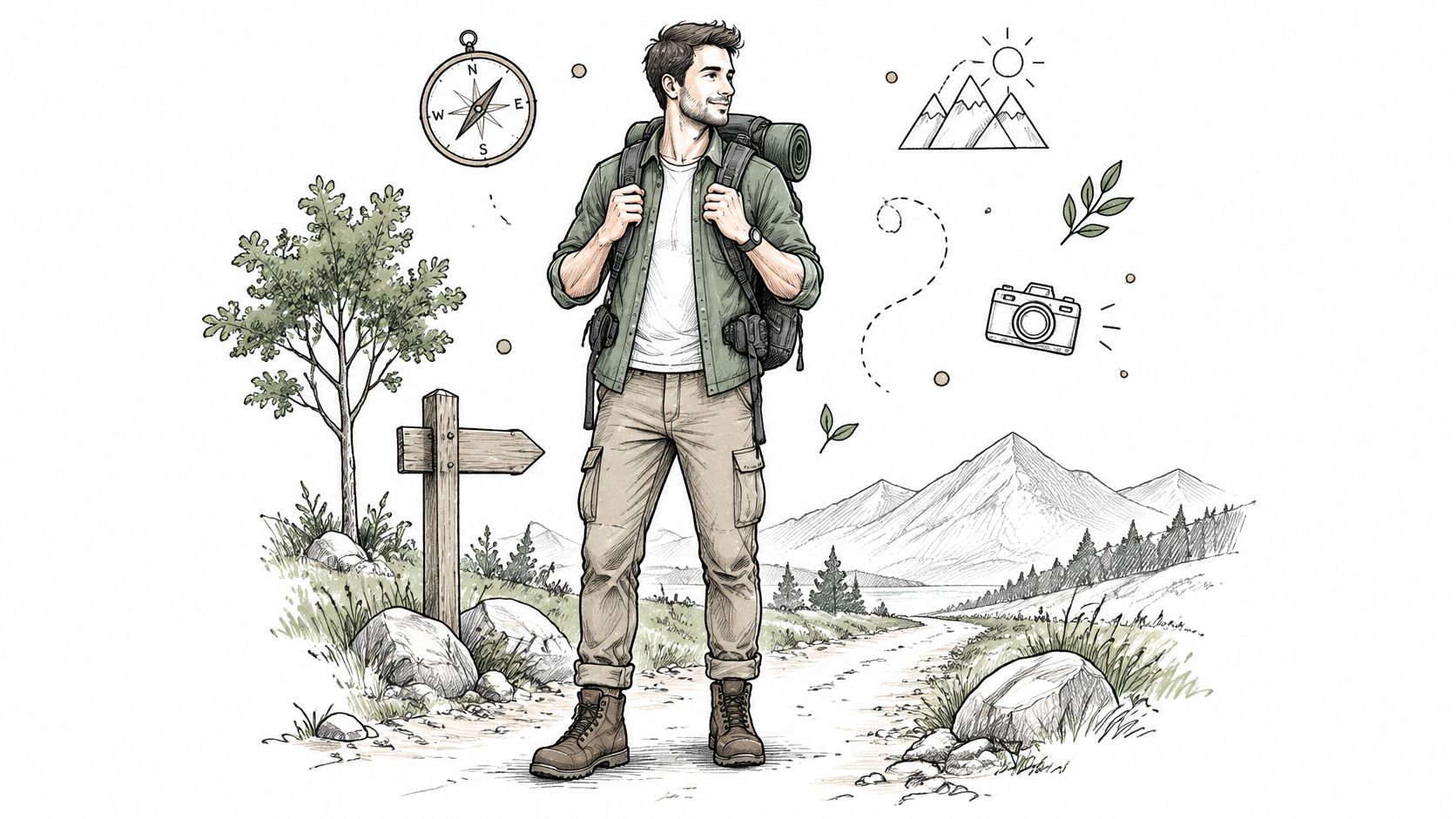
Prompt pattern: Full shot of an adult hiker standing on a mountain trail, entire body visible from head to boots, charcoal jacket, tan trousers, red backpack, relaxed upright posture, clear ground beneath the boots, restrained mountain background, locked camera, natural morning light.
When using the Veo 3 AI video generator, this is a useful baseline for testing framing with Veo 3.1. Start with the pose before asking for walking, turning, or prop handling.
- Movement note: Ask for a small weight shift and a glance toward the trail. Keep the camera stationary.
- Failure and fix: If the boots touch the lower edge, add visible ground below the feet and breathing room above the head.
- Fit-for-use verdict: Strong for character introductions, outfit previews, and reference-based animation. Weak when facial expression or small product details carry the message.
Don't describe every mountain, cloud, and backpack buckle. Keep the character's identifying features specific and the background subordinate.
<a id="2-wide-environmental-full-shot"></a>
2. Wide Environmental Full Shot
In Lawrence of Arabia, riders crossing desert expanses provide a useful reference for scale. For an original travel or fantasy clip, borrow the relationship between figure and surroundings rather than asking the model to reproduce a particular scene.
This sits near the boundary between full shot and wide shot. Backstage's explanation of full-shot framing distinguishes a character-led full shot from a wide view that primarily emphasizes the surrounding space.
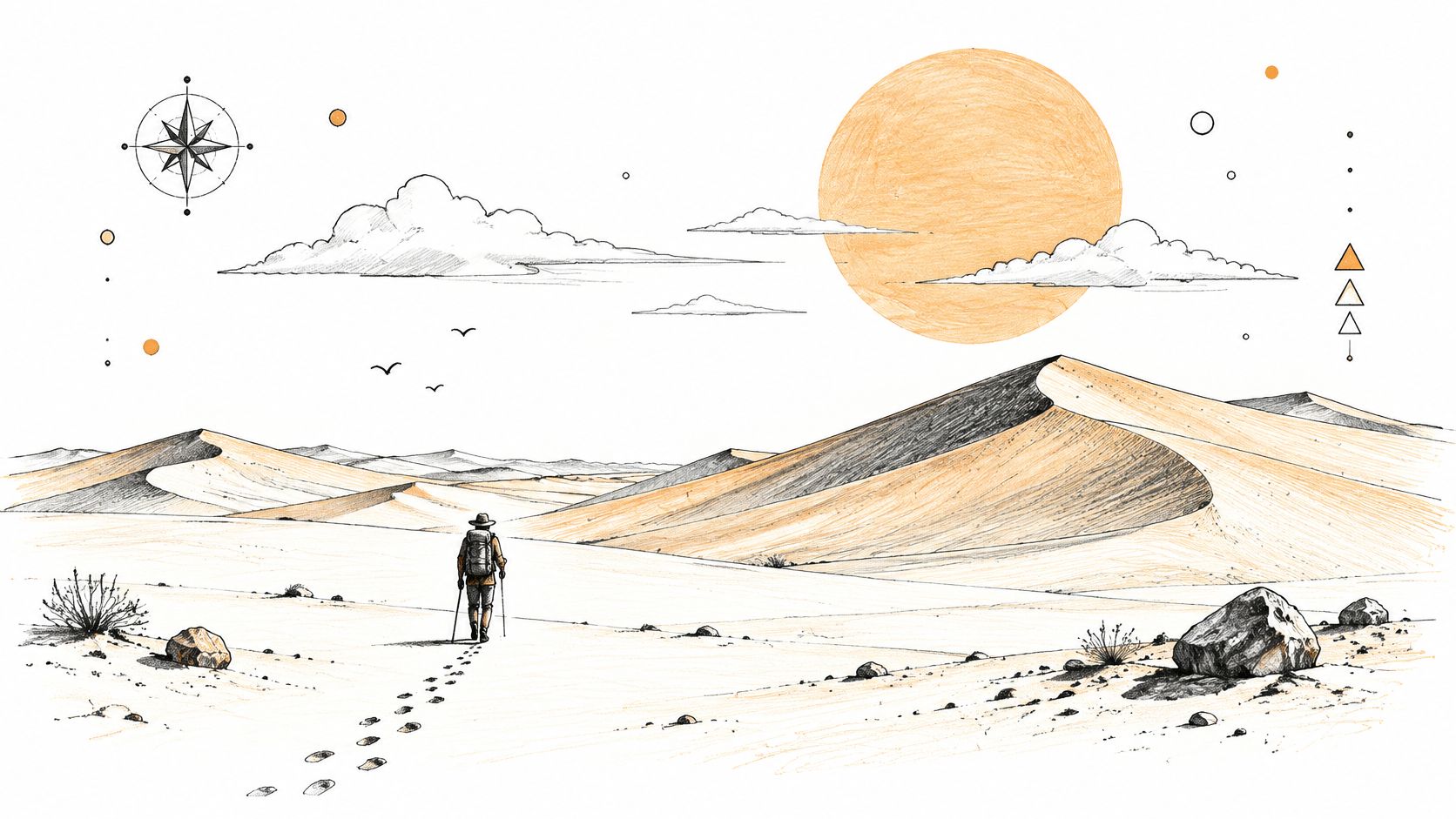
Prompt pattern: Wide environmental full shot of an adult traveler walking along a desert ridge at dawn, entire body visible, traveler placed off-center, layered dunes extending behind them, pale atmospheric haze, clear silhouette, camera locked, movement across the frame rather than toward the lens.
Keep the subject large enough to recognize the action. A spectacular landscape won't rescue a figure whose movement is unreadable.
<a id="make-the-environment-do-a-specific-job"></a>
Make the environment do a specific job
For a travel brand, the dunes might communicate remoteness. For a fantasy sequence, a distant gate might establish the destination. Use mise-en-scène principles to choose meaningful scenery instead of stacking unrelated visual adjectives.
Movement note: Use a steady lateral walk with a consistent distance from the camera. Movement toward the lens changes subject size and makes head-to-toe coverage harder to maintain.
Fit-for-use verdict: Excellent for establishing geography and mood, less useful for garment texture or product recognition. Choose a higher available resolution when distant detail matters, but enlarge the subject if the action remains unclear. Resolution can't compensate for an unsuitable composition.
<a id="3-symmetrical-centered-full-shot"></a>
3. Symmetrical Centered Full Shot
For a fashion reveal or stylized brand introduction, symmetry gives you a concrete arrangement to request. The Grand Budapest Hotel is a useful reference for centered figures inside balanced hotel interiors; Barry Lyndon offers a different reference for formal, painterly placement.
The practical instruction is not cinematic symmetry alone. Specify what aligns: the subject, doorway, floor pattern, and camera axis.
<a id="build-the-frame-around-a-stable-axis"></a>
Build the frame around a stable axis
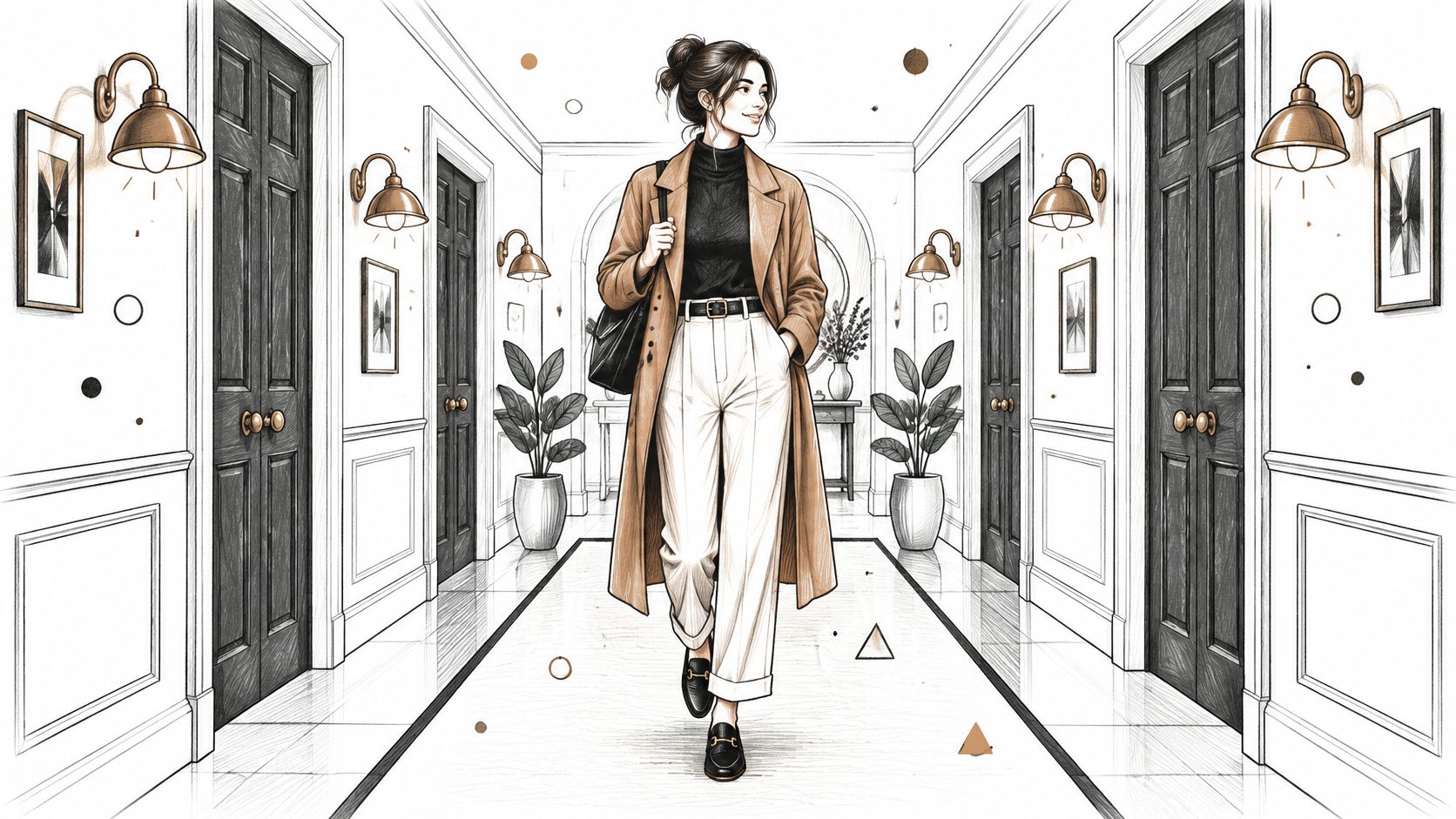
Prompt pattern: Symmetrical centered full shot of an adult woman in a tan coat and white trousers, standing beneath the central arch of a formal hallway, matching doors on either side, muted cream and burgundy palette, full body and shoes visible, level camera, balanced headroom and footroom, no camera rotation.
Flashboards' full-shot guide emphasizes leaving breathing room above the head and below the feet. That margin matters here because exact centering can tempt you to frame the body too tightly.
- Movement note: Start with a stationary pose and a deliberate coat adjustment. For walking, request a straight path along the hallway's centerline.
- Failure and fix: If the walls bend or the doors multiply, simplify the architecture and remove ornamental detail from the prompt.
- Fit-for-use verdict: Well suited to polished lookbooks and graphic social clips. Less convincing for spontaneous documentary-style action.
Symmetry also exposes mistakes. A drifting camera or uneven doorway becomes conspicuous, so don't combine this composition with an orbit unless breaking the symmetry is intentional.
<a id="4-tracking-action-full-shot-with-clear-spatial-geography"></a>
4. Tracking Action Full Shot with Clear Spatial Geography
A chase becomes confusing when you can't tell where the subject is going. Use the continuous camera movement associated with Emmanuel Lubezki's work on Children of Men as a reference for following action through space, and Mad Max: Fury Road as a reference for making positions and travel direction readable.
A full shot describes framing; a long take describes duration. ICC's cinematography chapter explains the framing's role in geography, movement, and the relationship between characters and locations.
<a id="describe-the-route-before-the-spectacle"></a>
Describe the route before the spectacle
Prompt pattern: Full-body tracking shot moving alongside an adult courier jogging from left to right through an empty industrial corridor, camera matches the courier's speed, constant subject distance, entire body visible throughout, wide lens perspective, doors remain behind the subject, uninterrupted movement, no cuts.
For camera-path planning, LesFM on smooth camera movement provides a useful companion to the distinction between subject movement and camera movement. Don't add a whip-pan shot until the basic route works.
Continuity check: Track the feet, screen direction, and passing landmarks. A smooth-looking camera move can still contain impossible geography.
Movement note: Begin with a clear, unobstructed route and a single moving subject. Compare a short test with a longer version before introducing crossings, crowds, or turns.
Fit-for-use verdict: Strong for entrances, pursuits, and location reveals. It breaks down when the prompt simultaneously requests sprinting, circling, fighting, and rapid camera changes. Remove competing actions before adding more continuity language.
<a id="5-full-body-dance-and-movement-shot"></a>
5. Full-Body Dance and Movement Shot
If the footwork is the point, don't crop it out. Gene Kelly's routines in Singin' in the Rain offer a clear reference for framing that lets viewers read posture, balance, and movement together.
For AI output, start with a repeatable movement phrase rather than an elaborate routine. A static camera makes it easier to judge whether the dancer's motion works without confusing it with camera motion.
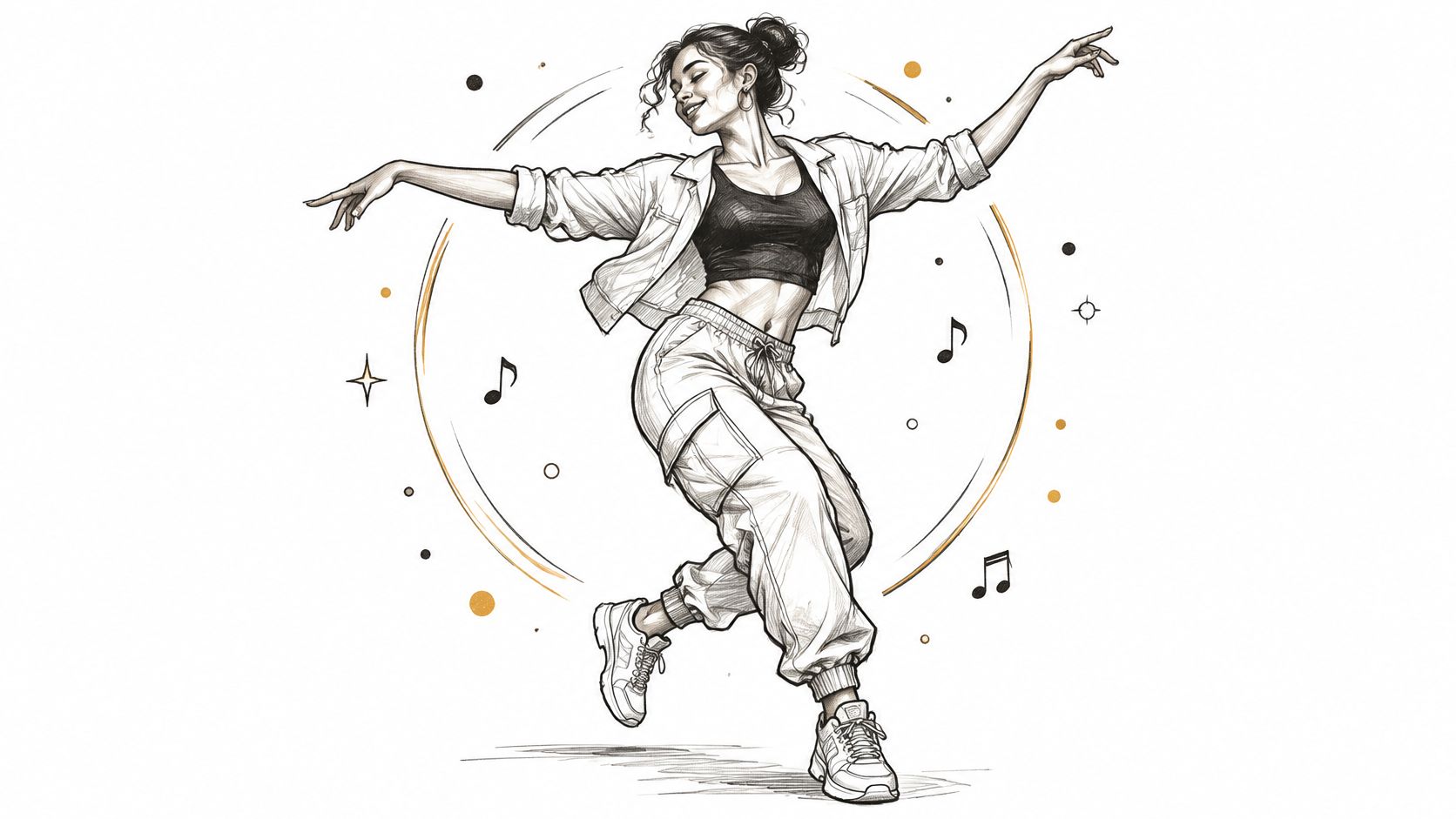
Prompt pattern: Full-body shot of an adult dancer performing a slow side-step sequence in a plain rehearsal studio, relaxed arm movements below shoulder height, entire body visible throughout, generous space beside the hands, visible floor beneath the feet, static level camera, consistent soft lighting.
<a id="protect-the-movement-envelope"></a>
Protect the movement envelope
The movement envelope is the space the performer needs at the widest and tallest point of the action. Frame for that extent, not just the starting pose.
- Movement note: Name the style and pace, then describe the actual action. Slow ballroom-inspired steps are clearer instructions than beautiful dancing.
- Failure and fix: If feet slide or limbs overlap, remove spins and crossing steps. Use separated foot positions and a slower phrase.
- Fit-for-use verdict: Useful for performance concepts, music visuals, and choreography exploration. Don't treat generated motion as a technically accurate dance tutorial without checking it.
When exploring an AI dance generator, judge the complete motion rather than the opening image. A convincing costume and face don't establish that weight shifts, hand paths, or floor contact remain coherent.
<a id="6-low-angle-heroic-full-shot"></a>
6. Low-Angle Heroic Full Shot
A superhero standing on a rooftop and a western protagonist facing a showdown share a useful framing idea: show the complete stance from below. The low camera position changes the figure's relationship to the viewer without requiring a complicated action.
The trade-off is perspective distortion. A very low viewpoint can enlarge foreground boots, obscure the torso, or make the legs dominate the composition. Request a restrained low angle before reaching for an extreme ground-level view.
<a id="add-authority-without-losing-anatomy"></a>
Add authority without losing anatomy
Prompt pattern: Low-angle full shot looking slightly upward at an adult explorer standing on a rocky rise, entire body visible from head to boots, balanced natural proportions, confident upright stance, clean sky background, soft directional sunlight, camera stationary, coat moving gently in the breeze.
For a narrative introduction, let the character settle into the stance rather than land from a jump. For a promotional clip, the same composition can emphasize an outdoor outfit, provided the clothing remains readable.
A low angle should strengthen the pose, not make the viewer inspect an oversized shoe.
Movement note: Keep the subject's distance constant. Ask for a controlled head turn or subtle coat movement rather than a forward stride that pushes the feet toward the lens.
Fit-for-use verdict: Effective for confident introductions, adventure concepts, and stylized fashion. Poor for neutral fit comparisons or demonstrations where viewers need undistorted proportions.
If the body looks stretched, raise the implied camera position, reduce the upward tilt, and request natural perspective. Don't try to solve distorted anatomy by adding more heroic adjectives.
<a id="7-full-shot-for-product-and-brand-demonstrations"></a>
7. Full Shot for Product and Brand Demonstrations
A full-body presenter can show how a product fits into an activity, but the product still needs to be identifiable. Fashion lookbooks benefit from complete outfit coverage; a small skincare container usually needs a separate detail insert.
Old Spice's The Man Your Man Could Smell Like offers a useful commercial reference for coordinated blocking and transitions. The campaign case study describes a continuous-shot structure built around set changes and choreography, a reminder to plan transitions rather than merely request fluid motion.
<a id="compose-for-the-delivery-frame"></a>
Compose for the delivery frame
Prompt pattern: Vertical full shot of an adult presenter wearing a navy jacket and demonstrating a travel backpack, entire body visible, presenter centered with clear side margins, backpack held beside the torso, plain studio background, space above the head for a title, locked camera, presenter turns slightly to reveal the backpack profile.
Full-shot guidance from NFI is a useful starting point for complete-body framing. For social delivery, also check whether gestures, captions, and the product fit within the composition.
- Widescreen: Use a 16:9 composition for lateral movement and environmental context.
- Vertical: Use a 9:16 composition with a narrow movement path and deliberate caption space.
- Square: Build a 1:1 composition around compact gestures rather than cropping a wider action afterward.
Movement note: Limit the demonstration to a clear action, such as lifting the backpack and turning it outward. Generate a separate close-up for zippers or material detail.
Fit-for-use verdict: Strong for wearables, luggage, and lifestyle context, weaker for tiny labels. Use this guide to making product demo videos alongside short-form video templates for online shops to plan the full-shot and detail-shot edit together.
<a id="how-the-seven-full-shot-examples-compare-for-ai-video-prompts"></a>
How the seven full shot examples compare for AI video prompts
| Item | Best Use Case | Camera Movement | AI Consistency Risk | Ideal Format |
|---|---|---|---|---|
| Classic Head-to-Toe Full Shot | Showing posture, costume, and full-body action | Usually static or minimal | Low; whole-figure framing is relatively stable | Dialogue, action, or establishing scenes |
| Wide Environmental Full Shot | Establishing scale, location, or solitude | Usually static or sweeping | Moderate; subject details may be small | Travel, fantasy, or landscape sequences |
| Symmetrical Centered Full Shot | Creating a controlled, graphic composition | Usually static | Low to moderate; symmetry may drift | Branded or stylized social clips |
| Tracking Action Full Shot with Clear Spatial Geography | Following action while clarifying positions and movement | Tracking alongside or behind the subject | High; motion can cause limb or background artifacts | Action, chase, or travel sequences |
| Full-Body Dance and Movement Shot | Showing choreography, footwork, and rhythm | Static or slowly moving | Moderate to high; fast movement can be inconsistent | Dance, music, or performance clips |
| Low-Angle Heroic Full Shot | Conveying power, confidence, or heroism | Usually static | Low to moderate; angle and proportions may distort | Character introductions or promotional scenes |
| Full Shot for Product and Brand Demonstrations | Showing a presenter, outfit, and product in context | Usually static or gently moving | Moderate; product details may be unclear | Vertical short-form ads and product demos |
<a id="turning-full-shot-choices-into-repeatable-ai-video-prompts"></a>
Turning Full Shot Choices Into Repeatable AI Video Prompts
The most useful full shot examples give you a repeatable decision process, not just a cinematic reference. Choose what the viewer must understand first: the outfit, the movement, the environment, or the product interaction. Then remove instructions that compete with that purpose.
A full shot isn't automatically a long take. Wikiversity's overview of long takes separates extended duration from ordinary shot construction, an important distinction when you want complete-body framing without demanding a complicated continuous sequence.
Use this short checklist before generating:
- Match framing to purpose: Keep the figure prominent for costume and posture; allow more environment when location matters.
- Name the camera move: Specify locked camera, lateral tracking, or following from behind instead of cinematic movement.
- Fix the subject position: Describe the starting position, movement direction, and space around hands and feet.
- Simplify the background: Retain landmarks that explain the scene and remove distracting activity.
- Test a short clip: Check body coverage, floor contact, outfit continuity, and product shape before committing to longer runs.
Inspect the delivery crop, not just the master. The C&I Studios production case study describes separate masters and a vertical version adapted for its viewing conditions, a practical reminder that alternate formats deserve their own review.
Vertical product-ad exports at up to 1080p suit social placements. Veo 3.1 offers first and last frame control at up to 4K, which helps define endpoints when a full shot must retain detail across a longer sequence. Neither endpoint control nor resolution removes the need to inspect the frames between them.
Save successful prompts with their movement instructions and framing constraints intact. Change the subject or setting deliberately, then test again rather than assuming the same composition will survive every new action.
Veo3 AI offers text-to-video and image-to-video workflows for developing full-body scenes from prompts or original images. Visit Veo3 AI to try a full-shot pattern above, test a restrained movement, and refine the framing before building the rest of your sequence.
Related Articles
Continue with more blog posts in the same locale.
Can You Turn a Photo Into a Video? What AI Can Do
Can you turn a photo into a video? Yes. Learn how AI image-to-video tools animate a still photo, what goes wrong, and how to get clean results.
Read article
AI Commercial Generator: How It Works and How to Use One
Learn how an AI commercial generator turns prompts or images into video ads, plus steps to create promotional clips and check rights before publishing.
Read article
Mise En Sce Ne for AI Video: Shape Look and Mood
Learn how mise en sce ne shapes AI video with setting, props, lighting and blocking, plus prompts to get consistent, moody results in 2026.
Read article